
Key Takeaways
Rate buydowns reduce your monthly mortgage payment—permanently or temporarily depending on the structure
Closing cost credits lower the cash you need at the closing table but don't affect your ongoing payment
Upgrade packages add features to your home, though builder pricing often exceeds appraised value
Preferred lender incentives can obscure true loan costs—always compare APR and fees against an outside quote
Mello-Roos taxes in Sacramento-area new developments can add hundreds to your monthly payment beyond the mortgage
The "best" incentive depends entirely on your constraint: monthly budget, cash reserves, or desired home features
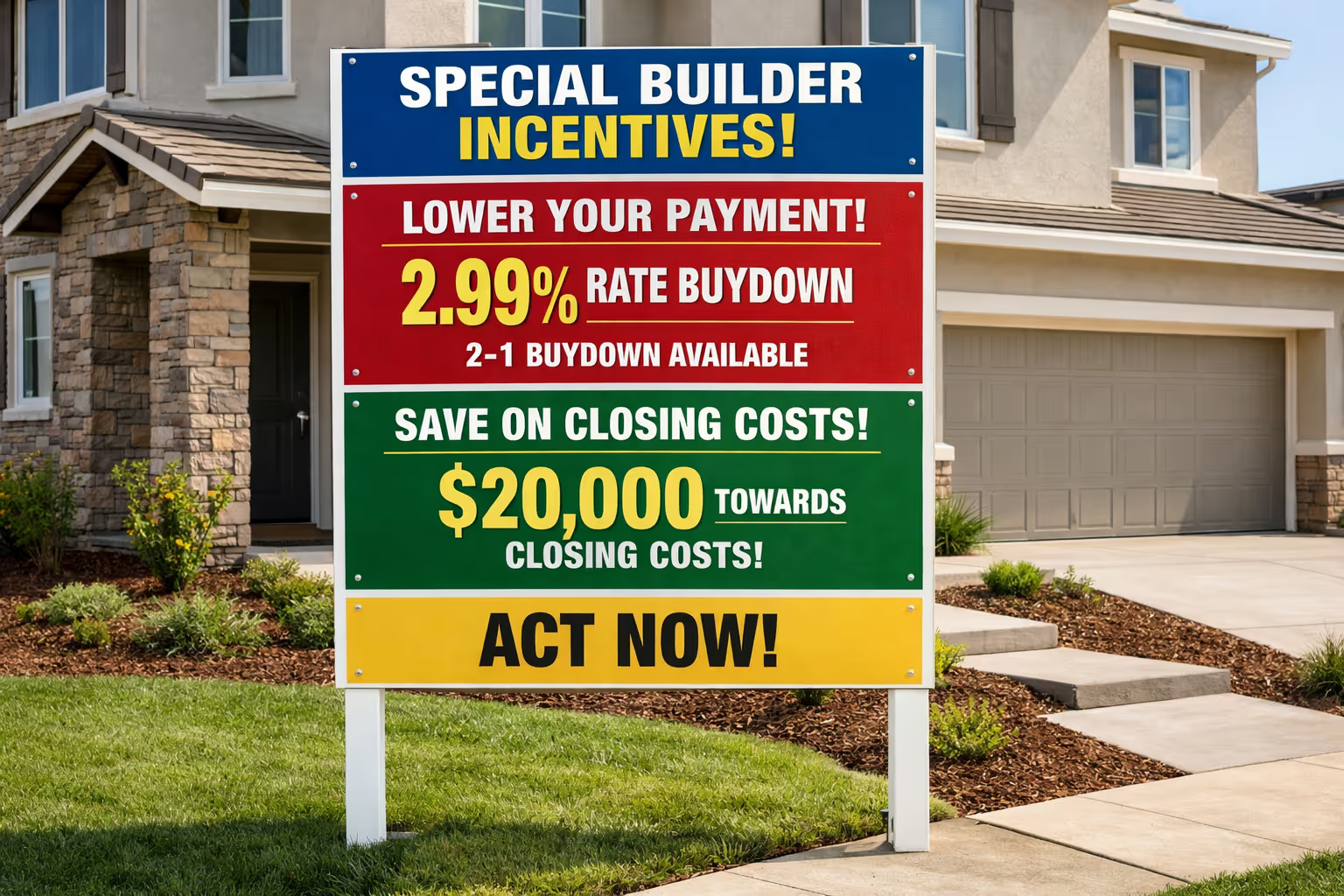
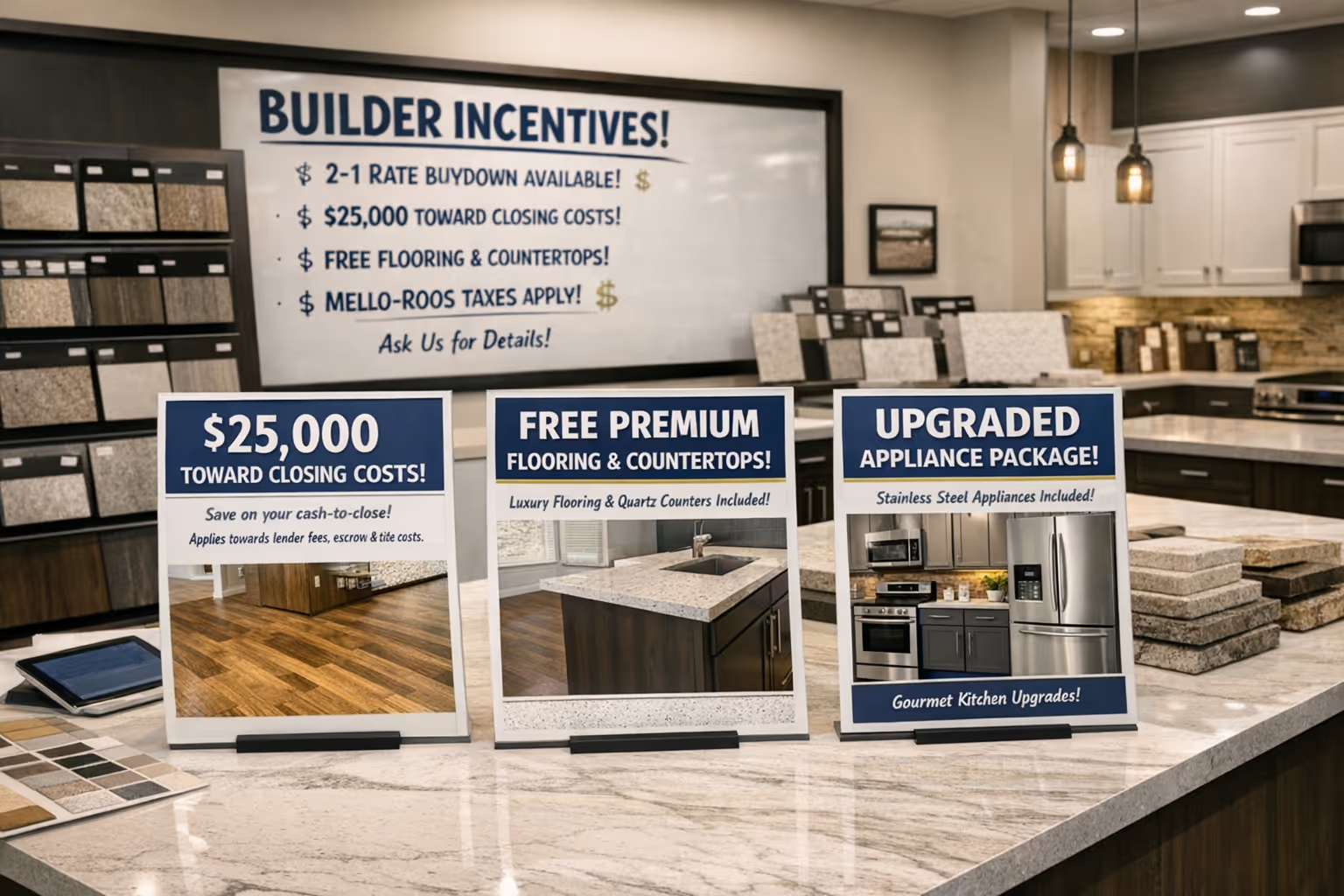
When I walk clients through new construction sales offices in Folsom or Natomas, the whiteboard behind the sales desk usually reads like a game show prize list: "$25,000 toward closing costs!" "Free premium flooring package!" "2-1 buydown available through our preferred lender!"
The sales agents present these offers enthusiastically—and to be fair, some genuinely help buyers. But most first-time buyers I work with have the same question after touring three or four communities: which incentive actually matters for my situation?
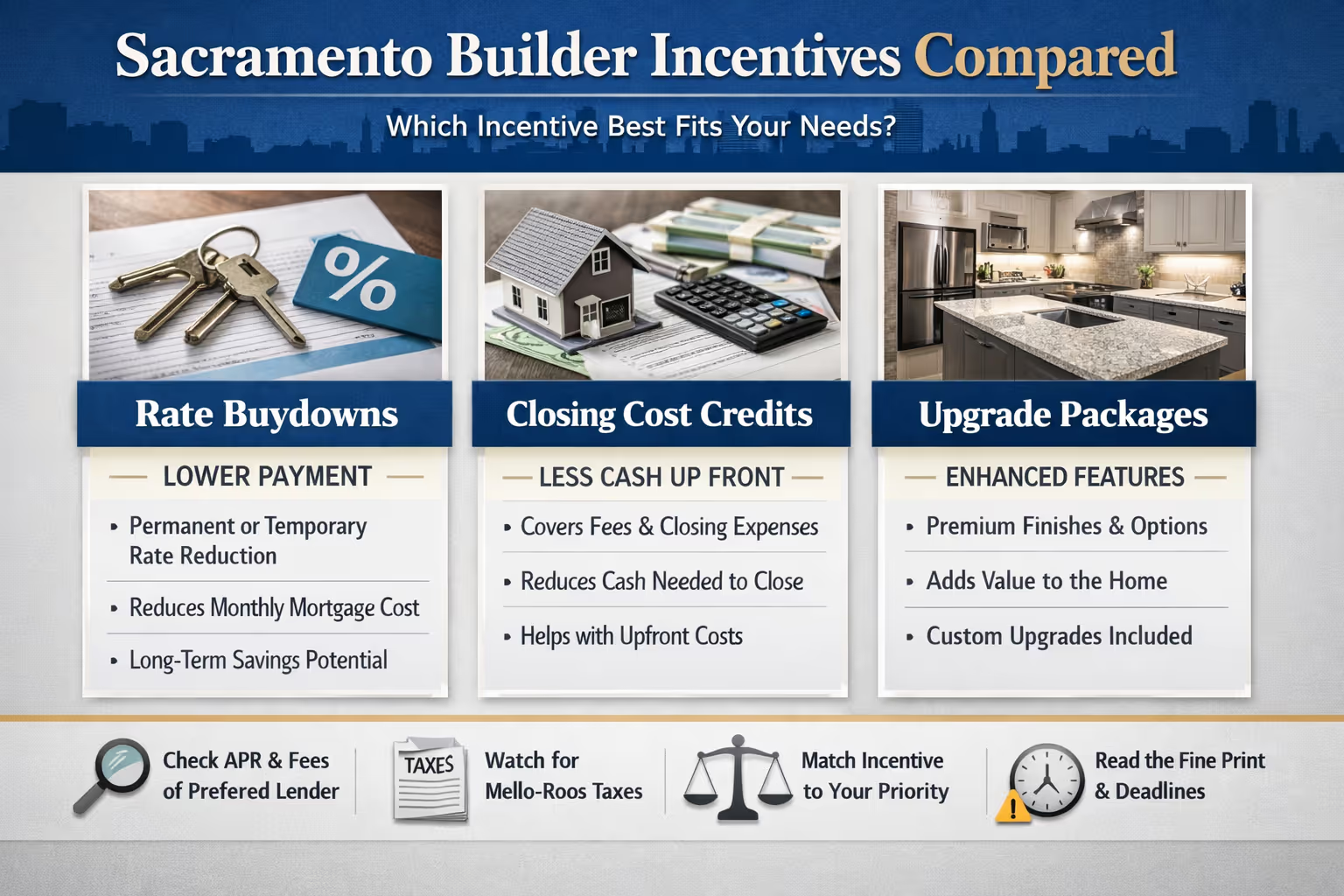
The answer depends on understanding what each incentive changes. A rate buydown affects your monthly payment. A closing cost credit affects your cash-to-close. An upgrade package affects the home itself. Comparing them as if they're interchangeable—"this builder is offering $20,000, that one only $15,000"—misses the point entirely.
This guide breaks down how each incentive works, how to evaluate Sacramento-area builder offers against your priorities, and what fine print catches buyers off guard.
Why Builders Offer Incentives (And Why They're Aggressive Right Now)
Builders in the Greater Sacramento region—from Lennar and KB Home communities in Elk Grove to Taylor Morrison developments in Roseville—use incentives strategically. When interest rates rise or buyer traffic slows, incentives become more generous. When demand picks up, they shrink or disappear [1].
This isn't charity—it's inventory management. Builders need to hit quarterly sales targets and avoid carrying completed homes on their books. Incentives move that inventory.
What matters to you as a buyer is whether a specific incentive addresses your constraint. A $20,000 incentive that doesn't solve your actual problem is worth less than a $10,000 one that does.
The challenge is that builders rarely explain how incentives interact with your loan structure, your reserves, or your total monthly housing cost—including property taxes and Mello-Roos assessments, which I'll cover shortly.
The Three Categories of Builder Incentives
Every builder incentive falls into one of three categories based on what it changes in your homebuying equation:
| Category | What It Affects | Example |
| Monthly payment incentives | Your mortgage interest rate and principal + interest payment | Permanent or temporary rate buydown |
| Cash-to-close incentives | The funds you need at the closing table | Closing cost credit |
| Home value incentives | Features and finishes of the property | Design center upgrade package |
Understanding which category an incentive belongs to is the first step toward evaluating whether it fits your situation.
Monthly Payment Incentives: Rate Buydowns Explained
Rate buydowns reduce your mortgage interest rate, which directly lowers your monthly principal and interest payment. Builders fund these by paying discount points to the lender on your behalf [2].
There are two structures to understand:
Permanent Buydowns
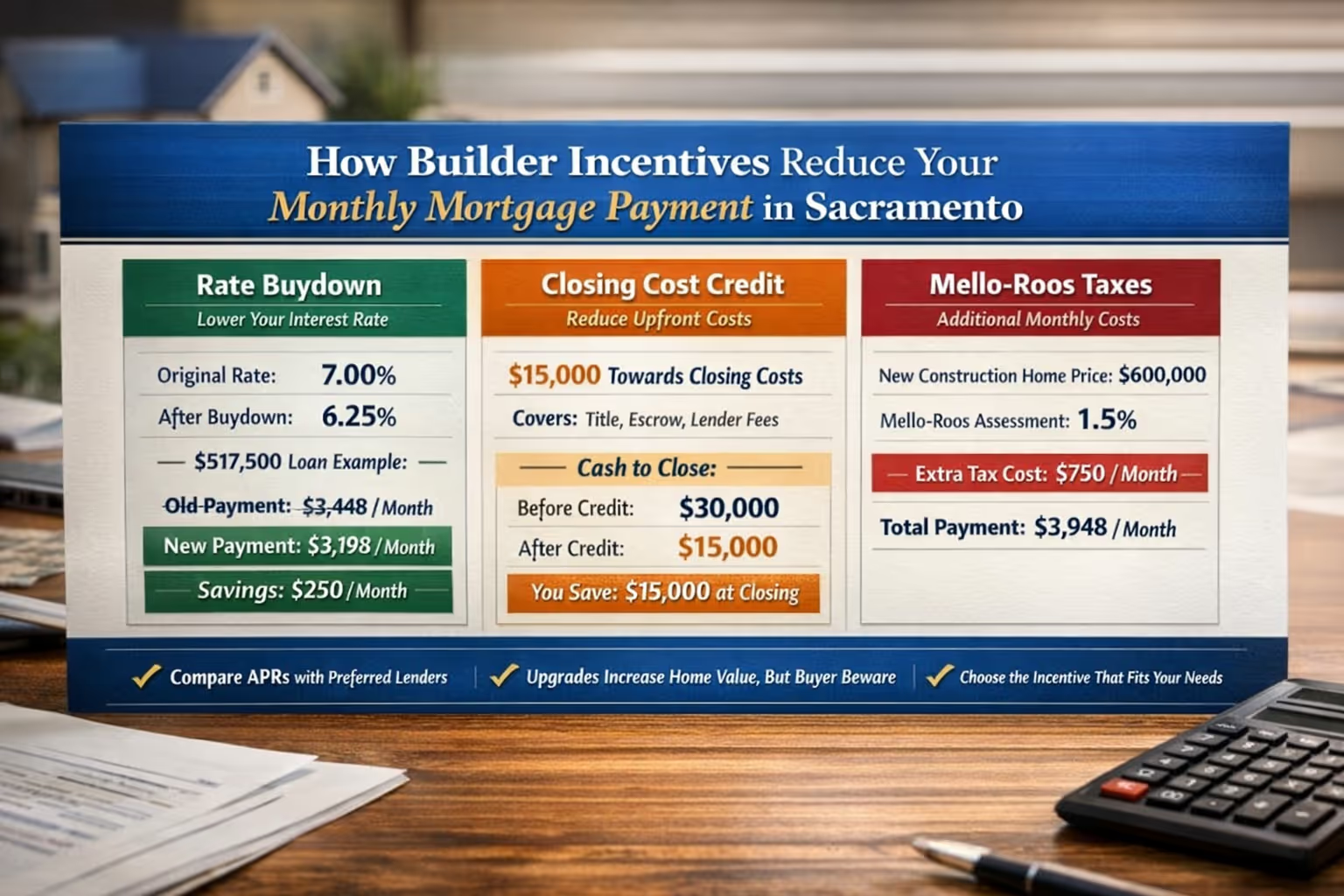
A permanent buydown reduces your interest rate for the entire life of the loan. If the builder pays enough points to drop your rate from 7% to 6.25%, you enjoy that lower rate for all 30 years (assuming a 30-year fixed mortgage).
On a $500,000 loan, a 0.75% rate reduction can mean roughly $250 less in principal and interest each month—adding up to significant savings if you stay in the home for seven years or more.
Temporary Buydowns (2-1 Structure)
A 2-1 buydown works differently. It reduces your rate by 2% in year one, 1% in year two, and then reverts to the full note rate starting in year three [3].
On a loan with a 7% note rate:
| Year | Effective Rate | What Happens |
| 1 | 5% | Builder-funded subsidy covers the difference |
| 2 | 6% | Smaller subsidy |
| 3–30 | 7% | Full rate applies |
The 2-1 buydown appeals to buyers who expect their income to increase or who plan to refinance before year three. However—and this is critical—you must qualify at the full 7% note rate, not the temporarily reduced rate [4]. A 2-1 buydown doesn't help you afford a more expensive home; it simply makes the first two years more comfortable.
The question I ask clients: Can you handle the year-three payment today? If the answer is "barely" or "no," a temporary buydown creates a future problem, not a solution.
Cash-to-Close Incentives: Closing Cost Credits
Closing cost credits reduce the amount of cash you bring to the closing table. They typically cover items like:
Lender fees (origination, underwriting, processing)
Title insurance and escrow fees
Prepaid property taxes and homeowners insurance
Recording fees
A "$15,000 closing cost credit" sounds substantial, but it only helps if your actual closing costs approach that amount. On a $550,000 purchase, closing costs in the Sacramento area typically run between $12,000 and $18,000 depending on loan type, lender fees, and prepaid amounts.
Important limitation: Any excess credit often can't be converted to additional down payment. Depending on how the contract is structured, unused credit may simply go unallocated—or require creative structuring that your loan officer needs to coordinate carefully [5].
Lender Credits vs. Builder Credits
These are different, and the distinction matters:
Lender credit: You accept a slightly higher interest rate in exchange for the lender covering some closing costs. This is a rate-for-cash tradeoff that affects your APR.
Builder credit: The builder contributes from their marketing budget to reduce your closing costs. It doesn't directly raise your rate—but it often requires using their preferred lender to access.
When a builder bundles both types through their preferred lender, comparing to outside loan offers becomes more complicated. I'll cover that below.
Home Value Incentives: Design Center Upgrades
Upgrade incentives add features to your home: premium flooring, quartz countertops, upgraded appliances, enhanced landscaping, expanded patios, or structural options like a loft conversion or additional bedroom.
Unlike rate buydowns or closing credits, upgrades theoretically add to the home's market value. However, the "value" a builder assigns to upgrades in their design center often exceeds what an appraiser will credit.
A common scenario I see: A buyer selects a $25,000 upgrade package (builder pricing). The appraiser, comparing to recent sales of similar homes, might credit $12,000–$16,000 in additional value. The buyer still gets nicer finishes—but they shouldn't assume the builder's price equals market value [6].
Design Center Realities
A few things to know before the design center appointment:
Deposits may be non-refundable. Some builders require deposits to lock in upgrade selections, and cancellation terms vary. Read the contract carefully.
Builder pricing reflects coordination, not just materials. A $5,000 appliance upgrade might involve a $2,500 refrigerator. The markup covers installation, scheduling, warranty coordination, and margin.
Resale value varies by category. Kitchen and primary suite finishes tend to retain value better than niche options like built-in speakers or premium garage flooring.
The Preferred Lender Question: What Most Buyers Miss
Most Sacramento-area builders offer their best incentives only when you use their preferred lender—often a mortgage company they own or have a revenue-sharing relationship with.
This is standard practice. Lennar has Lennar Mortgage. KB Home has KBHS Home Loans. Taylor Morrison has Taylor Morrison Home Funding. Using the affiliated lender keeps the transaction in the builder's ecosystem and allows coordinated closing timelines.
The incentives tied to preferred lenders can be significant—sometimes $10,000–$20,000 or more in combined buydowns and credits. But you need to examine the full picture:
What to Compare
The base interest rate (before any buydowns)
Lender fees (origination charges, discount points, processing and underwriting fees)
The Annual Percentage Rate (APR), which reflects the true cost of the loan including fees [7]
A preferred lender might quote a rate that appears competitive while charging higher origination fees. If the lender charges 1% in fees that an outside lender doesn't, a $10,000 closing credit on a $500,000 loan might simply cancel out the extra cost.
How to Actually Compare
Get a Loan Estimate from the builder's preferred lender and from at least one outside lender. Line up the numbers:
Page 1: Loan amount, interest rate, monthly principal + interest
Page 2: Loan costs (Section A: origination charges)
Page 3: APR comparison
The APR disclosure accounts for both rate and fees, making it the most useful single number for comparing total loan cost—but only if you're comparing the same loan amount, term, and lock period.
What I tell clients: The preferred lender incentive might genuinely be the better deal. Or it might be a wash. You can't know until you run the comparison.
Mello-Roos: The Hidden Monthly Cost in Sacramento New Construction
Here's something that catches buyers off guard in nearly every new construction community I tour with clients in the Sacramento region: Mello-Roos taxes.
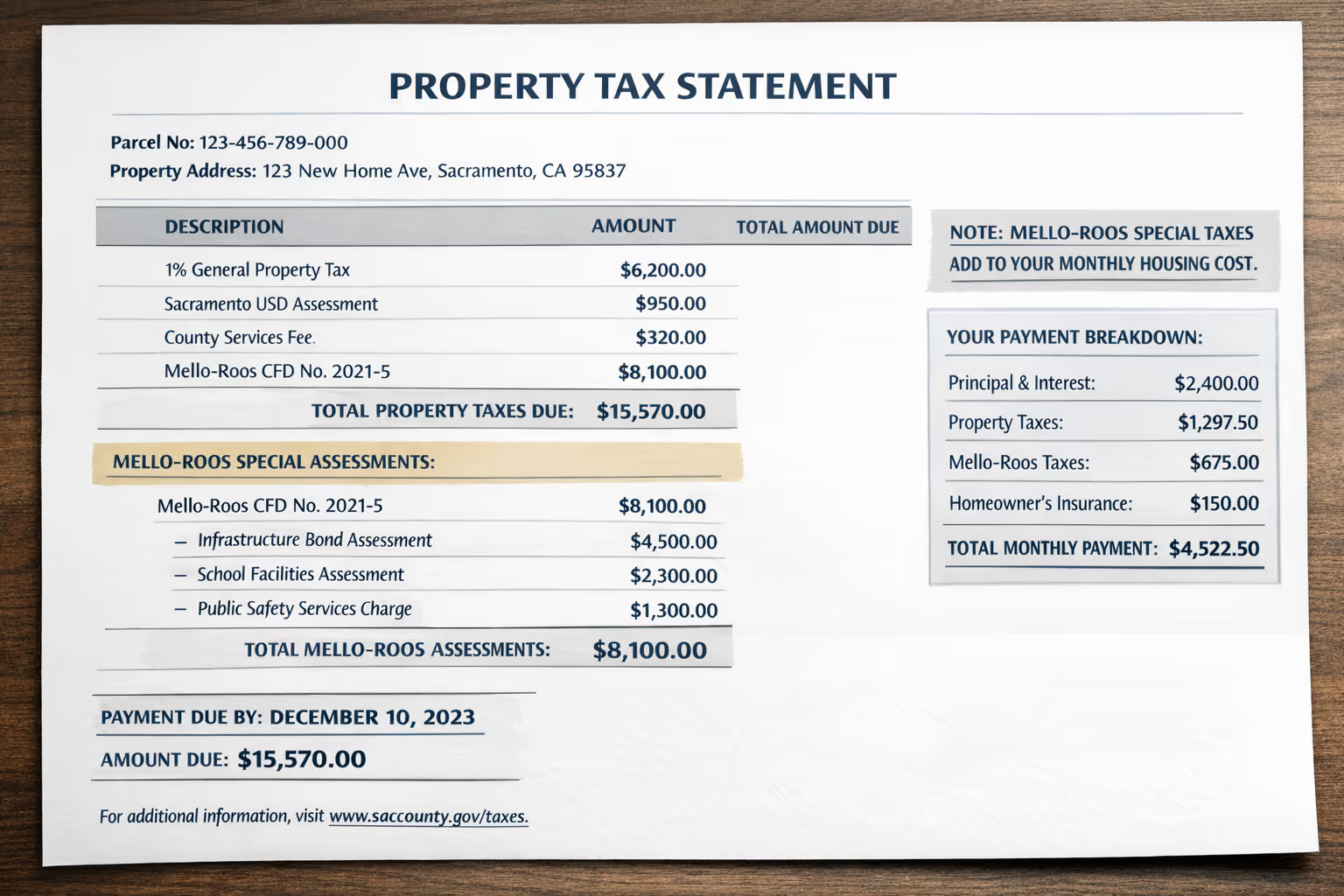
Mello-Roos is a special tax district that funds infrastructure—roads, schools, parks, fire stations—in newly developed areas. The tax appears on your property tax bill and adds to your monthly housing payment.
In established Sacramento neighborhoods, you'll typically pay only the base 1% property tax (plus any small voter-approved assessments). In new developments in Natomas, Elk Grove, Folsom, or Roseville, Mello-Roos can add another 0.5%–1.5% or more of the home's value annually.
Why This Matters for Incentive Comparisons
When evaluating a rate buydown's impact on your monthly payment, you need to account for total housing cost—not just principal and interest.
Example: On a $600,000 new construction home with a 1.5% Mello-Roos rate, you're paying an additional $9,000 per year ($750/month) beyond base property taxes. That $150/month savings from a rate buydown looks different when your total PITI (principal, interest, taxes, insurance) already includes a substantial special tax component.
Ask the builder for the current Mello-Roos rate and estimated annual amount. It's disclosed in community documents, but buyers often don't see it until deep in the contract process.
Decision Framework: Which Incentive Fits Your Situation?
Use this framework to identify which incentive category deserves your attention:
Start With Your Primary Constraint
If your main challenge is the monthly payment:
Focus on permanent rate buydowns. They provide lasting relief and accelerate equity building since more of each payment goes to principal at a lower rate.
This is often the priority for buyers whose debt-to-income ratio is tight or who want to preserve monthly cash flow for other financial goals.
If your main challenge is having enough cash to close:
Focus on closing cost credits. These directly reduce your upfront requirement, preserving savings for moving costs, furniture, emergency reserves, or simply making the purchase possible.
This is often the priority for first-time buyers who've saved enough for the down payment but have limited cushion beyond that.
If you can handle both payment and cash but want more home:
Focus on upgrades. Getting premium finishes included at purchase avoids the hassle, cost, and disruption of renovating after move-in. (Replacing flooring or countertops with a family living in the home is significantly more expensive and inconvenient than having it done during construction.)
If you're uncertain about staying long-term:
Lean toward temporary buydowns (2-1) or closing credits rather than permanent buydowns. The math on permanent buydowns typically requires staying in the home for five to seven years to recoup the benefit versus simply taking a credit.
Secondary Considerations
Planning to refinance soon? If you expect to refinance within two to three years (perhaps anticipating rate drops), paying for a permanent buydown today may not make sense. A 2-1 buydown or closing credit gives you flexibility.
Income expected to increase? A 2-1 buydown bridges you to higher earnings while keeping early payments manageable—as long as you've genuinely qualified at the full rate and aren't stretching.
Resale timeline? Certain upgrades (kitchen finishes, primary suite features, outdoor living space) tend to hold value better than highly personalized options.
Calculating the Real Value: A Practical Comparison
Suppose a Sacramento builder offers you a choice on a $575,000 home in Elk Grove (10% down, $517,500 loan):
| Incentive Option | What It Does | Best Fit |
| $15,000 permanent rate buydown | Reduces rate by approximately 0.5%, saving roughly $150–$175/month | Buyers staying 7+ years who prioritize long-term savings |
| $15,000 closing cost credit | Reduces cash needed at closing by up to $15,000 | Buyers with limited liquid savings beyond down payment |
| $15,000 upgrade package | Adds features valued at $15,000 (builder pricing) | Buyers who want specific finishes and can handle payment and cash |
The "right" answer depends entirely on your situation. A buyer with strong savings but tight monthly budget math should prioritize the buydown. A buyer who needs every dollar for the down payment should take the credit. A buyer comfortable on both fronts might value the upgraded kitchen more than either financing adjustment.
Red Flags and Fine Print to Watch
Incentives Contingent on Closing Dates
Builders frequently tie aggressive incentives to closing within 30–60 days. This works for move-in-ready inventory homes, but make sure your financing, inspections, and move timeline realistically support that window.
If the incentive requires an unrealistic closing date and you miss it, the terms may revert—or the builder may renegotiate less favorably.
"Up To" Language
"$25,000 in incentives!" often means "up to $25,000 if you select the right home, use the preferred lender, close by a specific date, and meet every condition." Read the purchase agreement carefully to understand what you're actually receiving.
Incentives Requiring Specific Loan Products
Some credits only apply if you use an adjustable-rate mortgage, a specific down payment amount, or a particular loan program through the preferred lender. Understand the tradeoffs before committing to a loan structure you wouldn't otherwise choose.
Upgrade Pricing vs. Market Pricing
As mentioned earlier, builder design center prices often significantly exceed retail or contractor costs. A $5,000 flooring upgrade might involve $2,500 in materials. That's not fraud—it covers the builder's installation, coordination, and margin—but factor it into your decision.
Questions to Ask Before Signing Anything
Bring these to your builder meeting and design center appointment:
Is this rate buydown permanent or temporary? If temporary, what's the exact structure?
Can I see a Loan Estimate showing my rate, APR, and all fees with the preferred lender?
What happens to unused closing credits—can they be applied elsewhere?
Are these incentives contingent on a specific closing date? What happens if we miss it?
What's the actual cost breakdown of the upgrade package?
Can I use an outside lender and still receive any portion of the incentives?
What is the current Mello-Roos rate for this community, and what's the estimated annual amount?
Are upgrade deposits refundable if the purchase doesn't close?
Taking the Next Step
Comparing builder incentives isn't about finding the biggest number—it's about finding the right fit for your cash position, monthly budget, and how long you plan to stay.
Before signing a purchase agreement with any Sacramento-area builder, consider getting an outside perspective on how their incentive package stacks up against your actual financing options.
Request an Incentive Comparison Review — I help buyers evaluate builder offers against independent loan quotes so you understand exactly what you're getting before you commit. Call or request a consult to walk through your specific situation.
Frequently Asked Questions
What's the difference between a 2-1 buydown and a permanent buydown?
A 2-1 buydown temporarily reduces your interest rate—by 2% in year one and 1% in year two—before reverting to the full note rate in year three. A permanent buydown reduces your rate for the entire loan term. The 2-1 provides early payment relief but doesn't lower your long-term borrowing cost, while a permanent buydown saves money every month you hold the mortgage. You must qualify at the full rate for either structure.
Can I negotiate builder incentives in Sacramento?
Builders have flexibility, especially on homes sitting in inventory longer or at the end of a quarter when sales targets matter. While advertised incentives set a baseline, asking about additional credits, upgraded options, or extended rate locks can yield results—particularly in slower market conditions. Inventory homes (already completed) typically offer more room than to-be-built contracts.
Do builder incentives affect the home's appraisal value?
Closing cost credits and rate buydowns don't directly affect appraised value—they adjust your financing, not the property. Upgrades may add some appraised value, though typically less than the builder's stated price. Appraisers base value on comparable sales in the area, not on what incentives or upgrades the builder offered.
Why do builders push their preferred lender so hard?
Builders often have ownership stakes or revenue-sharing arrangements with their affiliated mortgage companies. Using that lender keeps the transaction within their ecosystem and allows coordinated closing timelines. The incentives tied to preferred lenders offset this structure—but always compare total loan costs (rate, fees, APR) before committing.
What is Mello-Roos and how does it affect my payment?
Mello-Roos is a special tax district that funds infrastructure in newly developed California communities. It's added to your property tax bill and can significantly increase your monthly housing cost—sometimes by several hundred dollars. Most new construction communities in the Sacramento region have Mello-Roos; established neighborhoods typically don't. Ask for the specific rate and estimated annual amount before signing a purchase agreement.
About This Guide
This content was prepared by Tavon Willis, a California-licensed real estate salesperson (DRE #02095751) based in the Sacramento area. Tavon specializes in helping first-time buyers and relocating families navigate new construction purchases, including evaluating builder incentives, understanding financing options, and negotiating purchase terms. The guidance here reflects general principles and should be supplemented with advice from qualified mortgage and financial professionals for your specific situation.
Cited Works
[1] National Association of Home Builders — "Use of Sales Incentives by Home Builders." https://www.nahb.org/news-and-economics/housing-economics/special-studies/use-of-sales-incentives
[2] Consumer Financial Protection Bureau — "What Are Discount Points and Lender Credits?" https://www.consumerfinance.gov/ask-cfpb/what-are-discount-points-and-lender-credits-en-136/
[3] Freddie Mac — "Temporary Interest Rate Buydowns." https://guide.freddiemac.com/app/guide/section/5501.4
[4] Fannie Mae — "Qualifying Borrowers with Temporary Interest Rate Buydowns." https://singlefamily.fanniemae.com/originating-underwriting/mortgage-products/temporary-interest-rate-buydowns
[5] Consumer Financial Protection Bureau — "What Is a Closing Disclosure?" https://www.consumerfinance.gov/ask-cfpb/what-is-a-closing-disclosure-en-1983/
[6] Appraisal Institute — "Residential Property Appraisal and Improvements Analysis." https://www.appraisalinstitute.org/residential-appraisal
[7] Consumer Financial Protection Bureau — "What Is the Difference Between a Mortgage Interest Rate and an APR?"
https://www.consumerfinance.gov/ask-cfpb/what-is-the-difference-between-a-mortgage-interest-rate-and-an-apr-en-135/


