
Buying a new construction home in California comes with something resale homes don't: a builder warranty. And while that warranty sounds like protection, the truth is most buyers never actually read it until something goes wrong.
By then? You've missed deadlines. You didn't document the right things. And the coverage you thought you had turns out to be narrower than expected.
This guide walks you through exactly how to skim a California new home warranty booklet before signing—so you understand what's covered, what's excluded, and what notice deadlines could cost you if you miss them. We'll also cover what to document after closing to protect your claim rights down the road.
How California New Home Warranties Actually Work
California provides stronger warranty protections for new home buyers than many other states, thanks to Civil Code Sections 895-945.5, often called the "Right to Repair" law [1]. This framework establishes minimum construction standards builders must meet and outlines how defects should be addressed.
But here's the catch: the statutory protections set a floor, not a ceiling. Your builder's written warranty—the booklet you'll receive—may offer additional coverage beyond the minimums, or it may contain exclusions that limit your practical remedies.
Understanding both layers matters. The state sets baseline standards. The builder's warranty document governs your day-to-day claim process.
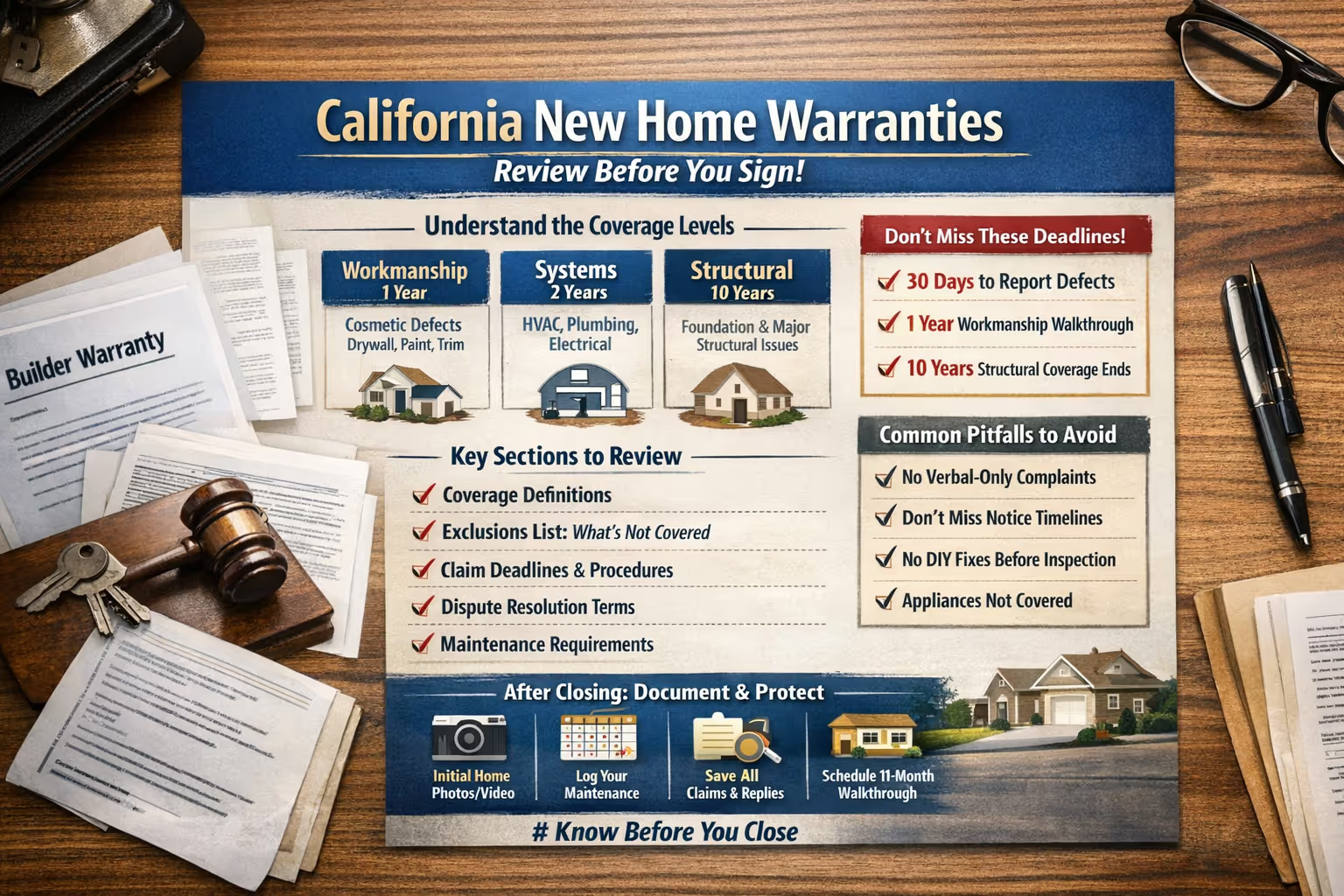
The Three-Tier Coverage Structure
Most California new home warranties follow a similar three-tier structure, though specific terms vary by builder and warranty provider:
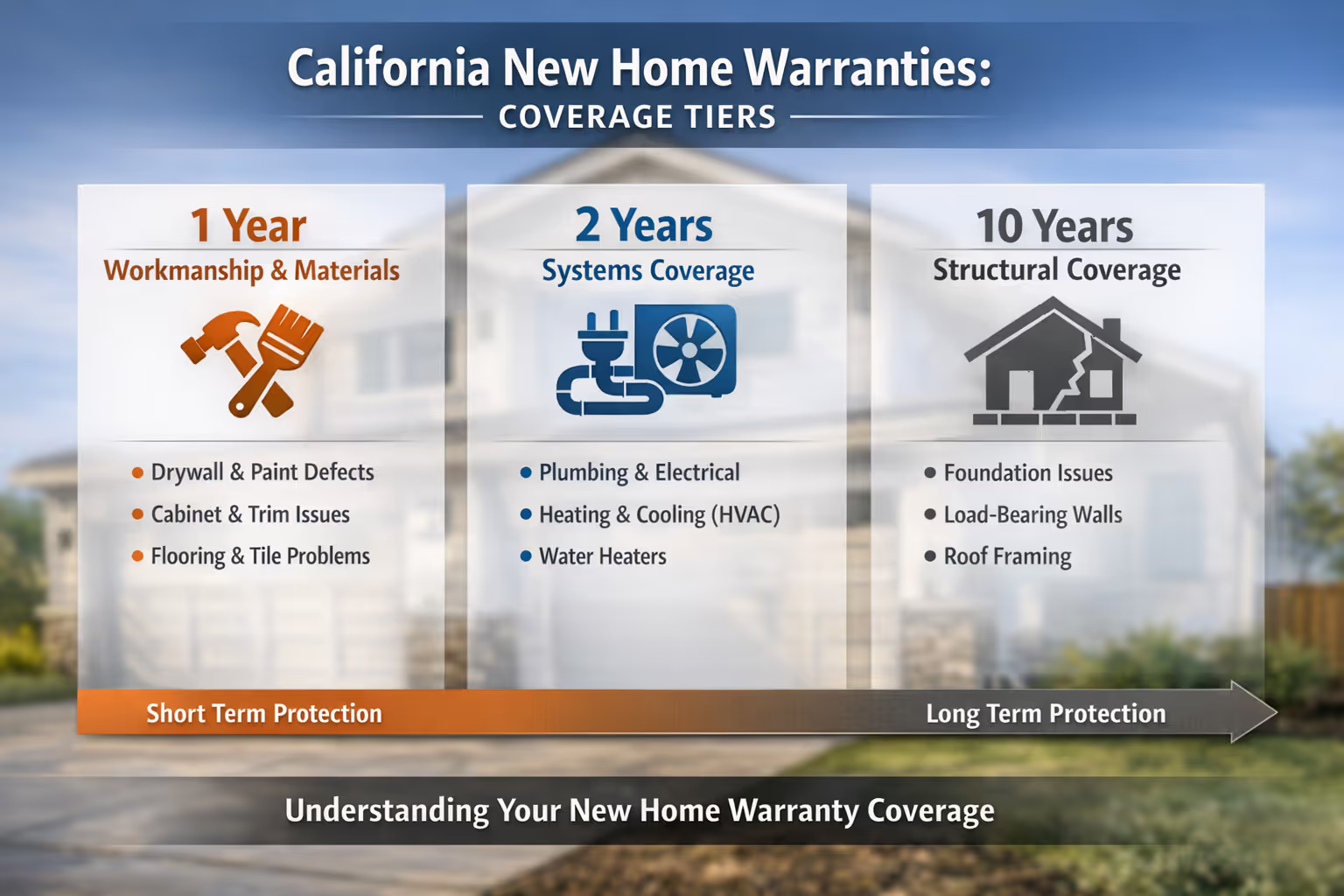
| Coverage Type | Typical Duration | What It Generally Covers |
| Workmanship & Materials | 1 year | Defects in construction quality—think drywall cracks, paint issues, cabinet alignment, trim gaps |
| Systems (Mechanical) | 2 years | Plumbing, electrical, HVAC, and other installed systems |
| Structural | 10 years | Major structural defects affecting load-bearing components, foundation issues, structural integrity |
These timeframes represent common industry practice, but your specific warranty may differ. Always confirm durations in your actual warranty document.
What to Review in Your Warranty Booklet Before Signing
Most warranty booklets run 20-40 pages. You don't need to read every word, but you absolutely need to find and understand these five sections.
1. Coverage Definitions: Workmanship vs. Systems vs. Structural
The warranty will define what falls into each coverage tier. Pay attention to the specific language.
Workmanship coverage typically addresses construction defects visible within the first year—things like:
Cracks in drywall or stucco
Gaps in flooring or trim
Door and window alignment issues
Grout problems in tile work
Systems coverage usually includes:
HVAC equipment and ductwork
Plumbing supply and drain lines
Electrical wiring and panels
Water heaters
Structural coverage generally covers:
Foundation and footings
Load-bearing walls and beams
Roof framing and trusses
Look for how these categories are defined. Some builders use broad definitions; others are narrow. The difference matters when you file a claim.
2. The Exclusions Section (Read This Carefully)
Every warranty contains exclusions—situations where coverage doesn't apply. Common exclusions in California new home warranties include:
Normal wear and tear (often broadly defined)
Homeowner negligence or improper maintenance
Changes or additions made after closing
Landscaping, irrigation, and exterior drainage (sometimes excluded entirely)
Appliances (often covered by manufacturer warranty only)
"Cosmetic" defects discovered after a certain window
Damage from natural disasters (earthquakes, floods)
Settling that falls within "acceptable tolerances"
The "acceptable tolerance" language deserves special attention. Builders often specify that certain types of movement, cracking, or variation are considered normal and not defects. These tolerances may be more generous to the builder than you'd expect.
3. Notice Deadlines and Claim Procedures
This section can make or break your ability to get repairs. Look for:
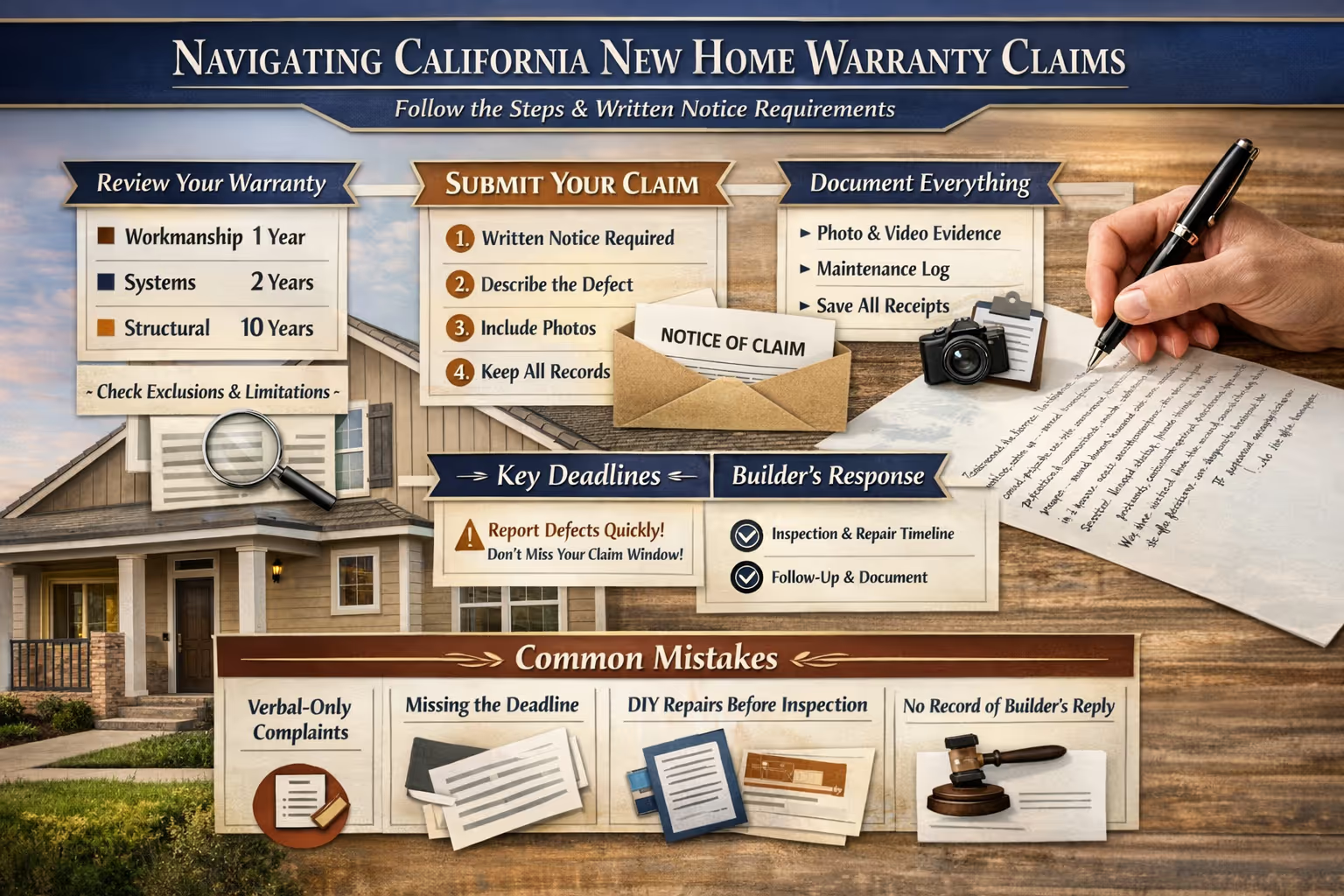
How to submit a claim: Most warranties require written notice. Some require specific forms. A few now accept online submissions. Verbal complaints often don't count.
Deadline for notice: Many warranties require you to report defects within a certain number of days of discovery—not just within the coverage period. Miss this window, and your claim may be denied even if you're within the coverage year.
Builder's response timeline: The warranty should specify how long the builder has to respond, inspect, and complete repairs.
Your obligations: Some warranties require you to provide access for inspection within specific timeframes or to allow the builder an opportunity to repair before seeking other remedies.
4. The Dispute Resolution Process
California's Right to Repair law includes a pre-litigation process that generally requires homeowners to notify builders of defects and give them an opportunity to repair before filing a lawsuit [1]. Your warranty may have additional dispute resolution requirements.
Look for:
Mandatory mediation or arbitration clauses
Whether you waive your right to a jury trial
Who selects the arbitrator or mediator
What claims are subject to arbitration vs. litigation
Arbitration clauses are common in California builder warranties. They're not necessarily bad—arbitration can be faster and less expensive than litigation—but you should know what you're agreeing to.
5. Maintenance Requirements That Affect Coverage
Many warranties condition coverage on proper homeowner maintenance. Look for a maintenance schedule or requirements section that specifies:
HVAC filter replacement frequency
Caulking and sealant maintenance
Gutter cleaning schedules
Foundation watering requirements (important in California's climate)
If the warranty says coverage is void without "proper maintenance," and you can't prove you maintained the home, you may have trouble with claims later.
What to Document After Closing (Your Protection Plan)
The warranty only helps if you can prove when defects appeared, that you reported them properly, and that you maintained the home. Here's what to document and how.
Week One: The Baseline Documentation
Within your first week of ownership, create a baseline record of your home's condition.
Video walkthrough: Record a slow, narrated walkthrough of every room, including:
All walls, ceilings, and floors (especially corners where cracks often appear)
Window and door operation (do they open, close, and lock smoothly?)
Cabinet doors and drawers
Tile grout lines
Exterior stucco, siding, and trim
Garage floor (note any existing cracks)
Driveway and walkways
Still photos: Take close-up photos of:
Areas around windows and doors
Bathroom caulking and grout
HVAC vents and returns
Water heater area
Under sinks (to document no existing water damage)
Save the documentation securely: Upload to cloud storage with timestamps. Email copies to yourself so you have dated proof of when the documentation was created.
Ongoing: The Maintenance Log
Create a simple log to track maintenance activities. This doesn't need to be complicated—a spreadsheet or notes app works fine. Record:
| Date | Activity | Who Performed | Notes/Receipts |
| Monthly | HVAC filter replaced | Homeowner | Filter brand/size |
| Quarterly | Checked caulking around showers | Homeowner | No issues noted |
| Annually | HVAC service | ABC Heating | Invoice #12345 |
Keep receipts for any maintenance work. If the builder later claims a problem resulted from neglected maintenance, your log becomes evidence.
When Problems Appear: The Defect Documentation Protocol
The moment you notice something that might be a warranty issue:
1. Photograph and video immediately
Take photos showing:
The defect itself (close-up)
The defect in context (wider shot showing location in the room)
Any damage or consequences of the defect
2. Note the date of discovery
Write down exactly when you first noticed the issue. Your warranty likely requires notice within a certain period of discovering a defect.
3. Submit written notice to the builder
Use whatever method the warranty specifies—usually a form, email, or certified mail. Include:
Your address and lot number
Date you discovered the defect
Specific location of the defect
Description of the problem
Photos attached
4. Keep a copy of everything
Save your submission confirmation, any email responses, and notes from phone calls (including date, time, and who you spoke with).
The 11-Month Walkthrough
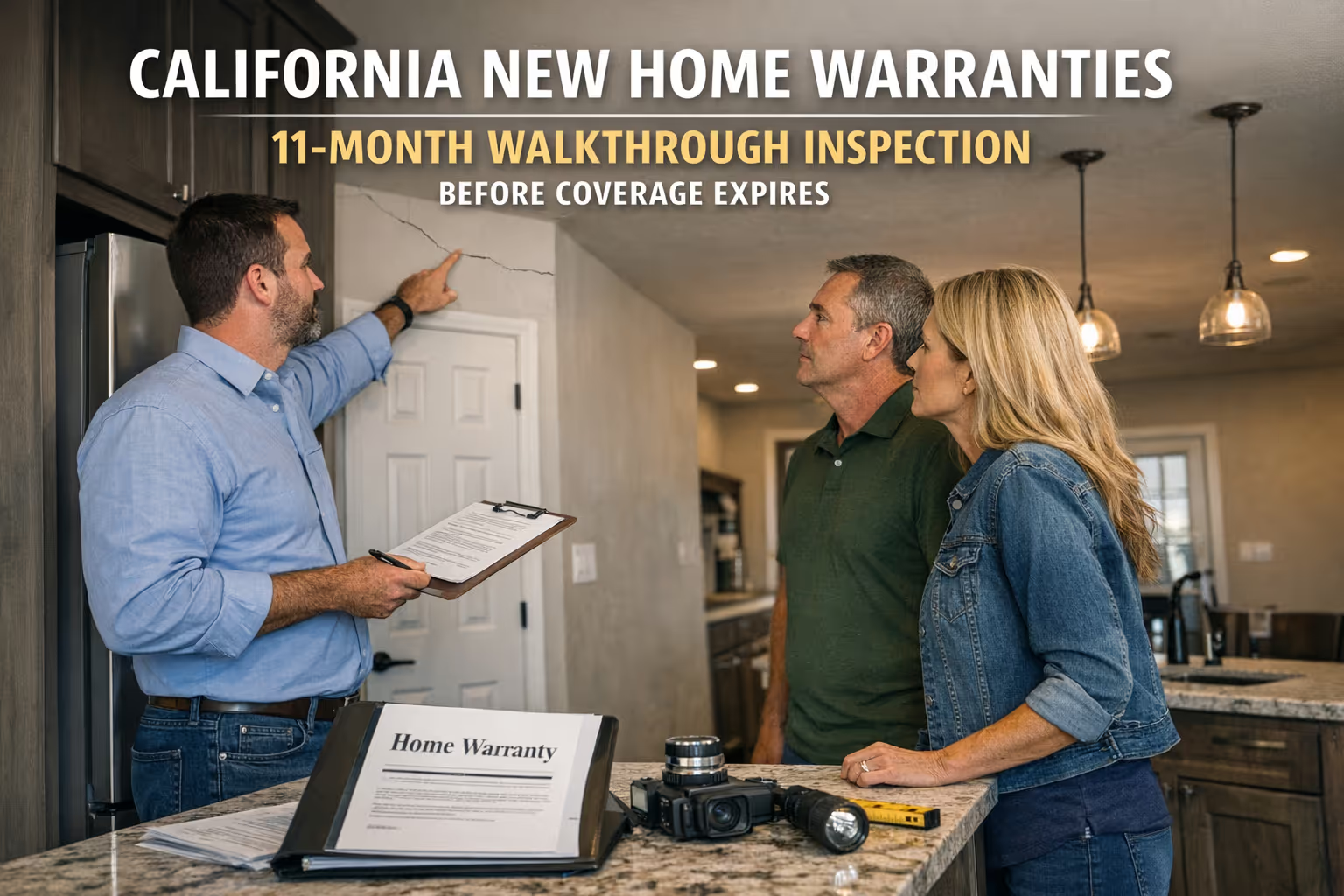
Most workmanship coverage expires at one year. Schedule a thorough walkthrough of your home around the 11-month mark to identify any issues before coverage ends.
Check systematically:
Interior: Walls, ceilings, floors, doors, windows, cabinets, tile, paint
Plumbing: Run all faucets, flush all toilets, check under sinks for leaks
Electrical: Test all outlets, switches, and fixtures
HVAC: Note any unusual sounds, uneven heating/cooling, or airflow issues
Exterior: Stucco, paint, drainage, driveway, walkways
Submit any warranty claims for issues discovered during this walkthrough while you're still within the coverage period.
Common Warranty Claim Mistakes to Avoid
Mistake 1: Verbal-Only Complaints
Calling the builder to complain isn't a warranty claim. You need written documentation submitted according to the warranty's procedures. If you call, follow up in writing.
Mistake 2: Missing the Discovery Deadline
The coverage period (1 year, 2 years, 10 years) is separate from the notice deadline. Your warranty may require you to report defects within 30 days of discovery, even if you're within the coverage period. Missing this deadline can void your claim.
Mistake 3: Making Repairs Before Builder Inspection
If you fix a problem yourself or hire someone before giving the builder a chance to inspect and repair, you may void your warranty claim. The builder typically has the right to inspect and attempt repair first.
Mistake 4: Not Documenting the Builder's Response
If the builder comes out, inspects, and says something isn't covered or is "within tolerance," get it in writing. If they promise to return and make repairs, document that too. Memories fade; paperwork doesn't.
Mistake 5: Assuming Appliances Are Covered
Most builder warranties don't cover appliances—those are typically under separate manufacturer warranties with different claim processes and deadlines. Register your appliances separately.
Understanding the California Right to Repair Process
If you have a construction defect and the builder isn't resolving it through the warranty process, California law provides a framework for next steps. Under Civil Code Sections 895-945.5, before filing a lawsuit for construction defects, homeowners generally must:
Provide the builder with written notice of the claimed defects
Allow the builder to inspect the property
Give the builder an opportunity to offer to repair the defects
This process has specific timelines and requirements [1]. The goal is to encourage resolution without litigation, but it also protects your right to pursue legal remedies if the builder doesn't adequately address legitimate defects.
For significant defect claims, consulting with an attorney who specializes in California construction defect law can help you navigate both the warranty process and any potential legal claims.
Questions to Ask Your Builder Before Closing
Before you sign, consider asking your builder:
What warranty provider are you using, and can I review the full warranty document before closing?
What is the exact process for submitting warranty claims?
What maintenance is required to keep the warranty valid?
What tolerances do you use for things like drywall cracks and floor levelness?
Is there a dedicated warranty department, and what are their contact hours?
How long do you typically take to respond to warranty claims?
Getting clear answers now prevents confusion later.
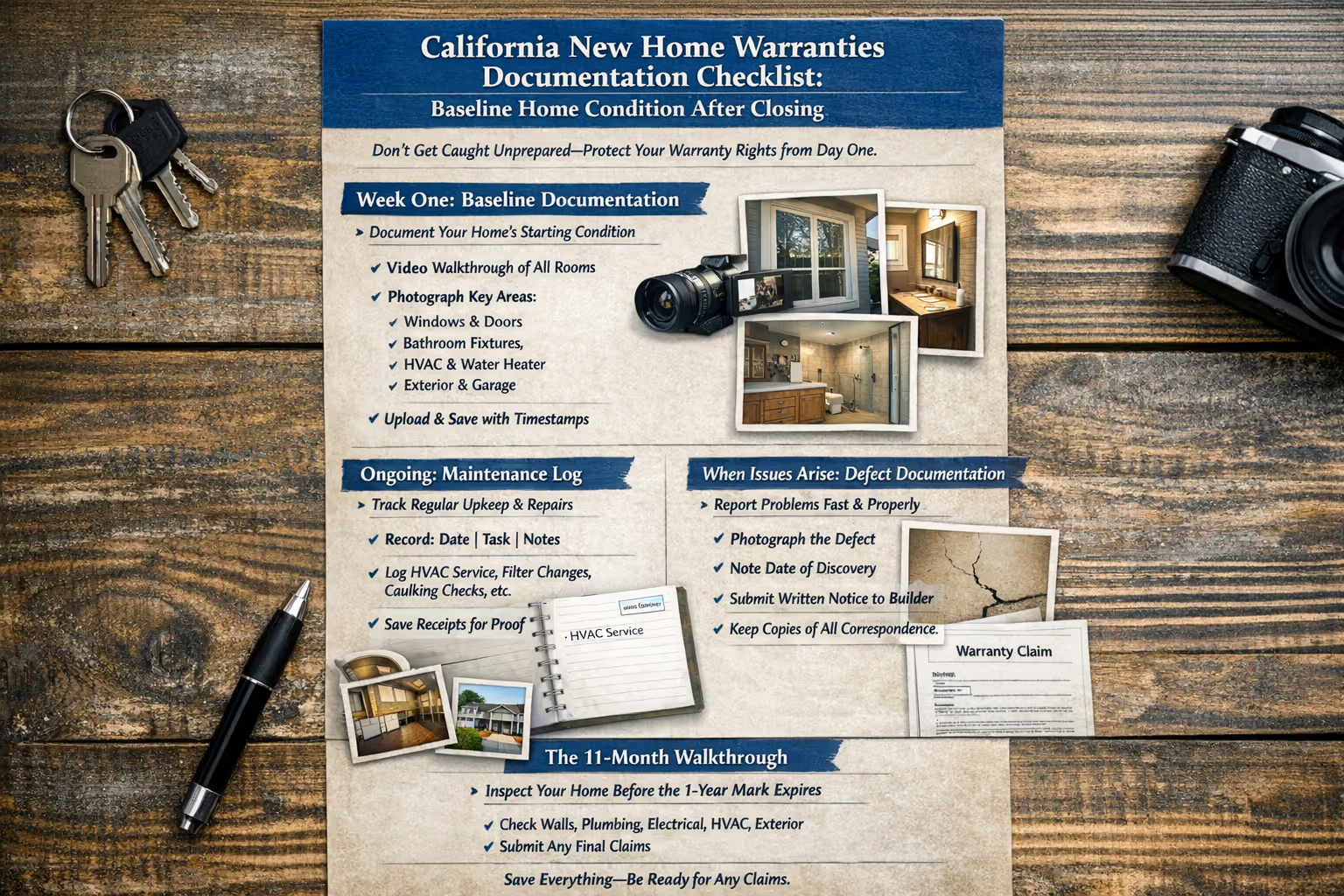
Your Pre-Sign and Post-Close Checklist
Before Signing
[ ] Obtained and reviewed the full warranty document
[ ] Identified coverage periods for workmanship, systems, and structural
[ ] Read the exclusions section completely
[ ] Found and noted the claim submission procedure and deadlines
[ ] Understood the dispute resolution process
[ ] Reviewed maintenance requirements
[ ] Asked builder any clarifying questions
After Closing
[ ] Completed baseline video and photo documentation within first week
[ ] Set up maintenance log
[ ] Registered appliances separately with manufacturers
[ ] Calendared 11-month walkthrough
[ ] Saved warranty document and claim forms in accessible location
[ ] Noted warranty department contact information
Ready to Review Your Warranty Before You Sign?
Understanding what your warranty actually covers—before you're standing in front of a leaky window or cracked foundation—puts you in a stronger position as a homeowner.
If you're buying new construction in the Sacramento or Elk Grove area and want a second set of eyes on your warranty document, send over your warranty PDF. I'll send you back a pre-sign review checklist tailored to what I see in your specific warranty terms.
Request a consult to talk through your new construction purchase and make sure you know exactly what protections you're getting.
Frequently Asked Questions
What's the difference between workmanship and structural coverage in California new home warranties?
Workmanship coverage typically lasts one year and addresses construction quality issues like drywall cracks, paint problems, and trim gaps—defects in how the home was built. Structural coverage typically lasts ten years and covers major defects affecting load-bearing components like the foundation, framing, and roof structure. Systems coverage (usually two years) sits in between, covering mechanical systems like plumbing, electrical, and HVAC.
How do I file a warranty claim on a new construction home in California?
Check your specific warranty document for the required claim process—most require written notice submitted through a specific form, email, or certified mail. Include your address, the date you discovered the defect, the exact location, a description of the problem, and photos. Keep copies of everything you submit and any responses you receive. Verbal complaints typically don't satisfy warranty notice requirements.
What voids a new construction warranty in California?
Common warranty voidance triggers include failing to perform required maintenance, making unauthorized modifications or repairs, not providing timely notice of defects (many warranties require notice within a set number of days of discovery), and not allowing the builder access to inspect and repair. Review your warranty's specific exclusions and conditions carefully—they vary by builder and warranty provider.
Should I do an 11-month walkthrough before my warranty expires?
Yes. Most workmanship coverage expires at one year, so scheduling a thorough inspection around the 11-month mark gives you time to identify and report issues while coverage is still active. Check interior surfaces, plumbing, electrical, HVAC, and exterior elements systematically. Submit warranty claims for any defects discovered before your coverage period ends.
Does the California Right to Repair law replace my builder warranty?
No—they work together. California Civil Code Sections 895-945.5 establish minimum construction standards and a pre-litigation process for construction defect claims. Your builder warranty is a separate contractual agreement that governs day-to-day claim procedures and may provide additional coverage beyond statutory minimums. Understanding both helps you know your full range of protections and remedies.
About This Guide
This article was created by Tavon Willis, a California-licensed real estate salesperson (DRE #02095751) serving the Greater Sacramento area, including Elk Grove and surrounding communities. With a focus on helping buyers—especially those purchasing new construction—navigate the homebuying process with clarity, Tavon provides education-first guidance on topics that matter to informed homeownership decisions. This content is for educational purposes and does not constitute legal advice. For specific warranty disputes or construction defect claims, consult with a qualified attorney.
Cited Works
[1] California Legislative Information — "Civil Code Sections 895-945.5." https://leginfo.legislature.ca.gov/


