

When I sit down with a first-time buyer in my Elk Grove office, I can usually tell within five minutes whether they've done any prep work. The ones who show up with questions written down and a general sense of their finances? We spend our time building an actual game plan. The ones who arrive cold? We spend most of the hour just getting oriented.
Both approaches are fine—I'm happy to meet you wherever you are. But if you want to walk out of your first consultation with a clear path forward instead of a longer to-do list, a little preparation goes a long way.
This guide covers exactly what happens during a first-time buyer consultation with a Sacramento-area Realtor, plus a 30-minute prep checklist you can knock out the night before.
One more thing worth knowing upfront: the initial consultation is free. You're not committing to anything by having a conversation. The goal is to figure out whether working together makes sense—and to give you clarity on your next steps either way.
Why the First Consultation Matters More Than Most Guides Admit
Most online advice about buying your first home jumps straight to pre-approval and house hunting. The consultation gets treated like a box to check.
That's a mistake.
A well-run first consultation accomplishes three things:
Clarifies your timeline and priorities so you're not chasing homes that don't fit your actual life
Identifies gaps in your financing readiness before they become deal-breakers mid-transaction
Establishes how you'll work together—communication preferences, decision-making pace, and expectations on both sides
I've had buyers show up convinced they needed a single-family home with a big yard, only to realize through our conversation that a newer townhome with low maintenance made more sense for their lifestyle. That kind of clarity early on saves weeks of looking at the wrong properties.

What Actually Happens During a First-Time Buyer Consultation
Every Realtor structures these meetings a bit differently. Here's how I typically run mine, broken into five parts.
1. Your "Why" and Timeline
I'll ask questions like:
Why are you looking to buy now?
When do you need to be in a home?
Is this purchase tied to a specific event (job start date, lease ending, growing family)?
These aren't small talk. Your answers shape how aggressively we need to search and which areas make sense given your commute, lifestyle, or other constraints.
A buyer who needs to close in 60 days because their lease is up has a very different search strategy than someone who's flexible for the next six months.
2. Budget and Financing Status
This is where your preparation pays off. I'll want to understand:
Have you talked to a lender yet?
Do you have a pre-approval letter, or are you still researching?
What's your estimated comfort zone for cash-to-close (not just down payment)?
Are you exploring specific loan programs—VA, FHA, conventional, or non-traditional paths like ITIN financing?
A note on pre-approval: You don't need a pre-approval letter before our first meeting. But having one changes the conversation significantly. With pre-approval in hand, we can discuss specific price ranges and neighborhoods with confidence. Without one, part of our time together will focus on connecting you with a lender as your immediate next step. [1]
If you're a veteran or active-duty military, mention that early. VA loans have specific benefits and requirements that affect your strategy, and I work with lenders who specialize in them.
3. Property Priorities and Trade-Offs
Here's where many first-time buyers get stuck. You might know you want three bedrooms and a backyard, but have you thought about:
New construction versus resale homes?
HOA communities versus non-HOA?
Commute tolerance (miles versus minutes versus remote work flexibility)?
School district boundaries (if that matters to your household)?
Part of my job is helping you distinguish between true must-haves and nice-to-haves—and flagging where your budget might require trade-offs.
I'll be direct with you: in most Sacramento-area price ranges, you probably can't get everything on your wish list. But if we're clear about what matters most, we can focus your search on properties that actually fit rather than ones that look good online but miss the mark.
4. The Sacramento Market Reality Check
The Greater Sacramento area—including Elk Grove, Roseville, Folsom, Rancho Cordova, and surrounding communities—has its own patterns that affect how you should approach your search.
During our consultation, I'll give you a realistic snapshot of current conditions:
Inventory levels: How many homes are actually available in your price range right now? In some brackets, you might be competing for a handful of listings. In others, you'll have more options to choose from.
Offer competitiveness: Are homes selling at list price, above, or below? How many offers are typical? This varies significantly by area and price point.
Timeline expectations: How long should you expect from accepted offer to keys in hand? For resale homes, plan on 30-45 days in most cases. New construction operates on completely different timelines—sometimes move-in ready, sometimes six months out.
I'm not trying to predict the market. I'm trying to set your expectations so you're not caught off guard when things move quickly—or when they don't.
If you're considering areas like Elk Grove or Natomas for their newer housing stock, or looking at established neighborhoods in Land Park or East Sacramento, the dynamics differ. We'll talk through what's realistic for your specific targets.
5. How You'll Work Together
Buyer representation has evolved significantly. Recent industry changes mean the process for working with a buyer's agent now involves clear written agreements about services and compensation before we tour homes together. [2]
During our consultation, I'll explain:
What buyer representation means and what services are included
How compensation works in today's market
When you'll need to sign a Buyer Representation Agreement (required before touring properties)
Communication preferences—do you want texts, calls, emails, or portal updates?
How quickly you'll need to make decisions when the right home appears
This conversation protects both of us. You'll know exactly what to expect, and I'll understand how to support your decision-making style. Some buyers want me to give strong recommendations. Others prefer to process information independently and come back with questions. Either approach works—I just need to know which one fits you.
The 30-Minute Pre-Consult Prep Checklist
Want to make the most of your consultation? Block 30 minutes the night before and work through this list.
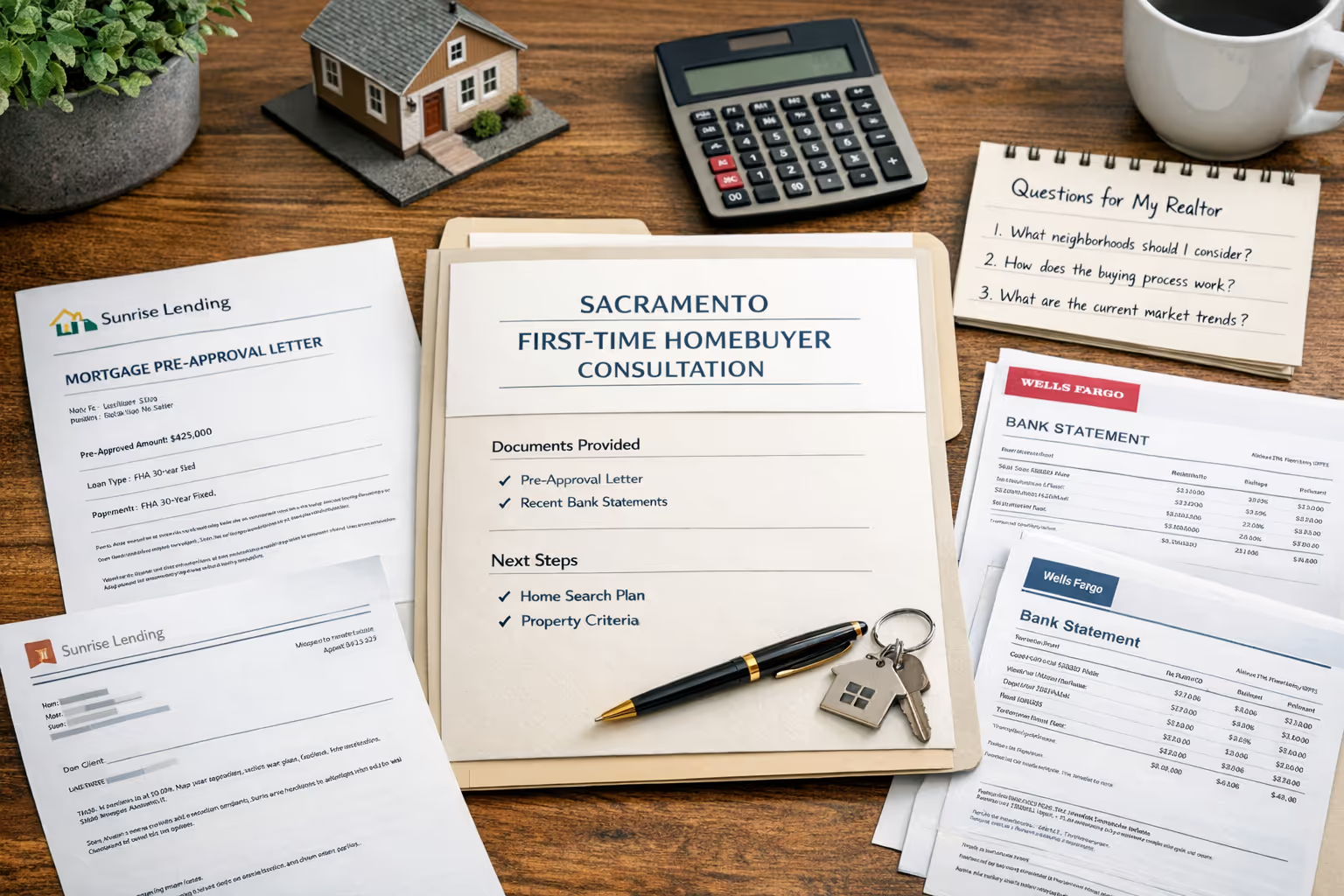
Documents to Gather (10 minutes)
| Document | Why It Matters |
| Pre-approval letter (if you have one) | Shows your verified budget range and signals readiness |
| Recent pay stubs (2 most recent) | Helps discuss financing options and income stability |
| Bank statements (2 months, all accounts) | Shows cash reserves for down payment, closing costs, and reserves |
| Gift letter draft (if applicable) | Clarifies if family assistance is part of your plan |
| Valid ID (driver's license or passport) | Basic verification for future paperwork |
Don't have a pre-approval yet? Bring whatever financial picture you can share. I can recommend lender partners to contact as your next step—including those experienced with VA loans, FHA, and non-traditional financing paths.
Questions to Answer for Yourself (10 minutes)
Write down your answers before we meet:
What's driving your timeline? (Lease end date, job start, life event, or flexible?)
What neighborhoods or cities interest you most—and why?
What are your top three non-negotiables in a home?
What would you compromise on if needed?
How do you prefer to communicate during the search process?
Having these answers ready means we can skip the basics and dig into strategy.
Questions to Ask Your Realtor (10 minutes)
Prepare at least three questions for the consultation. Consider:
How do you typically work with first-time buyers?
What should I understand about buyer representation agreements?
Based on what I've shared, what gaps do you see in my readiness?
How do you handle situations where I want to see a new construction community?
What's your availability for showings given my schedule?
Having your own questions signals you're serious—and helps you evaluate whether the Realtor you're meeting is the right fit.
Common First-Time Buyer Mistakes (and How to Avoid Them)
After working with first-time buyers throughout Sacramento and Elk Grove, I see the same patterns derail people early in the process.
Mistake #1: Skipping Pre-Approval
Some buyers want to "just look around" before talking to a lender. The problem? You might fall in love with homes outside your actual price range—or lose out on a property because you couldn't submit an offer fast enough.
In a market where well-priced homes can receive multiple offers within days, not having pre-approval ready puts you at a serious disadvantage.
The fix: Even a quick pre-approval conversation before your Realtor consultation puts you ahead of most buyers. It doesn't commit you to anything—it just gives you clarity on your actual numbers.
Mistake #2: Underestimating Cash-to-Close
Your down payment is just one piece of the puzzle. Cash-to-close also includes:
Closing costs (lender fees, title insurance, escrow fees)
Prepaid expenses (homeowner's insurance, property taxes, HOA dues if applicable)
Reserves your lender may require
The Consumer Financial Protection Bureau notes that closing costs typically range from 2% to 5% of the loan amount—on top of your down payment. [3]
For a $450,000 home with 5% down, you might need $22,500 for the down payment plus another $9,000-$22,500 in closing costs and prepaids. That's a significant difference from what many buyers initially expect.
The fix: Ask your lender for a detailed estimate of total cash needed, not just the down payment. Programs like CalHFA offer down payment assistance for qualifying buyers—worth exploring if cash-to-close is tight.
Mistake #3: Not Understanding What Your Agent Actually Does
Buyer representation goes far beyond unlocking doors for showings. Your agent negotiates on your behalf, coordinates inspections, reviews disclosures, manages timelines, and advocates for your interests from contract through closing.
The National Association of REALTORS® outlines these fiduciary duties as core to the buyer-agent relationship. [4]
The fix: Use your first consultation to understand exactly what services your Realtor provides and how they'll communicate throughout the process. If something isn't clear, ask.

New Construction: A Note for Sacramento-Area Buyers
If you're considering new construction homes in Sacramento, Elk Grove, Natomas, or Rancho Cordova, bring it up during your consultation.
Here's why it matters: Walking into a builder's sales office without your own representation can limit your options. Builder sales representatives work for the builder—not for you.
Having your own Realtor involved from the beginning means someone is:
Reviewing contracts (builder contracts are typically non-negotiable, but that doesn't mean you shouldn't understand what you're signing)
Explaining builder incentives (interest rate buy-downs, closing cost credits, upgrade allowances)
Advocating for your interests during construction and at final walkthrough
Watching timelines and holding the builder accountable
One thing I tell every buyer considering new construction: register me as your agent on your first visit to any sales office. Most builders accommodate buyer representation, but only if you establish the relationship upfront. Walk in alone first, and you may lose the ability to have representation on that purchase. [5]
New construction also operates on different timelines. Some homes are move-in ready. Others require months of construction with potential delays. Understanding how that fits your timeline is part of what we'll cover.
What Happens After Your First Consultation
A good consultation ends with clear next steps. Depending on where you are in the process, that might look like:
If you're not pre-approved: Lender referrals and a timeline for completing that step
If you're pre-approved and ready: A search strategy and schedule for your first showings
If you're still deciding: Resources to review, with a follow-up date to reconnect
You should leave feeling clearer about your path—not more confused. If something wasn't explained well, a good Realtor welcomes follow-up questions.
Ready to Start Your Sacramento Homebuying Journey?
Buying your first home is one of the bigger financial decisions you'll make. The right preparation—and the right guidance—can make the difference between a stressful experience and one that builds your confidence.
If you're a first-time buyer in Sacramento, Elk Grove, or the surrounding area and want a no-pressure conversation about your options, I'm happy to help. Bring your documents and questions, and we'll build a plan that fits your timeline, budget, and goals.
Before reaching out, think through these three questions (they'll help us make the most of our time):
Have you spoken with a lender yet, or do you need recommendations?
What's your ideal timeline for being in a new home?
Are you interested in new construction, resale homes, or both?
Frequently Asked Questions
What should I bring to my first meeting with a Realtor as a first-time buyer?
Bring your pre-approval letter if you have one, recent pay stubs, two months of bank statements, and a valid ID. If you're receiving gift funds for your down payment, bring documentation of that arrangement. Having these ready allows your Realtor to give specific guidance tailored to your situation rather than generic advice that may not apply.
Do I need to be pre-approved before meeting with a Realtor?
Pre-approval isn't required for your first consultation, but it significantly changes what you can accomplish together. With pre-approval, you can discuss specific price ranges and neighborhoods with confidence. Without it, part of your meeting will focus on getting you connected with a lender as an immediate next step.
How long does a first-time buyer consultation usually take?
Most thorough consultations last between 45 minutes and an hour. This allows time to cover your timeline, budget, property preferences, local market conditions, and how you'll work together. Rushing this conversation often leads to misaligned expectations later—better to invest the time upfront.
What's the difference between pre-qualification and pre-approval?
Pre-qualification is typically a quick estimate based on self-reported financial information—useful for ballpark numbers but doesn't carry much weight. Pre-approval involves a lender actually verifying your income, assets, and credit, resulting in a letter that sellers take seriously. For competitive markets, pre-approval is the stronger position. [1]
Does the initial Realtor consultation cost anything?
No. The first consultation is free and doesn't commit you to anything. It's a chance for both of us to determine whether working together makes sense and to give you clarity on your next steps regardless of what you decide.
Why should I have a Realtor if I'm buying new construction?
Builder sales representatives work for the builder, not for you. Having your own Realtor means someone reviews contracts, explains incentives objectively, and advocates for your interests throughout the process. Most builders accommodate buyer representation when you register your agent at your first visit to their sales office.
About the Author
Tavon Willis is a California-licensed real estate salesperson (DRE #02095751) serving Sacramento, Elk Grove, and surrounding communities. With a focus on first-time homebuyer education and new construction guidance, Tavon helps clients make informed decisions about homeownership as part of their long-term financial planning. He is affiliated with LPT Realty, Inc.
Cited Works
[1] Consumer Financial Protection Bureau — "Getting a Mortgage: What to Know Before You Apply." https://www.consumerfinance.gov/owning-a-home/prepare/
[2] National Association of REALTORS® — "What Buyers and Sellers Need to Know About Recent Changes." https://www.nar.realtor/the-facts
[3] Consumer Financial Protection Bureau — "What Are Closing Costs?" https://www.consumerfinance.gov/ask-cfpb/what-are-closing-costs-en-1845/
[4] National Association of REALTORS® — "The Value of a REALTOR®." https://www.nar.realtor/about-nar/policies/the-value-of-a-realtor
[5] California Department of Real Estate — "Real Estate Advertising Guidelines." https://www.dre.ca.gov/files/pdf/re27.pdf


