

Most new construction neighborhoods across the Sacramento region require HOA membership. If you're buying in Folsom Ranch, Elk Grove's master-planned communities, or one of the new developments in Roseville or Natomas, chances are you'll sign HOA documents at closing.
That reality doesn't have to be a problem—but it does require preparation. I've walked buyers through HOA disclosures that looked intimidating at first glance, only to find manageable communities with solid finances. I've also seen buyers nearly close on homes where the reserve study revealed trouble ahead.
The difference between those outcomes? Knowing where to look and what actually matters.
This guide gives you a prioritized approach to reviewing HOA documents, a deal-breaker checklist you can use during your contingency period, and the Sacramento-specific context that generic HOA articles miss.
Why Sacramento New Construction Comes With HOAs
Builders establish HOAs in new developments to manage shared amenities and enforce architectural standards. In communities like those built by Lennar, Toll Brothers, or Taylor Morrison across the Sacramento region, the HOA maintains pools, parks, clubhouses, common landscaping, and sometimes front-yard maintenance.
California's Davis-Stirling Common Interest Development Act governs how these associations operate [1]. The law requires HOAs to provide specific financial disclosures and protects certain homeowner rights—which means you'll receive a stack of documents during escrow.
For new construction specifically, the builder typically controls the HOA during initial sales. Once enough homes sell (often 50–75%), control transfers to an elected homeowner board. This transition matters because decisions made during builder control—how reserves are funded, what maintenance is deferred, whether infrastructure was properly completed—affect the HOA's long-term health.

What Sacramento New Construction HOA Fees Typically Cover
Monthly dues generally fund:
Common area maintenance: landscaping, irrigation, lighting, and signage
Amenity operations: pools, fitness centers, playgrounds, and clubhouses
Insurance: coverage for shared structures and common areas
Management fees: the company that handles day-to-day operations
Reserve contributions: savings for future major repairs
Some Sacramento-area communities bundle additional services into dues—front-yard landscape maintenance, trash collection, or community internet. Always clarify exactly what's included before comparing fees between communities.
Realtor Insight: I've seen buyers surprised to learn that two communities with similar amenities had vastly different dues. The difference often comes down to whether front-yard maintenance is included and how aggressively the HOA funds reserves. A $250 monthly fee with well-funded reserves may be a stronger value than a $175 fee with underfunded reserves heading toward a special assessment.
Understanding CC&Rs: The Rules That Shape Daily Life
CC&Rs—Covenants, Conditions, and Restrictions—are recorded documents that run with the property [2]. They bind every owner, current and future, regardless of whether you read them before closing.
Common CC&R Provisions in Sacramento New Construction
Most new construction CC&Rs address:
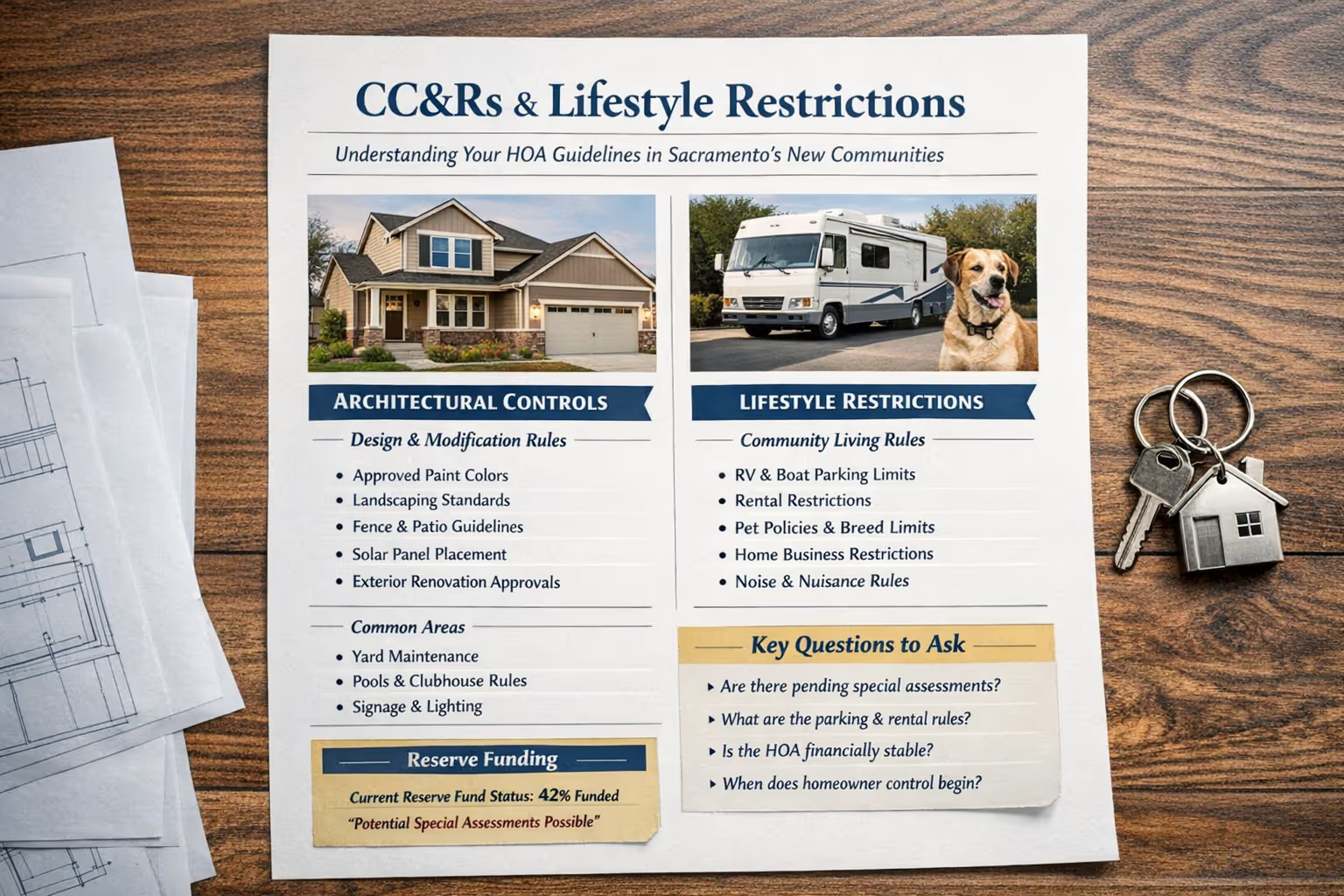
Architectural controls: exterior paint colors, landscaping requirements, fencing styles, solar panel placement, and modification approval processes
Vehicle rules: restrictions on RV/boat parking, commercial vehicles, and requirements to park inside garages
Rental restrictions: minimum lease terms, caps on rental percentages, or tenant screening requirements
Pet policies: breed restrictions, size limits, and number of animals allowed
Home business limitations: restrictions on signage, client visits, or delivery frequency
Noise and nuisance standards: quiet hours and short-term rental prohibitions
California Civil Code requires HOAs to provide these governing documents to prospective buyers through escrow [3]. You'll receive them during your contingency period—don't wait until closing week to review them.
Why CC&Rs Deserve Your Attention
That RV you're planning to buy? The CC&Rs might prohibit street parking and require enclosed storage you don't have. The home-based consulting business generating your income? Some associations restrict how many client visits you can have monthly. The rental income you're counting on if you relocate for work? Rental caps could eliminate that option entirely.
CC&Rs are legally enforceable restrictions. Violations can result in fines, liens against your property, and in persistent cases, lawsuits from the HOA.
Reserve Studies and Special Assessments: Reading the Financial Health
Two documents reveal whether an HOA is financially prepared or heading toward trouble: the reserve study and the assessment history.
What a Reserve Study Tells You
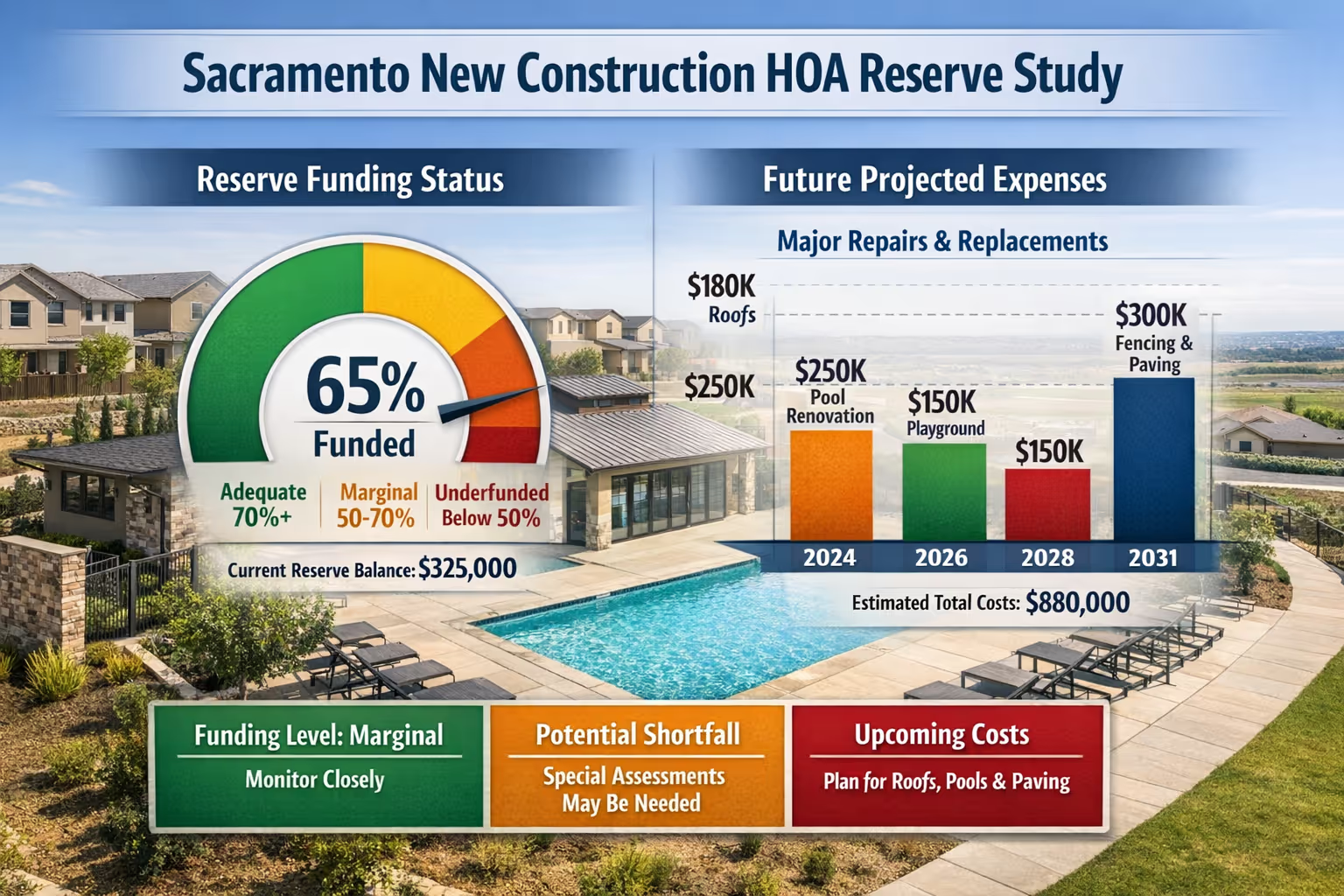
A reserve study is a long-range planning document that identifies major components—roofs on shared structures, pool resurfacing, road repaving, perimeter fencing—and projects when they'll need repair or replacement [4]. California law requires HOAs to conduct reserve studies at least every three years.
The key metric: percent funded. This number tells you how much the HOA has saved compared to how much it should have saved for upcoming repairs.
Above 70%: Generally considered adequate
50–70%: Marginal; monitor closely
Below 50%: Underfunded; increased risk of special assessments
Special Assessments: When Reserves Fall Short
When an HOA doesn't have enough money for a necessary repair, it levies a special assessment—a one-time charge to all owners. These can range from a few hundred dollars to tens of thousands depending on the project.
California Civil Code Section 5605 limits the board's ability to impose special assessments exceeding 5% of budgeted gross expenses without membership approval [5]. However, emergency repairs and certain circumstances allow exceptions.
In new construction communities, special assessments are less common initially but can arise when: ... Construction defects (e.g., faulty roofing, drainage issues) emerge that were not properly addressed during the warranty period or by the builder.
The builder underestimated infrastructure costs or deferred maintenance
Construction defects require legal action and repairs
Amenities were promised but not fully funded
The original reserve study used optimistic assumptions
Realtor Insight: A buyer I worked with almost purchased in a community where the reserve study showed 35% funding with the community pool and perimeter fencing both approaching end of life. A deeper look at board meeting minutes revealed the board had already discussed a potential $8,000 per-unit special assessment. That context changed the entire affordability calculation.

A Prioritized Approach to HOA Document Review
HOA disclosure packages often run 100+ pages. Trying to read every word leads to overwhelm; skimming randomly leads to missed red flags. This prioritized approach helps you focus on what matters most.
Important: This is a strategy for knowing where to look first—not a replacement for thorough review. Complex legal and financial documents may warrant professional review, particularly if you identify concerns.
Step 1: Financial Health Indicators
Open the most recent budget and reserve study summary. Look for:
Reserve funding percentage: Above 70% is generally adequate; below 50% raises concerns
Monthly dues trend: Have they increased significantly in recent years?
Reserve contribution percentage: What portion of monthly dues goes toward reserves?
What to watch for: A low reserve percentage combined with aging infrastructure suggests special assessments may be coming.
Step 2: Assessment History
Find the assessment disclosure or collection policy. Check for:
Any special assessments in the past five years
The amounts and stated purposes
Current delinquency rates (high delinquency strains HOA finances)
What to watch for: Multiple special assessments or delinquency rates above 10–15% indicate potential financial instability.
Step 3: Lifestyle-Relevant CC&R Sections
Search the CC&Rs for keywords relevant to your situation:
"Vehicle" or "parking" if you own an RV, boat, or work truck
"Rental" or "lease" if you might rent the property later
"Pet" or "animal" if you have or plan to have pets
"Business" if you work from home
"Solar" if you're considering panels
"Modification" or "architectural" for approval processes
What to watch for: Restrictions that directly conflict with your current lifestyle or near-term plans.
Step 4: Recent Board Meeting Minutes
The last 6–12 months of board meeting minutes reveal current issues:
Ongoing disputes or litigation
Deferred maintenance discussions
Proposed rule changes or fee increases
Vendor problems or management company changes
What to watch for: Mentions of construction defect litigation, significant deferred maintenance, or contentious board disputes.
Step 5: Insurance and Litigation Status
Review the insurance summary and any litigation disclosures:
Does the HOA carry adequate liability and property insurance?
Is there pending or threatened litigation?
Has the HOA been involved in construction defect claims?
What to watch for: Inadequate insurance coverage or ongoing litigation without clear resolution timelines.
The HOA Deal-Breaker Checklist
Not every concerning item should stop a purchase. This checklist distinguishes true deal-breakers from issues that may be negotiable or manageable.
Affordability Deal-Breakers
| Issue | Consider It a Deal-Breaker When... |
| Monthly dues exceed budget | Dues + mortgage + taxes + insurance > 36% of gross income |
| Reserve funding critically low | Below 30% with major components nearing end of life |
| Pending special assessment | Assessment amount exceeds your cash reserves |
| Rapid dues increases | More than 20% increase in past two years without clear justification |
Lifestyle Deal-Breakers
| Issue | Consider It a Deal-Breaker When... |
| Vehicle restrictions | You own an RV/boat with no compliant storage solution available |
| Pet restrictions | Your current pet violates breed, size, or number limits |
| Rental restrictions | You may need rental income flexibility within 3–5 years |
| Home business restrictions | Your income depends on home-based work that violates rules |
| Architectural controls | Approval process is unreasonably restrictive for planned modifications |
Financial Stability Deal-Breakers
| Issue | Consider It a Deal-Breaker When... |
| Delinquency rate | Above 15% of units delinquent |
| Construction defect litigation | Unresolved claims without adequate insurance or reserves |
| Management instability | Multiple management company changes in recent years |
| Board dysfunction | Inability to achieve quorum or ongoing legal disputes among members |
Questions Worth Asking Before You Commit
Beyond document review, these questions provide important context:
Ask the builder (during the sales phase):
When will HOA control transfer to homeowners?
What amenities are planned but not yet built?
Are there any pending construction defect claims in other phases or communities?
Ask the HOA management company:
What's the current reserve funding percentage?
Are any special assessments planned or under discussion?
What are the most common rule violations and how are they enforced?
Ask yourself:
Can I comfortably afford these dues for the next 5–10 years, assuming modest annual increases?
Do any restrictions conflict with how I want to live?
Am I comfortable with the level of community involvement required?
How HOA Costs Affect Your Total Housing Budget
When calculating affordability, HOA dues impact both your debt-to-income ratio and your total housing cost. Lenders include HOA dues when calculating your housing expense ratio, which may affect how much loan you qualify for.
Consider this comparison:
| Scenario | Monthly HOA | Annual Cost | 10-Year Cost |
| Community A | $150 | $1,800 | $18,000+ |
| Community B | $350 | $4,200 | $42,000+ |
Over a decade, the difference between $150 and $350 monthly fees exceeds $20,000—before accounting for annual increases. Factor this into total cost of ownership, not just monthly budgeting.
Sacramento-Specific HOA Considerations
New construction communities across the Sacramento region face some realities worth understanding:
Mello-Roos and HOA fees are separate charges. Many new developments in Folsom, Roseville, Elk Grove, and Natomas carry Community Facilities District (CFD) assessments—often called Mello-Roos—in addition to HOA dues [6]. These fund public infrastructure like schools, roads, and fire stations. They appear on your property tax bill, while HOA dues are typically paid separately. When evaluating affordability, add both to your monthly housing cost calculation.
Water and landscaping costs vary significantly. California's climate means irrigation and landscape maintenance represent substantial HOA expenses. Communities with extensive common areas, lakes, or golf courses may face budget pressure during drought years when water costs increase or landscaping requires replacement.
Phased developments shift over time. In communities built across multiple phases—common with large Sacramento-area builders—the budget and dues may shift as new phases complete. More homes can mean more dues collected, but also more amenities to maintain and potentially more infrastructure the HOA becomes responsible for once the builder exits.
What monthly dues look like locally. While fees vary based on amenities, new construction HOA dues in the Sacramento region often range from roughly $100–150 monthly for basic maintenance-focused communities to $300–400+ monthly for amenity-rich master-planned communities with pools, fitness centers, and extensive common areas. Communities with golf courses or lake amenities may run higher.
When HOA Documents Deserve a Closer Look
If your document review reveals any of these situations, consider seeking additional guidance before removing contingencies:
Reserve funding below 50% in a community more than five years old
Active or pending construction defect litigation
Special assessment language in recent board minutes
Delinquency rates exceeding 10%
Multiple management company changes within a few years
Restrictions that may affect your intended use of the property
A real estate attorney can review CC&Rs for enforceability concerns. A CPA can help you understand the financial implications of low reserves or pending assessments. Your agent can help you evaluate whether the issues warrant renegotiation, additional contingency time, or walking away.
Ready to Evaluate HOA Documents With Confidence?
Understanding HOA obligations before you buy protects both your budget and your lifestyle. But reviewing these documents alongside builder contracts, financing terms, and neighborhood factors can feel overwhelming.
If you're considering new construction in the Sacramento area and want help evaluating HOA obligations alongside your other decision factors, request a consult. We can walk through HOA documents together for properties you're seriously considering and identify what matters for your specific situation.
Frequently Asked Questions
What happens if I violate HOA rules in a new construction community?
Violations typically begin with a written notice from the management company, followed by an opportunity to correct the issue within a specified timeframe. If the violation continues, the HOA can impose fines according to its enforcement policy. California law requires HOAs to follow specific procedures before imposing fines, including providing written notice and an opportunity for you to be heard by the board [7]. Persistent violations can result in liens against your property.
Can HOA dues increase after I buy?
Yes. HOA boards can raise dues annually based on budget needs and reserve funding requirements. California law requires certain notification procedures for increases above specified thresholds. Before purchasing, review the HOA's historical dues increases over the past three to five years to understand the trend. Annual increases of 3–5% are common; larger increases may signal underfunding or deferred maintenance catching up.
How do I find out if an HOA has financial problems?
Review the reserve study funding percentage, compare recent budgets to actual expenses, check delinquency rates, and examine special assessment history. California law requires HOAs to disclose this information to prospective buyers. A reserve funding level below 50% combined with aging infrastructure and recent special assessments suggests potential financial stress. Board meeting minutes often reveal discussions about upcoming expenses that haven't yet resulted in formal assessments.
Are HOA fees tax-deductible for primary residences?
Generally, HOA fees for a primary residence are not tax-deductible. However, if you use part of your home for a qualified home office, a portion of HOA fees may be deductible as a business expense. Consult a tax professional for guidance specific to your situation. If the property is a rental, HOA fees are typically deductible as a rental expense.
What's the difference between Mello-Roos and HOA fees?
Mello-Roos assessments (formally called CFD assessments) fund public infrastructure—schools, roads, parks, fire stations—through a Community Facilities District established by a government entity. They appear on your property tax bill and typically run for 20–40 years. HOA fees fund private community amenities and maintenance and are paid directly to the HOA, usually monthly. Both commonly apply to new construction properties in the Sacramento area, and they represent separate costs you'll pay as a homeowner.
About This Guide
This guide was developed to support homebuyers evaluating new construction in the Sacramento area. The information reflects California's Davis-Stirling Common Interest Development Act requirements and standard HOA practices as of publication. Tavon Willis is a California-licensed real estate salesperson (DRE #02095751) specializing in new construction guidance and homeownership education in the Greater Sacramento region.
Works Cited
[1] California Legislative Information — "Davis-Stirling Common Interest Development Act, California Civil Code Division 4, Part 5." https://leginfo.legislature.ca.gov/faces/codes_displayexpandedbranch.xhtml?tocCode=CIV&division=4.&title=&part=5.&chapter=&article=
[2] California Legislative Information — "California Civil Code Section 4250, Covenants and Restrictions." https://leginfo.legislature.ca.gov/faces/codes_displaySection.xhtml?sectionNum=4250.&lawCode=CIV
[3] California Legislative Information — "California Civil Code Section 4525, Prospective Purchaser Disclosures." https://leginfo.legislature.ca.gov/faces/codes_displaySection.xhtml?sectionNum=4525.&lawCode=CIV
[4] Community Associations Institute — "National Reserve Study Standards." https://www.caionline.org/HomeownerLeaders/Pages/Reserve-Studies.aspx
[5] California Legislative Information — "California Civil Code Section 5605, Assessment Limitations and Member Approval." https://leginfo.legislature.ca.gov/faces/codes_displaySection.xhtml?sectionNum=5605.&lawCode=CIV
[6] California State Controller's Office — "Mello-Roos Community Facilities Act of 1982." https://www.sco.ca.gov/ard_mello_roos.html
[7] California Legislative Information — "California Civil Code Section 5855, Discipline and Cost Reimbursement Procedures." https://leginfo.legislature.ca.gov/faces/codes_displaySection.xhtml?sectionNum=5855.&lawCode=CIV


