

Searching for the right neighborhood can feel overwhelming. You've got spreadsheets of listings, browser tabs open for every city in your target area, and a growing sense that everyone has an opinion about where you should live—except the one person who should: you.
If you've asked a real estate agent "which neighborhood is best?" and received what felt like a non-answer, that wasn't evasiveness. It was ethical practice. And understanding why reveals the foundation for making better housing decisions on your own terms.
Real estate professionals are legally prohibited from steering buyers toward or away from certain areas based on protected characteristics. [1] [2] This means the most helpful thing an agent can do isn't tell you where to live—it's teach you how to evaluate your options using objective, measurable criteria that reflect your actual priorities.
This checklist gives you that framework. Verifiable data points. Official sources. Questions only you can answer. No opinions required.
What Is Steering—and Why Does It Matter for Your Home Search?
Steering occurs when a real estate professional influences a buyer's housing choice based on race, color, religion, sex, national origin, familial status, disability, or other protected characteristics. [1] [2] The U.S. Department of Housing and Urban Development (HUD) enforces federal fair housing laws prohibiting this practice. [3] In California, protections extend even further, covering additional categories like source of income, sexual orientation, and immigration status. [4]
Steering isn't always obvious. It can sound like:
"This area is great for young professionals."
"Families tend to prefer neighborhoods like this one."
"You'd probably feel more comfortable over here."
Even well-intentioned comments can violate fair housing principles. That's why ethical agents avoid subjective neighborhood recommendations altogether—and why you benefit from knowing how to evaluate areas independently.
The alternative? A systematic approach using objective criteria that you define and you research.

The Objective Criteria Checklist
Each factor below is measurable, verifiable, and based entirely on your personal priorities. No assumptions about what you "should" want. No subjective rankings. Just data you can act on.
Commute Time and Transportation Access
Your daily commute shapes your quality of life more than most factors. Fifteen extra minutes each way adds up to over 125 hours per year. This kind of planning is crucial, especially if you're undertaking a major relocation.
What to measure:
Drive time to your workplace during rush hour (use Google Maps with the "depart at" feature for realistic estimates)
Public transit options and travel time via transit apps
Proximity to major highways and arterial roads
Walkability score and bike infrastructure
Where to find the data:
Google Maps (real-time and historical traffic patterns)
Walk Score (walkscore.com) for walkability, transit, and bike scores
Local transit authority websites for route maps and schedules
Questions to ask yourself:
What's my maximum acceptable one-way commute?
Do I need public transit access, or am I car-dependent?
How important is walkability to daily errands?
Insurance Costs and Availability
Insurance premiums vary dramatically by location and directly affect your monthly housing costs. In California, this factor deserves particular attention given wildfire and flood risks—and the shifting availability of coverage in certain areas.
What to measure:
Estimated annual homeowner's insurance premium for properties you're considering
Whether the property is in a FAIR Plan territory (California's insurer of last resort)
Flood insurance requirements if the property sits in a FEMA-designated flood zone
Where to find the data:
Request quotes from insurance providers for specific addresses (not just zip codes)
FEMA Flood Map Service Center (msc.fema.gov) for flood zone designations [5]
California Department of Insurance website for FAIR Plan information
Questions to ask yourself:
What's my total budget including insurance costs—not just principal, interest, taxes?
Am I comfortable with the insurance market conditions in this area?
Have I factored potential insurance increases into long-term affordability?
Natural Hazard Zone Information
California law requires sellers to disclose natural hazard zone information during a transaction, but you can research this independently before writing offers. [6]
What to measure:
Fire Hazard Severity Zone designation (State Responsibility Area or Local Responsibility Area)
Earthquake fault zones and liquefaction potential
Flood zone designation
Landslide susceptibility areas
Where to find the data:
California Governor's Office of Emergency Services (MyHazards tool)
Cal Fire's Fire Hazard Severity Zone maps
USGS earthquake hazard maps
Natural Hazard Disclosure reports (required during escrow but publicly researchable beforehand)
Questions to ask yourself:
What level of natural hazard risk am I comfortable with?
How do hazard zones affect insurance availability and cost in this specific area?
What mitigation measures would I need to take in higher-risk zones?
Environmental and Nuisance Factors
Beyond natural hazards, man-made environmental factors can significantly affect your daily living experience. These are measurable and often overlooked until after move-in.
What to measure:
Proximity to flight paths and airport noise zones
Distance from train tracks, freight rail corridors, or light rail lines
Highway noise exposure
Nearby industrial facilities or commercial zones
Proximity to wastewater treatment plants, landfills, or other infrastructure
Where to find the data:
FAA airport noise maps and local airport authority websites
Department of Transportation noise mapping tools
City or county zoning maps (identify industrial zones near residential parcels)
EPA facility registry for industrial sites
Questions to ask yourself:
What noise levels am I willing to tolerate daily?
Are there specific times (early morning freight trains, late-night flights) that would affect my schedule?
Would proximity to industrial zones concern me for air quality or quality-of-life reasons?
Property Tax Rates and Special Assessments
Property taxes in California follow Proposition 13 rules, but base taxes tell only part of the story. Special assessments, Mello-Roos districts, and local bonds can add significantly to your annual costs—sometimes thousands of dollars.
What to measure:
Base property tax rate for the county and city
Mello-Roos Community Facilities District fees (common in newer developments)
Special assessment districts (for infrastructure, schools, parks, lighting)
Total estimated annual tax and assessment burden at your target purchase price
Where to find the data:
County Assessor's website for tax rate areas
Preliminary title reports during escrow (these show Mello-Roos and assessments clearly)
California State Board of Equalization for Prop 13 guidelines
Questions to ask yourself:
What's the total annual tax burden—not just the base 1% rate?
Are Mello-Roos fees fixed or escalating over time?
How do these costs affect my monthly budget compared to other areas I'm considering?
HOA Rules, Fees, and Financial Health
If you're considering a property with a homeowners association, the HOA's rules and financial condition directly affect your ownership experience—and your costs.
What to measure:
Monthly and annual HOA dues
Reserve fund balance and reserve study status
Pending or recent special assessments
CC&R restrictions that affect how you can use the property
Where to find the data:
HOA disclosure documents (required during escrow in California under Civil Code Section 4525)
Request reserve study summary from HOA management
Review meeting minutes for recent board decisions
Questions to ask yourself:
Can I afford current dues plus realistic potential increases?
Is the reserve fund adequately funded to handle major repairs without special assessments?
Do the CC&Rs align with how I actually want to live?
School District Information
Schools matter to many buyers, but discussing them requires care. The ethical approach: use official data sources and research according to your own criteria. [7]
What to measure:
School district boundaries and which schools serve a specific address
School enrollment processes and any open enrollment options
Publicly reported metrics from the California Department of Education
Programs available (STEM, arts, special education services, language immersion)
Where to find the data:
California School Finder (schools.cde.ca.gov) for official school data [8]
Individual school district websites for boundary maps
California Dashboard for school accountability data
Questions to ask yourself:
What educational factors matter most to my family?
Have I verified which schools actually serve this address—not just the nearest ones?
Am I relying on official sources or third-party rating sites with proprietary algorithms?
Third-party school rating sites use formulas that may not reflect your priorities. Always verify with official California Department of Education resources.
Proximity to Services and Amenities
What you need nearby depends entirely on your lifestyle. Create your own priority list rather than accepting a generic definition of "convenient."
What to measure:
Distance to healthcare facilities (hospitals, urgent care, pharmacies)
Grocery store options within your acceptable radius
Parks, trails, and recreation facilities
Religious institutions, community centers, or cultural amenities you value
Where to find the data:
Google Maps for distance and travel time to specific locations
City parks and recreation department websites
Community facility maps from local government sites
Questions to ask yourself:
Which services must be within 10 minutes? 20 minutes?
Are there amenities I use weekly that need to be close?
How do my priorities differ from a generic "convenience" score?
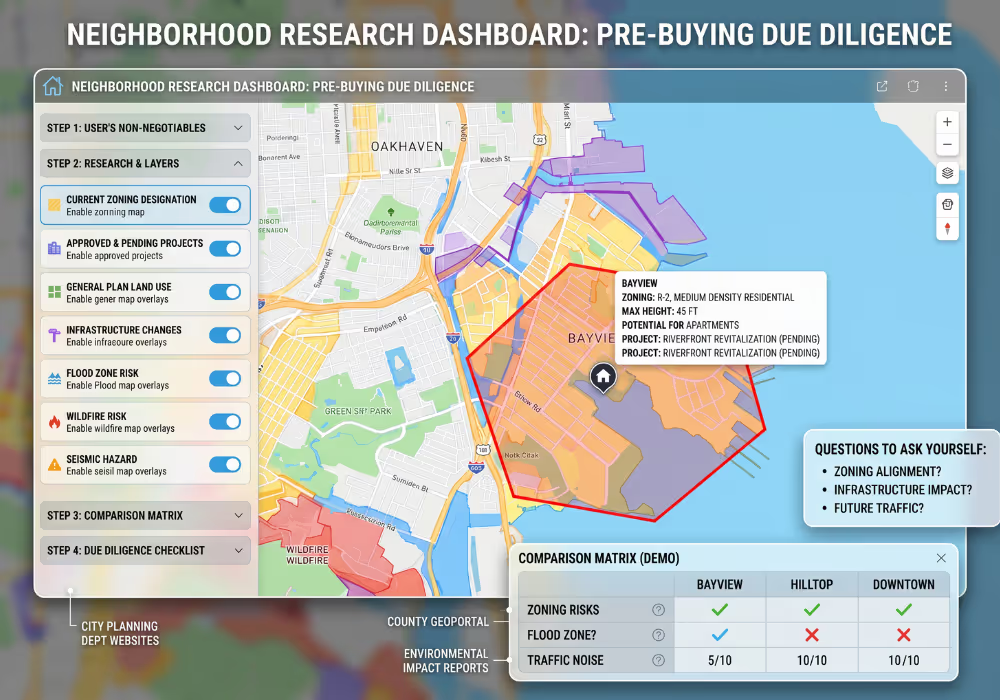
Future Development and Zoning
Understanding what could be built near a property helps you anticipate neighborhood changes over time. Today's empty lot could become tomorrow's apartment complex, shopping center, or industrial facility.
What to measure:
Current zoning designation for the property and surrounding parcels
Approved or pending development projects in the area
General plan land use designations
Any planned infrastructure changes (road widening, transit expansion)
Where to find the data:
City or county planning department websites
General plan documents and zoning maps
Public meeting agendas for planning commission hearings
Environmental impact reports for major projects
Questions to ask yourself:
Am I comfortable with what could legally be built on nearby vacant land?
Are there major infrastructure projects that could affect traffic, noise, or property access?
Does the area's development trajectory align with my long-term preferences?
How to Apply This Checklist
Step 1: Define Your Non-Negotiables
Before researching any neighborhood, identify your top three to five criteria that cannot be compromised. For some buyers, that's commute time. For others, it's natural hazard exposure or school district boundaries.
Write them down. Be specific.
"Good location" isn't a criterion. "Under 30-minute commute to downtown Sacramento" is. "Safe area" isn't measurable. "Not in a designated flood zone" is.
Step 2: Research Before You Tour
Do your homework using the data sources above before spending time touring homes. You'll eliminate areas that don't meet your criteria and focus your energy on viable options. This prevents the emotional trap of falling in love with a house in a location that doesn't actually work for your life.
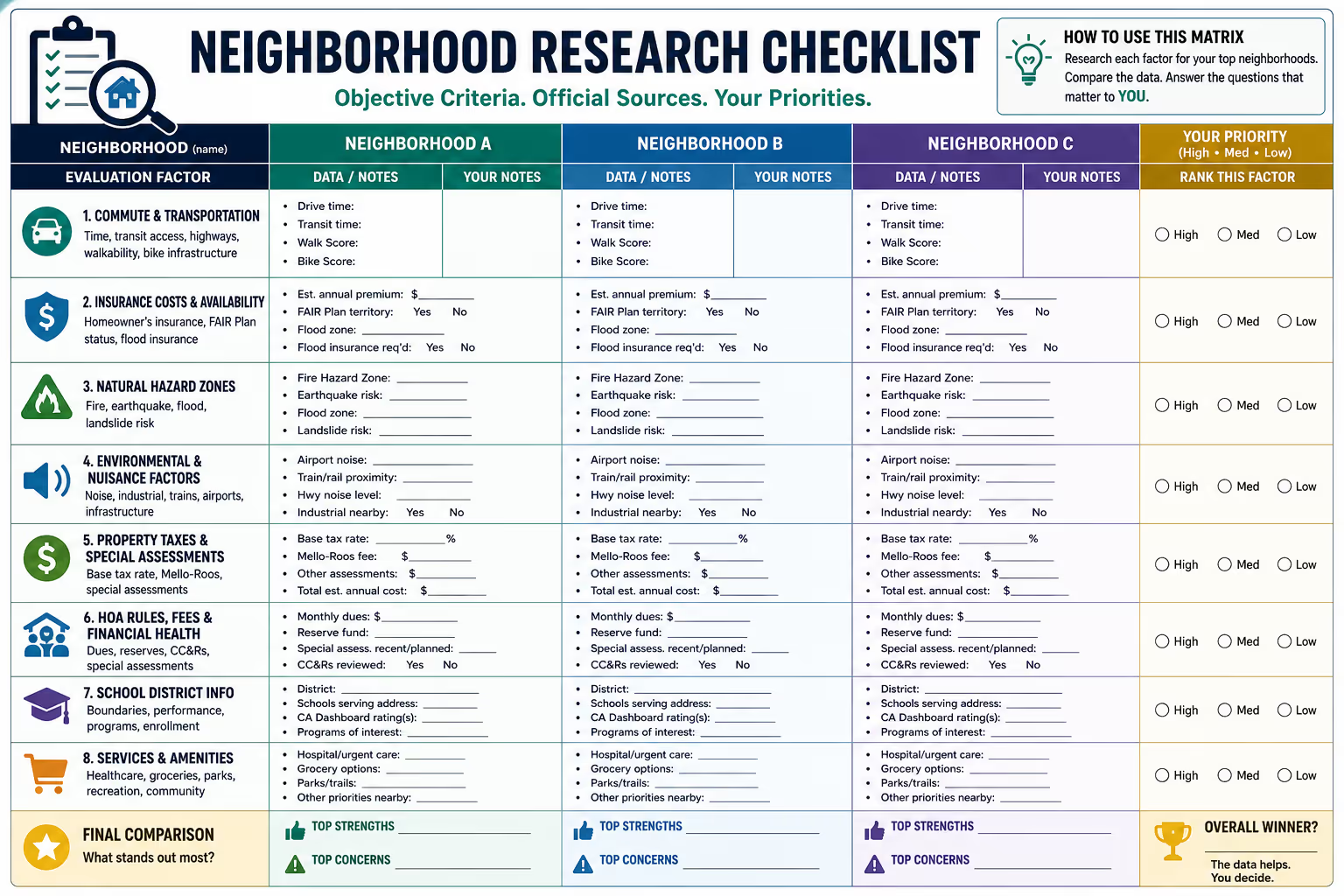
Step 3: Create a Comparison Matrix
Build a simple spreadsheet with your criteria as rows and neighborhoods as columns. Score each objectively based on your research. This removes emotion from the process and helps you spot patterns you might otherwise miss.
Step 4: Verify During Due Diligence
Once you're in contract on a property, use the inspection and disclosure period to verify your research. Preliminary title reports, natural hazard disclosures, and HOA documents provide official confirmation of what you found independently.
What Your Agent Should—and Shouldn't—Do
An ethical real estate agent will:
Teach you how to research neighborhoods using objective criteria
Provide links to official data sources
Answer factual questions about what's nearby
Discuss commute times, tax rates, and other measurable factors
Explain how to read disclosure documents
An ethical agent will not:
Tell you which neighborhoods are "better" or "worse"
Make assumptions about where you'd "fit in"
Describe areas using demographic characteristics
Steer you toward or away from specific communities
Offer subjective opinions disguised as professional advice
If an agent pressures you toward certain areas or uses language that feels presumptuous about your preferences, that's a red flag—not helpful guidance.
Making Confident Decisions Without Subjective Input
The neighborhoods you choose to explore should reflect your priorities—verified through your research—using objective data. This approach protects you from bias (others' and your own) while ensuring your decision aligns with what actually matters to your daily life. For a complete guide to the process, check out our First Time Homebuyer Sacramento Roadmap.
You don't need someone to tell you where to live. You need a framework for evaluating your options systematically. That's what this checklist provides.
Ready to apply this checklist to Sacramento-area neighborhoods? Request a consult to clarify your priorities and work through the objective criteria that matter most to your situation.
Frequently Asked Questions
Why won't my real estate agent tell me which neighborhood is best?
Ethical agents avoid subjective neighborhood recommendations because fair housing laws prohibit steering buyers based on protected characteristics. [1] [2] This isn't evasiveness—it's professional practice that protects both you and the agent. Good agents teach you how to evaluate areas using objective criteria so you make informed decisions based on your own priorities, not assumptions about what you should want.
How do I research school quality without relying on rating websites?
Use official California Department of Education resources at schools.cde.ca.gov to access accountability data, enrollment information, and program offerings. [8] Third-party rating sites use proprietary formulas that may not reflect what matters to your family educationally. Always verify which schools serve a specific address through the district's official boundary maps—proximity doesn't guarantee enrollment.
What's the most overlooked factor when choosing a neighborhood?
Insurance costs and availability are among the most commonly overlooked factors, especially in California. Properties in high fire-risk zones or FEMA flood zones may face limited insurance options, significantly higher premiums, or both. [5] Environmental nuisances like flight paths, train tracks, and nearby industrial facilities also surprise many buyers after move-in. Request actual insurance quotes for specific addresses and visit at different times of day before making offers.
How do I find out about future development near a property?
Your city or county planning department maintains zoning maps, approved project lists, and general plan documents—usually available online. Review planning commission meeting agendas for pending applications. Environmental impact reports for major projects describe anticipated changes to traffic, noise, and community character. This research takes time but prevents surprises after you've already purchased.
Can I ask my agent about crime rates in different neighborhoods?
Crime statistics are publicly available through local police department websites and FBI uniform crime reports, and you can research them independently. However, be cautious about how this data gets used in conversation—historically, crime discussions have been used to steer buyers in discriminatory ways. [7] Focus on verifiable statistics from official sources and evaluate the data according to your own risk tolerance rather than relying on characterizations from others.
About This Guide
This checklist was developed by Tavon Willis, a California-licensed real estate professional (DRE #02095751) serving the Greater Sacramento area. [9] With a focus on first-time homebuyer education and ethical guidance, Tavon helps buyers make confident decisions using objective criteria rather than subjective opinions. His approach emphasizes teaching clients how to evaluate their options—empowering informed choices while maintaining full compliance with fair housing principles.
Cited Works
[1] National Association of REALTORS — "How to Handle Client Questions About Schools and Neighborhoods." https://www.nar.realtor/magazine/broker-news/network/how-to-handle-client-questions-about-schools-and-neighborhoods
[2] U.S. Department of Housing and Urban Development — "Fair Housing: Rights and Obligations." https://www.hud.gov/program_offices/fair_housing_equal_opp/fair_housing_rights_and_obligations
[4] California Civil Rights Department — "Housing Discrimination." https://calcivilrights.ca.gov/housing/
[5] Federal Emergency Management Agency — "FEMA Flood Map Service Center." https://msc.fema.gov/portal/home
[6] California Governor's Office of Emergency Services — "MyHazards." https://myhazards.caloes.ca.gov/
[7] National Association of REALTORS — "Fair Housing and Steering." https://www.nar.realtor/fair-housing/fair-housing-program-overview
[8] California Department of Education — "California School Finder." https://www.cde.ca.gov/schooldirectory
[9] California Department of Real Estate — "Public License Lookup." https://www2.dre.ca.gov/publicasp/pplinfo.asp?License_id=02095751


