
Key Takeaways:
ITIN loans let you buy a home in California without a Social Security number—thousands of residents do this every year
California ITIN loan requirements typically include two years of tax returns, 10–25% down payment, and alternative credit history
Comparing at least three lender offers is essential because terms vary dramatically in this specialized market
Watch for prepayment penalties, vague fee disclosures, and pressure tactics—these are common pitfalls in ITIN lending
Understanding the difference between interest rate and APR helps you spot hidden costs
Buying a home in California without a Social Security number is absolutely possible. I've worked with families in the Sacramento area who assumed homeownership was out of reach—until they learned about ITIN financing.
ITIN home loans exist because lenders recognize what actually predicts loan repayment: steady income, responsible tax history, and solid down payments. Immigration status isn't the determining factor. That said, ITIN lending is a specialized niche with its own rules, costs, and potential pitfalls that you need to understand before signing anything.
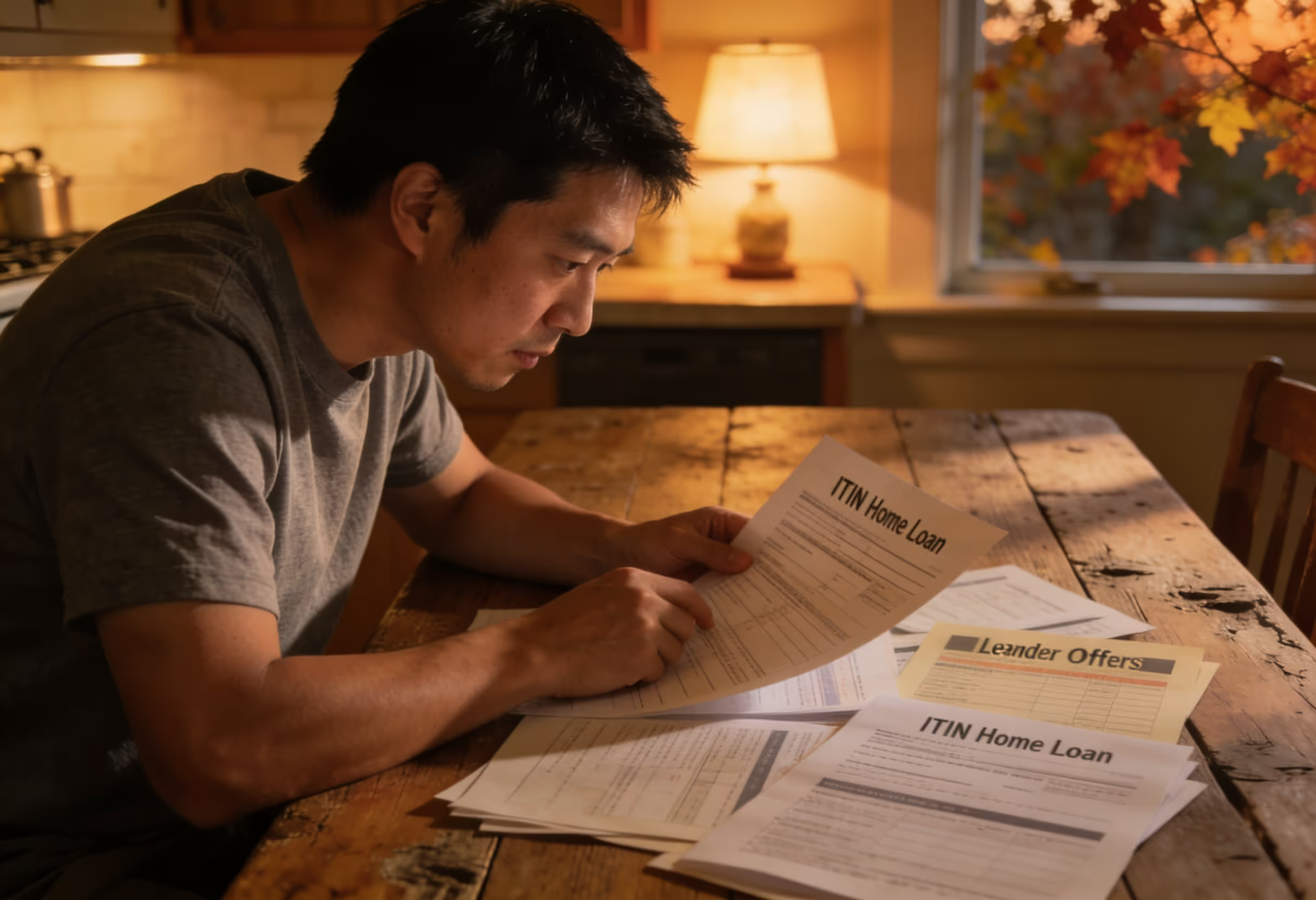
What I've seen trip up buyers most often isn't qualification—it's shopping. Many borrowers get one quote, feel grateful for the approval, and accept terms that cost them thousands more than necessary. This guide walks you through what California lenders typically require, how to compare ITIN loan offers without getting locked into a bad deal, and what red flags to watch for during the process.
How ITIN Loans Work in California
An Individual Taxpayer Identification Number (ITIN) is a nine-digit tax processing number issued by the IRS to individuals who need to file federal tax returns but aren't eligible for a Social Security number. [1] The IRS created ITINs in 1996 specifically to help people meet their tax obligations, regardless of immigration status.
ITIN home loans are non-qualified mortgages (non-QM loans), meaning they don't meet the standard underwriting criteria that conventional loans follow. Because they fall outside Fannie Mae and Freddie Mac guidelines, ITIN loans are funded by portfolio lenders, credit unions, and specialized non-QM lenders who keep these loans on their own books or sell them to private investors. [2]
Pro Tip: This is different from FHA loans. I occasionally talk with buyers who assume FHA financing works for ITIN holders—it doesn't. FHA loans require a valid Social Security number. ITIN borrowers need non-QM products specifically designed for this situation.
This funding structure explains why ITIN loan terms differ from conventional mortgages. Lenders take on additional perceived risk by offering these products, and that risk gets reflected in the rates, fees, and down payment requirements you'll encounter.
California ITIN Loan Requirements: What Lenders Typically Ask For
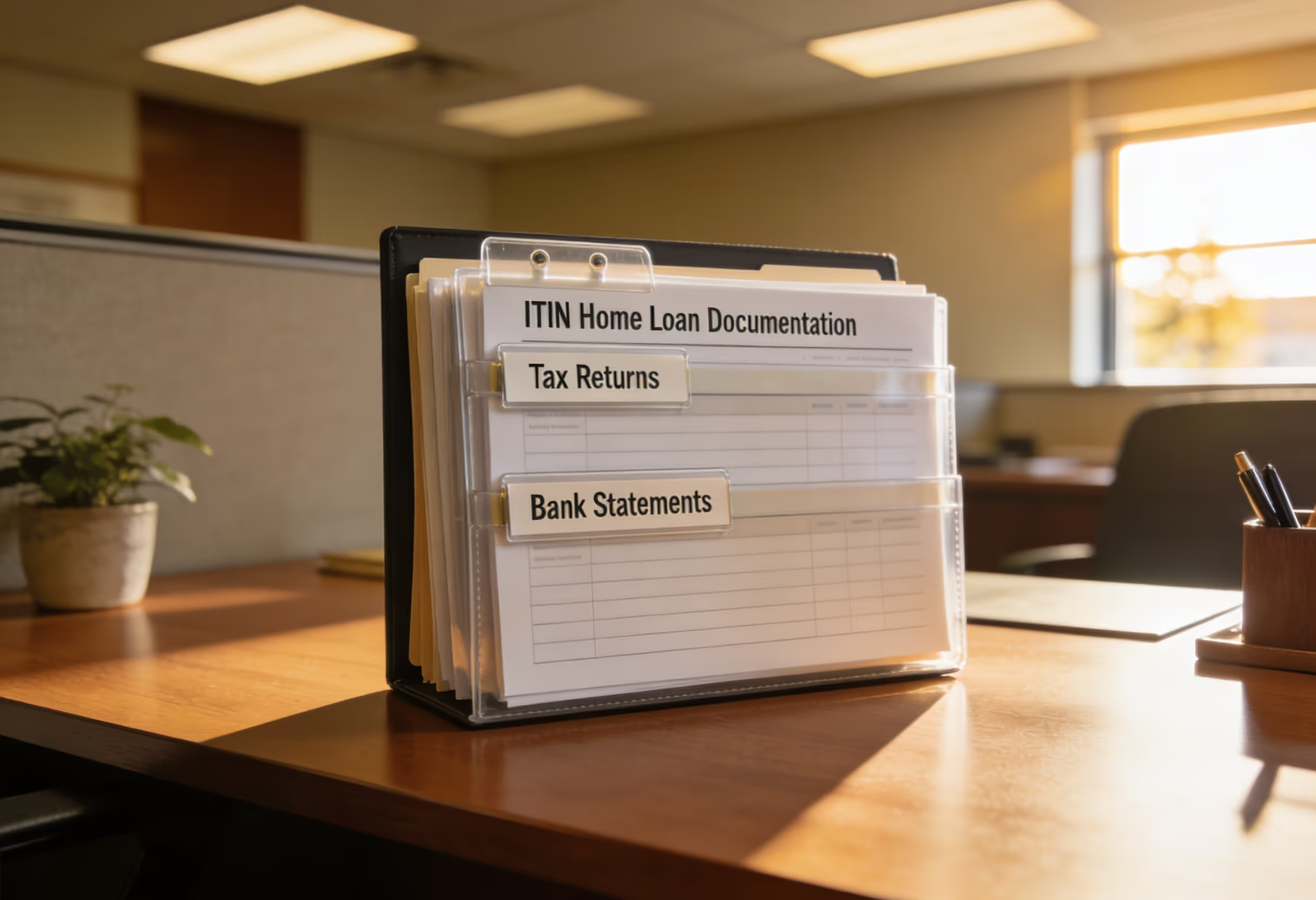
While requirements vary by lender, most California ITIN mortgage programs share common qualification standards. Here's what to prepare:
Valid ITIN Documentation
You'll need your ITIN assignment letter (CP 565) from the IRS or your most recent tax return showing your ITIN. Some lenders require your ITIN to be active—the IRS deactivates ITINs not used on a tax return for three consecutive years. [3]
Tax Return History
Most lenders want to see two years of federal tax returns filed using your ITIN. This demonstrates consistent income reporting and tax compliance. Your returns should show stable or increasing income over time.
Income Documentation
Unlike conventional loans that rely heavily on W-2s, ITIN loan income verification often includes multiple document types:
Two years of tax returns (Form 1040 with all schedules)
Bank statements (12–24 months)
Proof of employment (pay stubs, employer letter)
1099 forms for self-employed borrowers
Business bank statements for entrepreneurs
Down Payment
Expect minimum down payments between 10% and 25%, depending on the lender and your overall financial profile. This is higher than the 3–5% sometimes available on conventional loans, but it's the reality of this market.
Some programs allow gift funds for part of the down payment, but most require borrowers to contribute their own funds for at least a portion.
Lenders verify where your down payment and closing cost funds come from. You'll typically need to provide 60–90 days of bank statements showing the funds have been in your account (this is called "seasoning") or documented gift letters if receiving family assistance.
Lenders verify where your down payment and closing cost funds come from. You'll typically need to provide 60–90 days of bank statements showing the funds have been in your account (this is called "seasoning") or documented gift letters if receiving family assistance.
Credit Evaluation
ITIN borrowers often lack traditional U.S. credit scores. Many lenders use alternative credit—your payment history on rent, utilities, car insurance, phone bills, or remittances. Some lenders work with borrowers who have no credit history at all, while others require a minimum credit score if you have one established.
How to Compare California ITIN Loan Offers Without Getting Locked In
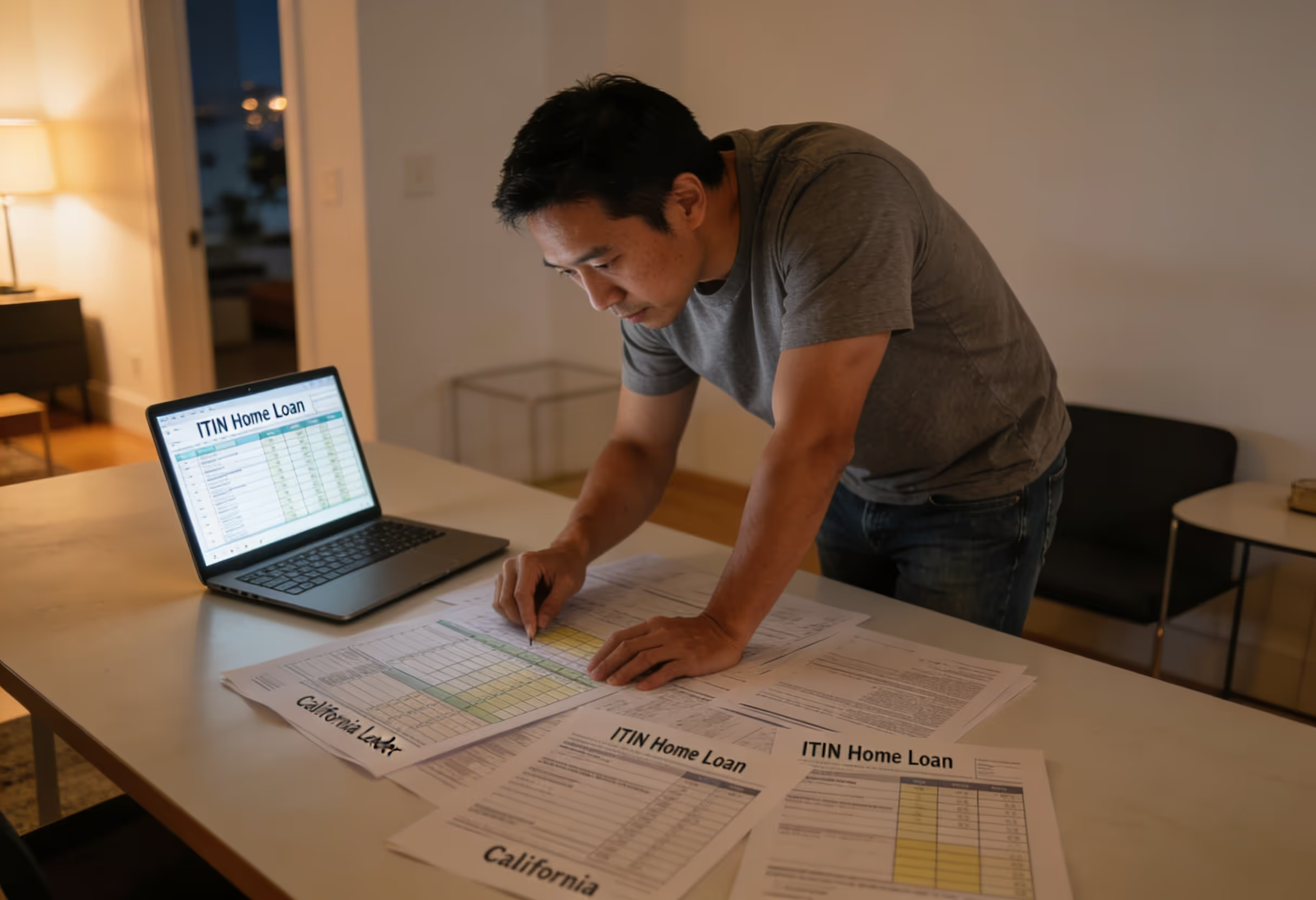
Here's where I see Sacramento-area buyers make costly mistakes. ITIN lending is less standardized than conventional mortgages, which means terms vary dramatically between lenders. Getting multiple quotes isn't just smart—it's essential.
The Four Numbers That Matter Most
When comparing ITIN loan offers, focus on these key factors:
1. Interest Rate (and APR—They're Different)
ITIN loan rates typically run higher than conventional mortgage rates because lenders price in additional risk. Rates often range from 1% to 3% above conventional rates, though this varies significantly by lender and borrower profile. [4]
Ask each lender for:
The exact interest rate
Whether it's fixed or adjustable
If adjustable: how often it adjusts, what index it's tied to, and what caps limit increases
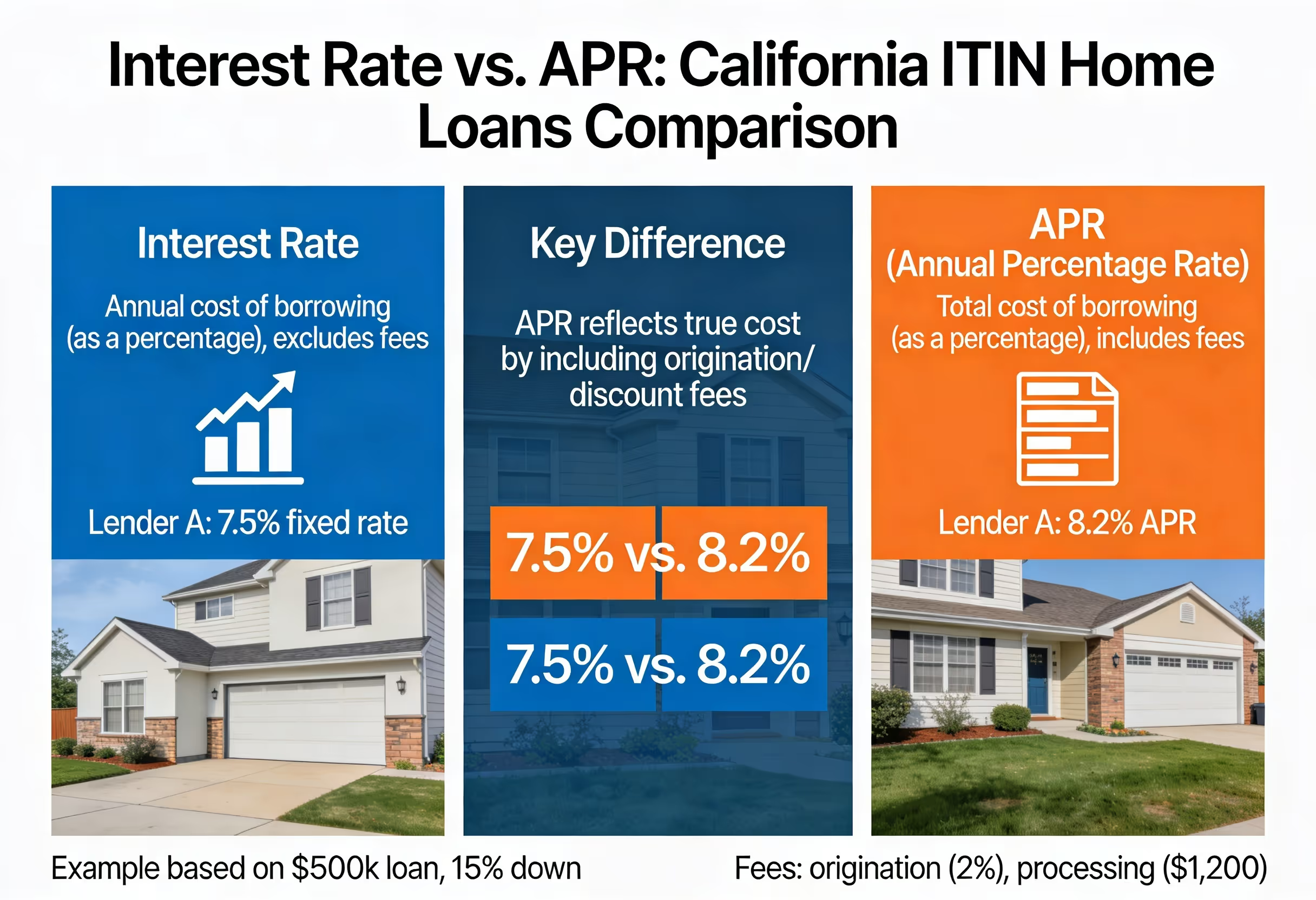
Here's the critical part most buyers miss: Always ask for the APR (Annual Percentage Rate), not just the interest rate. The APR includes fees rolled into the loan cost, giving you a truer picture of what you're actually paying.
A lender advertising a 7.5% rate with high fees might have an APR of 8.2%. Another lender at 7.75% with lower fees might have an APR of 7.9%. The second loan actually costs less over time—but you'd never know without comparing APRs.
2. Fees and Closing Costs
Origination fees on ITIN loans frequently range from 1% to 3% of the loan amount—sometimes higher. Request a detailed Loan Estimate from each lender so you can compare:
Origination fees
Discount points
Processing and underwriting fees
Third-party fees (appraisal, title, escrow)
Prepaid items and reserves
Some lenders advertise low rates but load up on fees. Others charge higher rates with lower upfront costs. Calculate the total cost over your expected time in the home to make real comparisons.
3. Down Payment Requirements
A lender requiring 15% down versus one requiring 25% down creates a significant difference in how much cash you need at closing. On a $500,000 home, that's a $50,000 difference.
Lower down payments may come with higher rates or additional fees, so weigh the tradeoffs carefully.
4. Prepayment Penalty Rules
This is critical—and where I've seen buyers get burned. Many ITIN loans include prepayment penalties that charge you for paying off the loan early, whether through refinancing or selling the property. [5]
Ask specifically:
Is there a prepayment penalty?
How long does it last? (typically 1–3 years)
How much is the penalty? (often 1–3% of the loan balance)
Does it apply if you sell the home, or only if you refinance?
A prepayment penalty can cost thousands of dollars if your circumstances change. Some lenders offer ITIN loans without prepayment penalties—they may charge slightly higher rates, but the flexibility might be worth it.
Building Your Comparison Spreadsheet
Create a simple grid comparing offers from at least three lenders:
| Factor | Lender A | Lender B | Lender C |
| Interest rate | |||
| APR | |||
| Fixed or adjustable? | |||
| Down payment required | |||
| Origination fee | |||
| Total closing costs | |||
| Prepayment penalty? | |||
| Penalty amount/duration | |||
| Monthly payment estimate |
Request a Loan Estimate (the standardized federal disclosure form) from each lender after they've reviewed your basic information. This ensures you're comparing equivalent figures.
Red Flags to Watch For in California ITIN Lending
ITIN lending attracts both legitimate lenders serving an underserved community and predatory operators looking to exploit borrowers with fewer options. Watch for these warning signs:
Pressure to Skip the Loan Estimate
Federal law requires lenders to provide a Loan Estimate within three business days of receiving your application. [6] Any lender who won't provide this document or pressures you to commit without it is a red flag.
Vague Answers About Prepayment Penalties
If a loan officer can't clearly explain prepayment terms or seems evasive, consider it a warning sign. Get everything in writing before proceeding.
Unusually High Fees Without Explanation
While ITIN loans do carry higher costs than conventional mortgages, fees that seem excessive compared to other quotes deserve scrutiny. Ask why their costs differ.
Requests for Large Upfront Fees Before Approval
Be cautious of lenders demanding large upfront fees before providing a formal commitment. Application fees and credit report costs are normal, but paying thousands before approval is risky.
No Clear Licensing Information
Verify that any lender or mortgage broker you work with is licensed through the Nationwide Multistate Licensing System (NMLS). You can check license status at the NMLS Consumer Access website. [7]
Preparing Your Documentation for a California ITIN Loan
Strong documentation improves your chances of approval and may help you negotiate better terms. Gather these items before shopping for loans:
IRS-Related Documents
ITIN assignment letter (Form CP 565) or recent tax return showing your ITIN
IRS Form W-7 if your ITIN needs renewal [8]
Two years of complete federal tax returns with all schedules
Income Verification
24 months of bank statements (personal and business if self-employed)
Recent pay stubs covering at least 30 days
Employment verification letter stating your position, salary, and length of employment
1099 forms if you work as an independent contractor
Asset Documentation
Bank statements showing down payment funds (60–90 days minimum)
Documentation for any gift funds
Statements for any other assets (retirement accounts, investments)
Identity and Residency
Valid government-issued ID (passport, consular ID, or state-issued ID)
Proof of current residence (utility bills, lease agreement)
Alternative Credit Documentation
12 months of rent payment history (canceled checks or landlord letter)
Utility payment records
Car insurance payment history
Phone or internet payment history
Having organized documentation ready speeds up the process and demonstrates to lenders that you're a prepared, serious borrower.

Where to Find California ITIN Lenders
ITIN lending isn't offered by every bank or mortgage company. Start your search with these options:
Community Development Financial Institutions (CDFIs)
These mission-driven lenders often specialize in serving underbanked communities and may offer more favorable ITIN loan terms. [9] California has several CDFIs focused on homeownership access.
Credit Unions
Some California credit unions offer ITIN mortgage programs with competitive rates. Credit unions are member-owned and often provide more personalized service.
Non-QM Specialty Lenders
Several national and regional lenders specialize in non-QM products including ITIN loans. Research their reputation, check NMLS licensing, and read reviews before engaging.
Experienced Mortgage Brokers
A broker who regularly works with ITIN loans can connect you with multiple lenders and help you compare options. Make sure they disclose how they're compensated and whether they have relationships with specific lenders.
Regardless of which route you choose, interview potential lenders. Ask how many ITIN loans they've closed, what their typical timeline looks like, and what challenges they commonly see. Their answers reveal their actual expertise.
Note on California-Specific Programs: The California Housing Finance Agency (CalHFA) offers various down payment assistance programs, but these typically require conventional, FHA, or VA financing—not ITIN loans. If your circumstances change and you obtain a Social Security number, CalHFA programs may become available. Check their current eligibility requirements directly. [10]
What to Expect on Costs and Timeline
Realistic expectations help you prepare financially and avoid frustration during the process.
Typical Cost Ranges for California ITIN Loans
Interest rates: Generally 1–3 percentage points above conventional rates
Down payment: 10–25% of purchase price
Origination fees: 1–3% of loan amount
Total closing costs: 3–6% of purchase price
Adding these together, you might need 13–31% of the purchase price in cash at closing. On a $450,000 Sacramento-area home, that's roughly $58,500 to $139,500 in total cash needed.
Timeline Expectations
ITIN loans often take longer to close than conventional mortgages. The additional documentation review and manual underwriting process means 45–60 days is common, though some lenders move faster with complete applications.
Build extra time into your home purchase timeline and communicate realistic expectations to sellers if you're making offers.
Frequently Asked Questions
Can I get an ITIN loan if my ITIN has expired?
You'll need to renew your ITIN before most lenders will approve a mortgage. The IRS allows renewal by filing Form W-7 with your tax return or submitting a standalone renewal application. Processing can take 7–11 weeks, so start early if your ITIN hasn't been used on a return in the past three years. [3]
Do ITIN loans require a larger down payment than conventional mortgages?
Generally, yes. While conventional loans may allow down payments as low as 3–5%, California ITIN loans typically require 10–25% down. The exact requirement depends on the lender, your credit profile, and the property type.
How do lenders evaluate my credit if I don't have a credit score?
Many ITIN lenders use alternative credit verification, reviewing your payment history on rent, utilities, insurance, and other recurring bills. You'll need to provide 12–24 months of payment documentation showing consistent, on-time payments.
Are there first-time homebuyer programs available for ITIN borrowers in California?
Some California down payment assistance programs may be available to ITIN borrowers, though eligibility varies by program. Many state programs require financing types (conventional, FHA, VA) that aren't available to ITIN holders. Research local housing authorities and nonprofit housing organizations in your area for potential options.
What happens if I get a Social Security number after taking out an ITIN loan?
You may be able to refinance into a conventional loan once you have an SSN and establish traditional credit. This could potentially lower your interest rate, though you'll need to consider refinancing costs and any prepayment penalties on your existing loan.
Take the Next Step
Comparing ITIN loan offers takes time and careful attention, but the effort protects you from overpaying or getting locked into unfavorable terms. The difference between a good ITIN loan and a predatory one can mean tens of thousands of dollars over the life of your mortgage.
If you're exploring homeownership in the Sacramento area and want guidance on connecting with reputable ITIN lenders, request a consult. I can help you understand your options, set realistic expectations, and build a plan that fits your financial situation—no pressure, just clarity.
About This Guide
This article was prepared by Tavon Willis, a California-licensed real estate salesperson (DRE #02095751) serving the Greater Sacramento area. Tavon specializes in helping first-time homebuyers and families navigating non-traditional financing paths understand their options and make informed decisions. This content is for educational purposes and does not constitute financial or legal advice. Work with qualified professionals—including licensed loan officers and attorneys—when making financing decisions.
Works Cited
[1] Internal Revenue Service — "Individual Taxpayer Identification Number." https://www.irs.gov/individuals/individual-taxpayer-identification-number
[2] Consumer Financial Protection Bureau — "What is a qualified mortgage?" https://www.consumerfinance.gov/ask-cfpb/what-is-a-qualified-mortgage-en-1789/
[3] Internal Revenue Service — "ITIN Expiration FAQs." https://www.irs.gov/individuals/itin-expiration-faqs
[4] National Association of Hispanic Real Estate Professionals — "ITIN Lending Report." https://nahrep.org/
[5] Consumer Financial Protection Bureau — "What is a prepayment penalty?" https://www.consumerfinance.gov/ask-cfpb/what-is-a-prepayment-penalty-en-1957/
[6] Consumer Financial Protection Bureau — "Loan Estimate Explainer." https://www.consumerfinance.gov/owning-a-home/loan-estimate/
[7] Nationwide Multistate Licensing System — "NMLS Consumer Access." https://www.nmlsconsumeraccess.org/
[8] Internal Revenue Service — "Form W-7, Application for IRS Individual Taxpayer Identification Number." https://www.irs.gov/forms-pubs/about-form-w-7
[9] U.S. Department of the Treasury — "Community Development Financial Institutions Fund." https://www.cdfifund.gov/
[10] California Housing Finance Agency — "Homebuyer Programs." https://www.calhfa.ca.gov/homebuyer/programs/


