
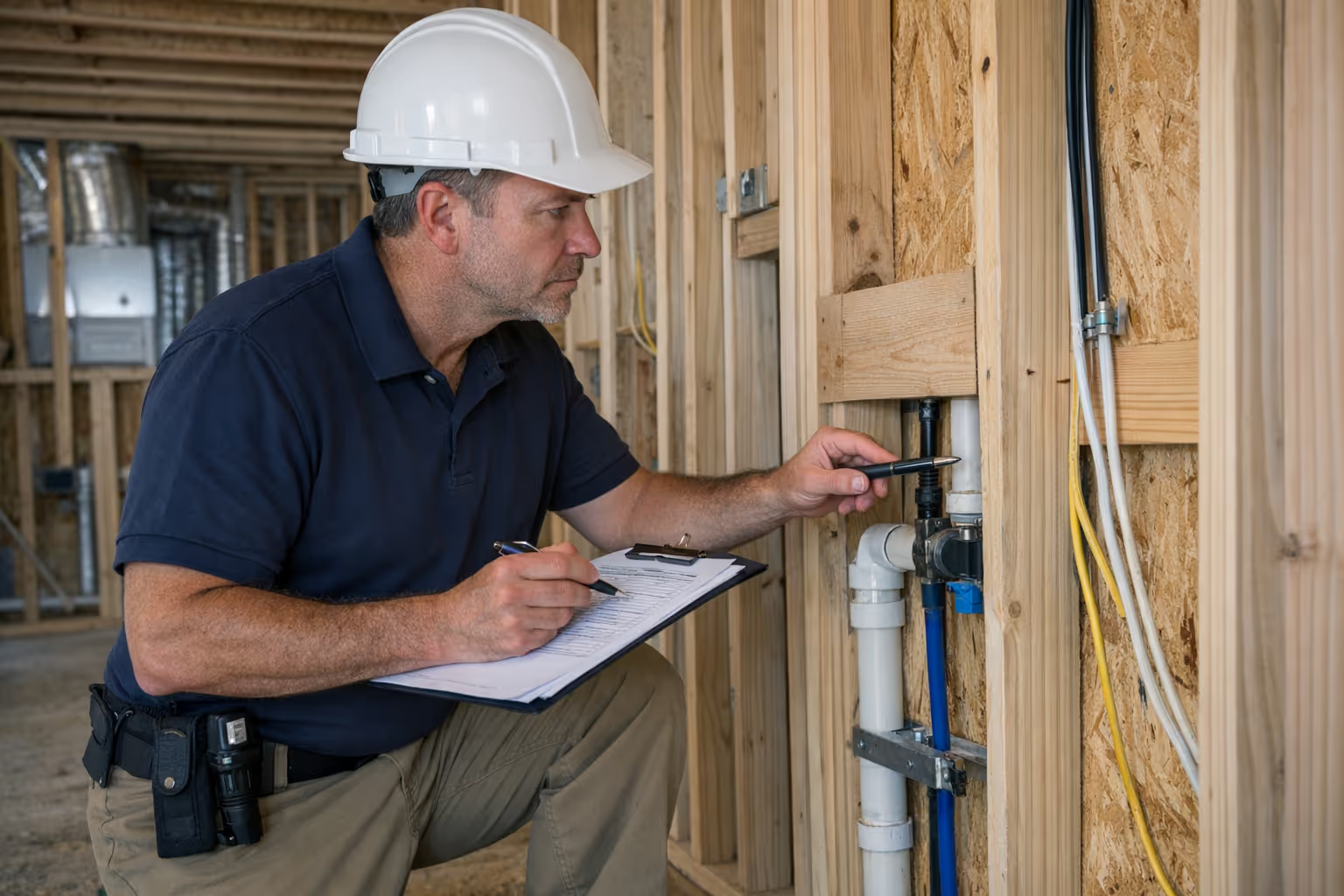
Last year, a buyer in Elk Grove closed on a brand-new home and discovered water pooling in the garage three months later. The culprit? A plumbing connection behind the finished wall that was never properly sealed. Fixing it meant cutting through drywall, repairing the pipe, and patching everything back together—roughly $2,800 out of pocket for something that would have taken a plumber fifteen minutes to correct before the walls went up.
That's the risk with new construction: "new" doesn't mean "flawless." Even experienced builders working with quality crews make mistakes. The difference between catching those mistakes early and inheriting them as your problem comes down to timing.
A strategic inspection timeline protects your investment at four critical milestones. Miss any of these windows, and you could discover warranty-covered defects after your coverage expires—or worse, after they've caused secondary damage.
This guide breaks down exactly when to schedule each inspection, what gets evaluated at each phase, and how to document everything so nothing falls through the cracks. You'll also find a reusable punch-list framework you can adapt for your own build.
Why New Construction Homes Still Need Independent Inspections
There's a persistent myth that new builds don't require inspections. Everything is new, the reasoning goes, so what could possibly be wrong?
Plenty, as it turns out.
The National Association of Home Builders has documented ongoing labor shortages affecting residential construction nationwide [1]. When crews are stretched thin or working under aggressive timelines, errors happen. Electrical wiring gets routed incorrectly. Plumbing connections aren't fully tightened. HVAC ductwork develops gaps at the seams. Framing members get notched beyond structural limits.
Municipal code inspections exist, but they serve a different purpose than a private inspection hired to protect your interests. City inspectors verify minimum code compliance at designated checkpoints—they're not conducting a comprehensive evaluation of your home's quality and workmanship [2].
Pro Tip from Tavon: "In the Sacramento market, I've seen buyers assume city inspections cover everything. They don't. The city inspector might spend fifteen minutes on-site checking specific code items. A private inspector hired by you will spend two to three hours documenting everything—because their job is protecting you, not checking boxes for a permit."
Think of it this way: the builder's goal is meeting code and completing the project on schedule. Your goal is ensuring the home performs well for decades. An effective new construction buyer representation helps align these goals. Those objectives overlap, but they're not identical.
The Four Critical Inspection Windows
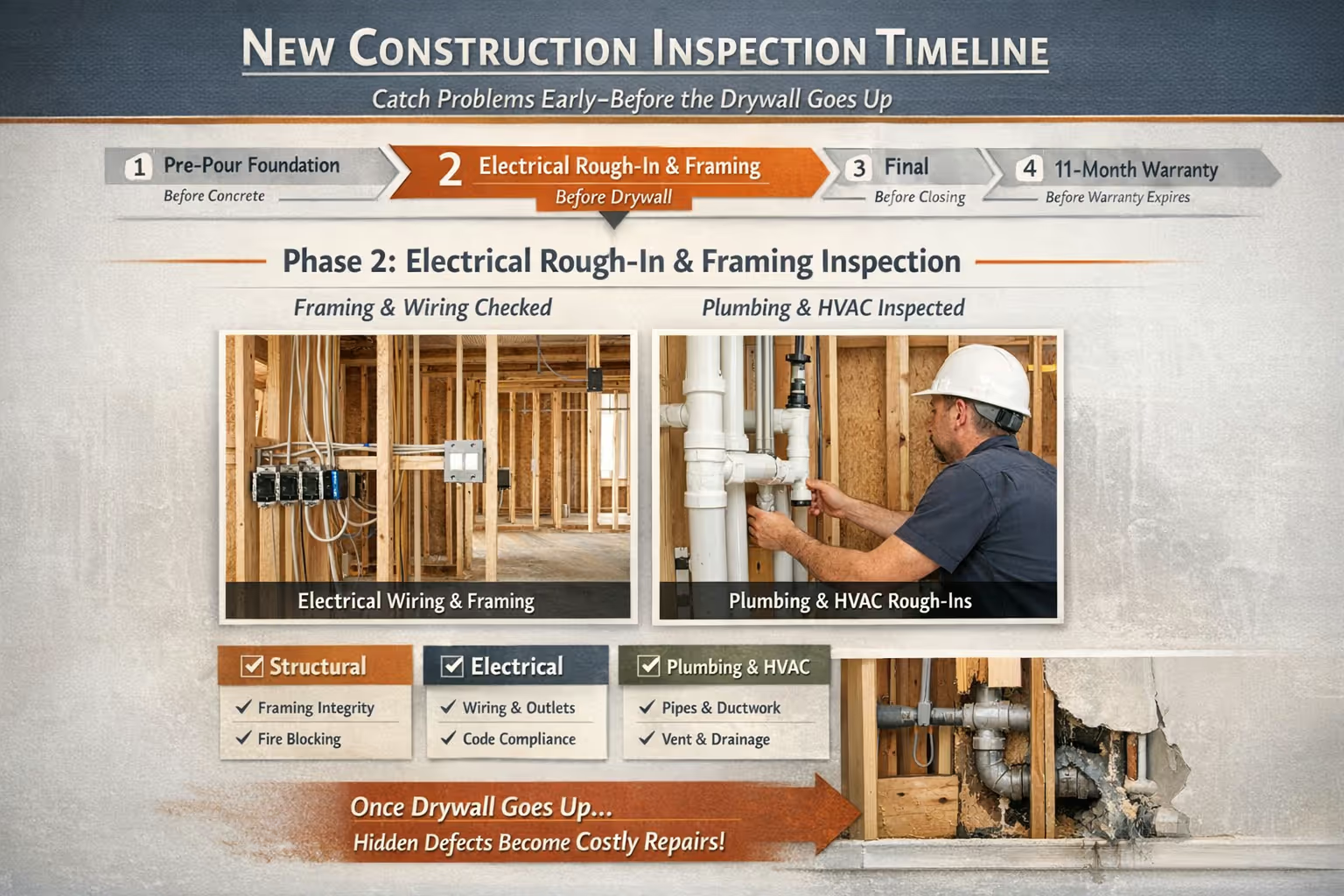
Your new construction inspection timeline should include four distinct phases, each tied to specific build milestones:
| Inspection Phase | Timing | Primary Focus |
| Pre-pour (foundation) | Before concrete is poured | Footings, rebar placement, soil preparation |
| Pre-drywall (frame) | After rough-ins, before drywall | Framing, electrical, plumbing, HVAC |
| Final walkthrough | Before closing | Cosmetic issues, fixtures, all systems |
| 11-month warranty | Before warranty expires | Hidden defects, settling issues |
Each inspection serves a different purpose. Skipping any one creates blind spots in your protection strategy.
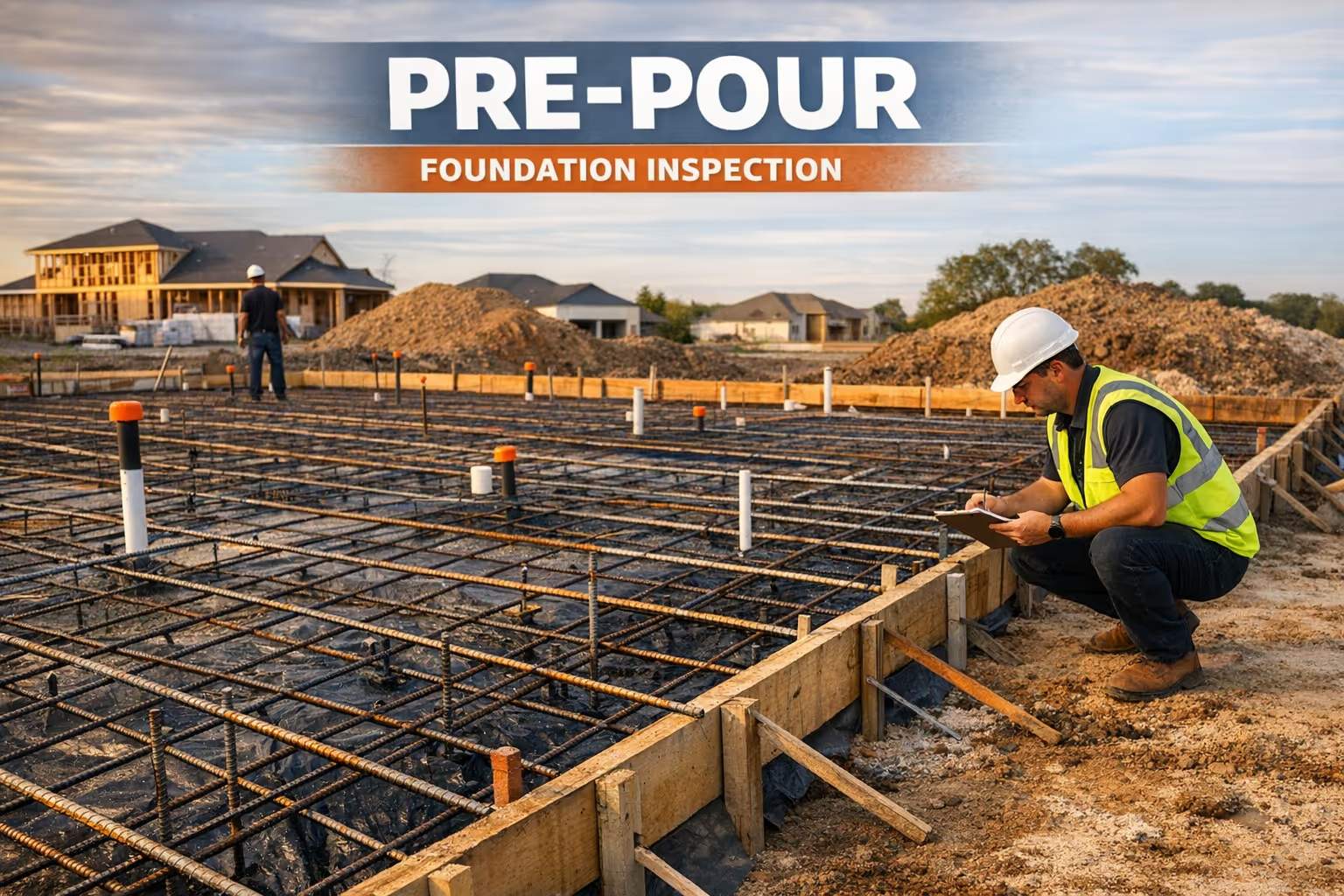
Phase One: Pre-Pour Foundation Inspection
The foundation is literally what everything else rests on. Once concrete is poured, correcting problems becomes exponentially more difficult and expensive.
When to Schedule
Coordinate with your builder to schedule this inspection after:
Excavation is complete
Footings are formed
Rebar and any required reinforcement are in place
Plumbing rough-in for slab (if applicable) is positioned
But before concrete trucks arrive
This window is often measured in days, sometimes hours. Stay in close contact with your builder's site supervisor once excavation begins.
What Gets Evaluated
A thorough pre-pour inspection examines:
Site preparation
Proper soil compaction
Correct depth of excavation
Adequate drainage provisions
Vapor barrier placement (where required)
Footing and foundation forms
Correct dimensions per engineering plans
Proper depth below grade
Level and square positioning
Adequate clearance for anchor bolts
Reinforcement
Rebar sizing matches specifications
Proper spacing and overlap at joints
Adequate coverage (distance from forms)
Chair and support placement
Embedded utilities
Plumbing stub-outs correctly positioned
Electrical conduit routing (if slab-on-grade)
Radon mitigation provisions (where required)
Why This Phase Matters
Foundation defects are among the most expensive problems to address after the fact. Cracks from improper reinforcement, settling from inadequate soil preparation, or misaligned plumbing stub-outs can create cascading issues throughout the home's lifespan.
In the Sacramento region, where soil conditions vary significantly across different areas, foundation preparation becomes particularly important. Expansive clay soils in some neighborhoods require different engineering approaches than the sandier soils found elsewhere.
Phase Two: Pre-Drywall Inspection
The pre-drywall inspection—sometimes called a frame inspection—is arguably the most valuable inspection you'll schedule. Once drywall goes up, critical components become invisible. Problems that would cost a few hundred dollars to fix now could cost thousands after walls are sealed.
When to Schedule
Coordinate with your builder to schedule this inspection after:
Framing is complete
Electrical rough-in is finished
Plumbing rough-in is finished
HVAC ductwork is installed
Before insulation is installed (ideally) or before drywall begins
Important timing note: Whether insulation is in place significantly affects what your inspector can evaluate. If insulation is already installed, some electrical and plumbing routing becomes harder to assess. Communicate with your builder about scheduling before insulation whenever possible.
You typically have a narrow window—often just a few days—between when rough-in work is complete and when the next phase begins. Stay in regular communication with your builder or site supervisor to avoid missing this milestone.
What the Inspector Evaluates
A thorough pre-drywall inspection covers multiple systems:
Structural framing
Proper sizing and spacing of studs, joists, and rafters
Adequate blocking for cabinets, grab bars, and heavy fixtures
Correct header sizes above windows and doors
No cracked, warped, or damaged lumber
Fireblocking between floors installed correctly
Electrical systems
Proper wire gauge for intended circuits
Correct box placement and mounting depth
GFCI protection in required locations (bathrooms, kitchen, garage, outdoor areas)
Arc-fault circuit interrupter (AFCI) protection where required by current electrical codes [3]
Adequate clearance and protection where wires pass through framing
Plumbing systems
Proper pipe materials and sizing
Secure connections at all joints
Correct slope on drain lines (typically 1/4 inch per foot minimum)
Adequate venting configuration
Water hammer arrestors where needed
Protective plates where pipes are close to stud edges
HVAC installation
Ductwork properly sealed at all connections
Adequate duct sizing for room volumes
Correct refrigerant line installation and support
Proper condensate drainage routing
Return air pathways correctly configured
Insulation and moisture barriers (if accessible)
Correct insulation R-values for your climate zone
No gaps, voids, or compression in insulation batts
Vapor barriers installed on the correct side (climate-dependent)
Air sealing around penetrations
Common Pre-Drywall Issues
Here are defects inspectors frequently discover at this stage:
Missing fireblocking between floors (fire safety issue)
Electrical boxes installed too deep for proper switch/outlet mounting
Plumbing drain lines with insufficient slope
HVAC ducts with unsealed joints that will leak conditioned air
Framing members notched or drilled beyond allowable limits
Missing nail plates protecting wires and pipes near stud edges
Inadequate blocking for future grab bar installation in bathrooms
Pro Tip from Tavon: "When I'm working with new construction buyers in Sacramento or Elk Grove, I always emphasize getting the pre-drywall scheduled as early as possible in the build process. Builders are generally cooperative when you frame it as catching small issues before they become expensive problems—it's in everyone's interest."
Diagnostic Tools That Make a Difference
Experienced new construction inspectors often use specialized equipment beyond visual examination:
Moisture meters to identify unexpected moisture in framing materials
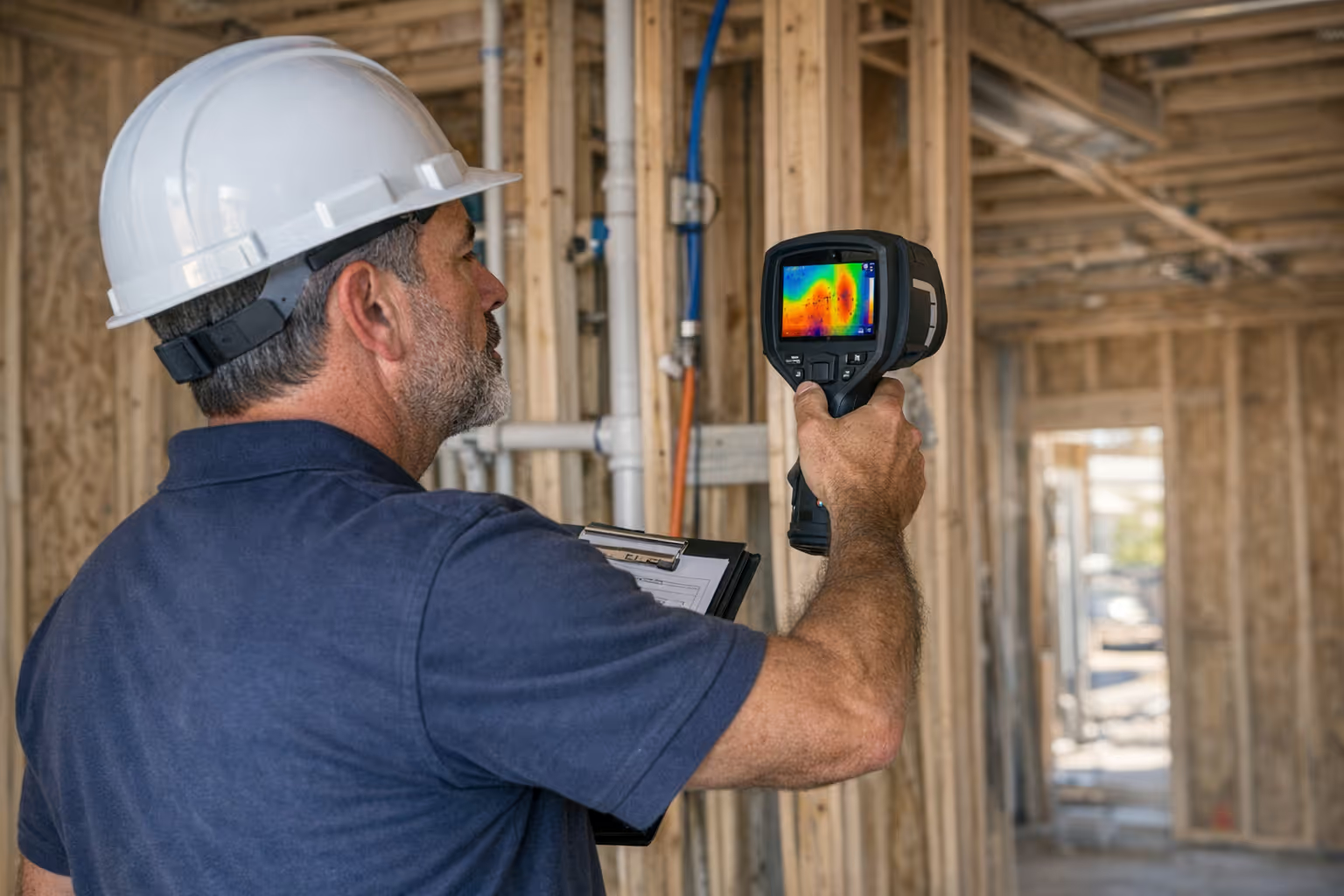
Thermal imaging cameras to detect air leaks, missing insulation, or HVAC ductwork issues (more useful at later stages but sometimes employed at pre-drywall)
Electrical testers to verify proper grounding and circuit configurations
Ask prospective inspectors what diagnostic tools they use as part of their standard process.
Phase Three: Final Walkthrough Inspection
The final walkthrough happens after construction is complete but before you sign closing documents. This is your last opportunity to identify deficiencies while you still have maximum leverage.
Timing Considerations
Schedule your final walkthrough inspection at least five to seven days before your closing date. This buffer provides time to:
Review the inspection report thoroughly
Submit repair requests to the builder with specific documentation
Allow the builder time to complete repairs
Verify completed repairs before closing
Rushing this process—or combining it with your actual closing day—eliminates your ability to negotiate effectively. If the inspection reveals significant issues, you need time to address them before you're committed.
What Gets Evaluated
At this stage, your inspector examines every accessible component:
Exterior components
Roof covering installation and flashing details
Gutter and downspout configuration
Siding installation, caulking, and trim work
Grading and drainage direction (away from foundation)
Garage door operation and safety reverse features
Driveway, walkway, and patio condition
Exterior electrical outlets and lighting
Interior systems
All electrical outlets, switches, and fixtures (functionality testing)
Plumbing fixtures, faucets, and water pressure at multiple locations
HVAC operation in both heating and cooling modes
Water heater installation and safety features
Appliance installation and basic function testing
Window and door operation, locks, and weather sealing
Smoke detector and carbon monoxide detector placement and function
Cosmetic and finish work
Paint quality, coverage, and touch-up needs
Flooring installation (transitions, edges, visible defects)
Cabinet alignment, door operation, and hardware
Countertop seams, edges, and mounting
Tile work, grout lines, and caulking
Trim and molding installation
Your Role During the Walkthrough
Don't just observe—actively participate. Bring a checklist and methodically work through every room.
Open every cabinet door and drawer
Run every faucet (hot and cold) and flush every toilet
Test every electrical outlet with a circuit tester
Operate every window (open, close, lock)
Turn on every light fixture and fan
Run the dishwasher through a cycle
Test the garage door opener and safety reverse
Your inspector will be thorough, but two sets of eyes catch more than one. Document everything with photos and detailed notes—even minor cosmetic issues are easier to address before closing than after.
Phase Four: The 11-Month Warranty Inspection
Here's the inspection most new homeowners forget about—and it's a costly oversight.
Most new construction homes come with a builder warranty, typically structured with different coverage periods for different components. Many builders offer one year of coverage for workmanship and materials defects [4]. Some structural components may carry longer coverage, but the first year is usually your window for most issues.
Once that coverage period ends, you lose the ability to have covered defects repaired at the builder's expense.
Scheduling an inspection around the 11-month mark gives you time to identify issues, submit warranty claims, and have repairs completed before coverage expires.
What to Look For at 11 Months
After nearly a year of living in your home, certain issues become apparent that weren't visible at closing:
Settling-related issues
Drywall cracks (especially at corners, above doors, and at ceiling lines)
Doors and windows that no longer close or latch properly
Gaps developing at trim joints or where different materials meet
Visible cracks in foundation or garage slab
System performance issues
HVAC struggling to maintain temperature in certain rooms
Unusual sounds from plumbing (water hammer, gurgling drains)
Electrical issues (flickering lights, tripping breakers)
Water pressure changes since move-in
Slow drainage that has developed over time
Exterior concerns
Grading that has shifted (water pooling near foundation)
Caulking failure around windows and doors
Flashing issues that weren't apparent initially
Concrete cracks in driveway, walkways, or patios
Pro Tip from Tavon: "I always recommend my new construction buyers set a calendar reminder for month ten of homeownership—not month eleven or twelve. You want buffer time to get the inspection scheduled, receive the report, and submit claims before your warranty window closes. Waiting until the last week is asking for trouble."
Warranty Claim Process
When your inspector identifies warranty-covered items:
Document each issue with photos, specific location descriptions, and measurements where relevant
Reference your warranty documentation for the required claim submission format and contact information
Submit your claim in writing—email creates a timestamp and paper trail
Request written confirmation that your claim was received
Follow up on repair timelines if you don't hear back within the timeframe specified in your warranty
Document completed repairs with photos and confirm in writing that work was done
Some builders handle warranty work promptly and professionally. Others require persistence. Either way, written documentation protects your interests and creates a clear record if disputes arise.
Your Reusable Punch-List Framework
Use this framework to organize findings at each inspection phase. Create a spreadsheet or document with these columns:
For every inspection phase:
Location: Specific room and area (e.g., "Primary bathroom, north wall")
Issue description: Clear, factual description of the defect
Photo reference: Number or filename of supporting photo
Priority level: A, B, or C (see classification below)
Date reported to builder: When you submitted the item
Builder response: Their acknowledgment or repair timeline
Date verified complete: When you confirmed the fix
Priority Classification
A – Safety or code concern: Address immediately (structural defects, electrical hazards, fire safety issues, code violations)
B – Functional issue: Address before closing or within warranty period (systems not working correctly, installation defects affecting performance)
C – Cosmetic issue: Address per builder's standard process (paint touch-ups, minor finish work, aesthetic concerns)
Pro Tip: Take photos with your phone's timestamp feature enabled. Include something for scale (a tape measure, your hand, or a coin) when documenting cracks or gaps. Wide shots showing context plus close-ups of specific defects create the most useful documentation.
How to Choose a New Construction Inspector
Not all home inspectors specialize in new construction. When selecting an inspector for any of these milestones:
Ask about new construction experience
How many new builds have they inspected in the past year? Are they familiar with local building codes and common practices among builders in your area? Experience with the specific builder constructing your home is a bonus.
Verify credentials
Look for inspectors who hold certifications from recognized professional organizations. Many states, including California, require licensing for home inspectors [5]. Verify active license status before hiring.
Request sample reports
A thorough new construction inspection report should be detailed, include numerous photos, and clearly explain each finding in terms a non-expert can understand. Generic or sparse reports suggest a less rigorous process.
Confirm timing flexibility
Pre-drywall and pre-pour windows are often short—sometimes only a day or two. You need an inspector who can adjust their schedule to match your build timeline, even on short notice.
Ask about diagnostic equipment
Inspectors who use thermal imaging cameras, moisture meters, and other diagnostic tools can identify issues that visual inspection alone might miss.
Coordinating With Your Builder
Some builders welcome independent inspections as a sign of an engaged buyer. Others initially push back. Regardless of their reaction, you have every right to hire your own inspector.
Here's how to approach the conversation:
Frame inspections as partnership, not adversarial: "I want to catch anything early while fixes are simple—that's better for both of us."
Request the build schedule in writing so you can plan inspection timing
Ask for the site supervisor's direct contact information for scheduling coordination
Provide reasonable notice (48-72 hours when possible, though pre-pour and pre-drywall may require faster turnaround)
Be flexible but firm: You're not asking permission—you're coordinating logistics
Most builders ultimately recognize that professional inspections reduce warranty claims and callbacks. The ones building quality homes have nothing to hide.
What Inspections Cost—And Why They're Worth It
New construction inspection costs vary by market, home size, and scope, but here are general ranges:
| Inspection Type | Typical Cost Range |
| Pre-pour foundation | $250–$400 |
| Pre-drywall | $300–$500 |
| Final walkthrough | $400–$600 |
| 11-month warranty | $350–$500 |
For approximately $1,300–$2,000 total across all four inspections, you're protecting an investment worth hundreds of thousands of dollars.
More importantly, you're catching problems when they're least expensive to repair. Consider the math: opening a finished wall to fix a plumbing leak might cost $1,500 or more. Having a plumber tighten that same connection before drywall? Maybe $50 in labor if it's even charged separately.
The inspection fee often pays for itself with a single caught defect.
Create Your Inspection Timeline Now
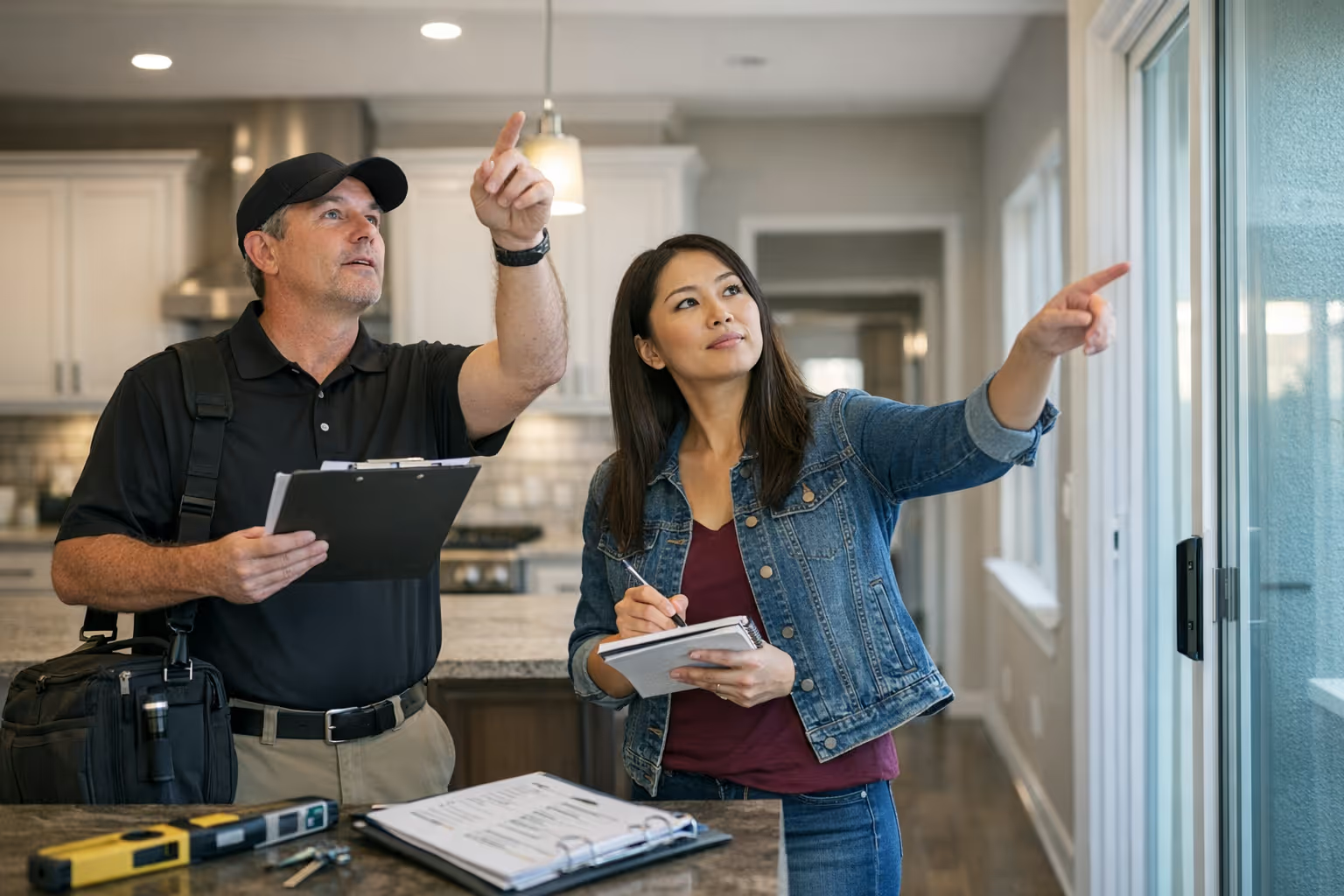
Once you have your build schedule from the builder, map out your inspection windows:
Identify the expected foundation pour date and schedule pre-pour inspection for that window
Mark rough-in completion dates for electrical, plumbing, and HVAC—schedule pre-drywall inspection within that window
Note your expected closing date and schedule final walkthrough inspection five to seven days prior
Set a calendar reminder for month ten of homeownership to schedule your 11-month warranty inspection
Proactive scheduling prevents missed windows and last-minute scrambling. Build relationships with one or two inspectors early so you have reliable contacts when timing gets tight.
Ready to Build Your Inspection Strategy?
If you're purchasing a new construction home in Sacramento or Elk Grove and want guidance on coordinating inspections with your build timeline, let's connect. Understanding when to schedule inspections—and what to prioritize at each stage—is part of the education-first approach to protecting your investment.
Request a consult to discuss your build schedule, inspection timing, and how to navigate the new construction process with confidence.
Frequently Asked Questions
Do I really need a pre-drywall inspection if the city already inspects during construction?
Yes. Municipal inspections verify minimum code compliance at designated checkpoints, but they're not comprehensive evaluations of your home's overall quality. A private inspector examines systems more thoroughly, documents issues with photos and detailed descriptions, and works exclusively in your interest—not the permit process. The scope and focus are fundamentally different.
Builders may initially discourage independent inspections, but as the buyer, you have the right to hire your own inspector. Frame the conversation around catching issues early when repairs are simple and inexpensive. Most builders cooperate once they understand your intent is collaborative rather than adversarial, though some may require scheduling during specific windows.
Builders may initially discourage independent inspections, but as the buyer, you have the right to hire your own inspector. Frame the conversation around catching issues early when repairs are simple and inexpensive. Most builders cooperate once they understand your intent is collaborative rather than adversarial, though some may require scheduling during specific windows.
What happens if I find issues during my 11-month warranty inspection?
Document each issue with photos, specific locations, and clear descriptions. Submit a written warranty claim to your builder following the process outlined in your warranty documentation—email creates a useful timestamp. Keep records of all communication and follow up on repair timelines. The key is addressing everything before your warranty period expires.
How far in advance should I book my inspector for the pre-drywall inspection?
Contact your inspector as soon as you have a build schedule, ideally before construction begins. Establish the relationship early and keep them updated on progress. The pre-drywall window is often narrow—sometimes only a day or two—and having an inspector who already knows your timeline prevents missed opportunities.
Is the 11-month warranty inspection different from a regular home inspection?
It's similar in scope but focuses specifically on issues that emerge after living in the home—settling cracks, system performance problems that developed over time, and defects that weren't apparent at closing. The goal is documenting everything that qualifies for warranty repair before your coverage expires, so the emphasis is on changes since move-in.
About This Guide
This guide was developed with input from Tavon Willis, a California-licensed real estate professional (DRE #02095751) who works with first-time buyers and new construction purchasers in the Sacramento and Elk Grove areas. The information reflects common practices in residential construction and is educational in nature. For specific concerns about your home, your build, or local code requirements, consult with licensed inspectors, contractors, and other qualified professionals in your area.
Cited Works
[1] National Association of Home Builders — "Labor Shortages." https://www.nahb.org/news-and-economics/industry-news/labor-shortages
[2] International Code Council — "Building Department Administration." https://www.iccsafe.org/
[3] National Fire Protection Association — "NFPA 70: National Electrical Code." https://www.nfpa.org/codes-and-standards/nfpa-70-standard-development/70
[4] Federal Trade Commission — "Home Warranties." https://consumer.ftc.gov/articles/home-warranties
[5] American Society of Home Inspectors — "State Licensing and Regulations." https://www.ashi.org/


