
Choosing where to live in the Greater Sacramento area comes down to what matters most to you—not what a ranking website says, and not what worked for someone else.
If you're relocating to Northern California or buying your first home in the region, you've probably noticed something frustrating. Most comparison articles rank cities as "best" or "safest" without explaining how they arrived at those conclusions, or whether those criteria even apply to your situation.
This guide takes a different approach. Instead of subjective labels, you'll find a commute-first, criteria-based method for comparing Sacramento, Elk Grove, Roseville, and Rancho Cordova. The framework covers factors you can actually measure: drive times, housing inventory, price ranges, monthly costs, and lifestyle considerations.
By the end, you'll know how to evaluate any city in the region based on your own priorities.
Why the "Commute-First" Method Works for Sacramento-Area Buyers
Most homebuyers start with price. That makes sense—budget is real. But starting with commute often produces better long-term results.
You can renovate a kitchen. You can adjust to a smaller yard. You cannot move your house closer to your office.
The commute-first method works like this:
Identify your workplace(s) or primary destinations
Set a maximum acceptable drive time (or transit time)
Map which cities fall within that time band
Then filter by housing stock, budget, and lifestyle
This approach eliminates cities that don't work logistically before you fall in love with a house you'll resent driving from in six months.
The U.S. Census Bureau's American Community Survey reports that the average one-way commute in the Sacramento-Roseville-Folsom metro area is approximately 27 minutes [1]. That's a useful baseline—but your personal threshold may be higher or lower depending on your work schedule, remote work arrangements, and tolerance for time in the car.
Understanding Commute Bands in the Sacramento Region
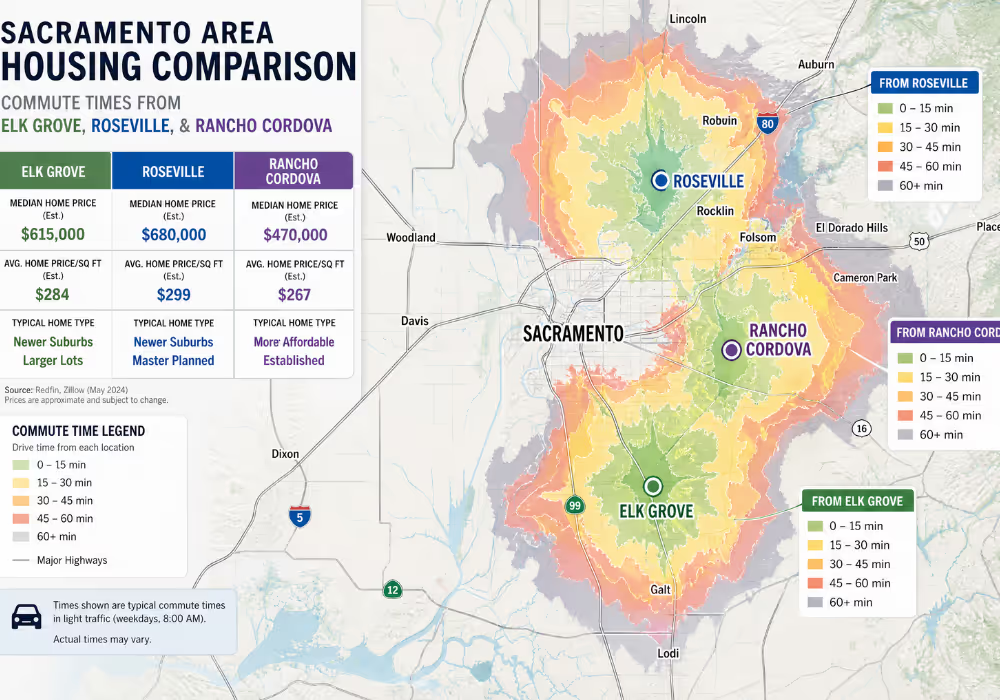
Approximate drive times from each city to downtown Sacramento during typical weekday rush hours vary based on specific neighborhoods, time of day, and traffic conditions. These estimates provide a starting point:
| Origin City | Distance to Downtown Sacramento | Typical Rush-Hour Commute |
| Sacramento (midtown/central) | 0–5 miles | 5–15 minutes |
| Rancho Cordova | ~12 miles | 20–35 minutes |
| Elk Grove | ~15 miles | 25–40 minutes |
| Roseville | ~18 miles | 30–45 minutes |
Sacramento offers the shortest commutes to downtown employers, state government offices, and midtown businesses. If you work in the central city, living within Sacramento proper—in areas like Land Park, East Sacramento, or Midtown—often means sub-20-minute drives.
Rancho Cordova sits along the Highway 50 corridor east of Sacramento. Commuters heading downtown face relatively predictable traffic patterns, though the Sunrise Boulevard and Hazel Avenue interchanges can create bottlenecks during peak hours [2]. Neighborhoods like Anatolia and Sunridge offer newer housing stock on the city's eastern edge.
Elk Grove lies south of Sacramento along Highway 99. Traffic on this corridor tends to be heavy during peak hours, particularly near the Florin Road and Calvine Road exits [2]. The city's master-planned communities appeal to families looking for newer homes with community amenities.
Roseville is north of Sacramento along Interstate 80. This corridor connects to major regional employers in the Roseville-Rocklin area and provides access to downtown Sacramento, though rush-hour congestion around the Douglas Boulevard and Atlantic Street exits is common [2]. West Roseville continues to see active new construction, while Historic Old Town Roseville offers a more established feel.
How to Build Your Personal Commute Map
Rather than relying on general estimates, here's how to get accurate data for your situation:
Use Google Maps or Apple Maps with "arrive by" or "depart at" features set to your actual work hours
Check multiple days—Tuesday through Thursday typically show heavier traffic than Monday or Friday
Test both directions if you have flexible hours; morning and evening patterns differ
Factor in remote work if you only commute 2–3 days per week, a longer drive may be acceptable
Drive the route yourself during actual rush hour before making a final decision
In my experience helping buyers relocate to the Sacramento area, the commute reality check is often the moment when a city moves on or off someone's shortlist. What looks reasonable on a weekend afternoon can feel very different at 8 AM on a Tuesday.
Housing Stock Comparison: What's Actually Available
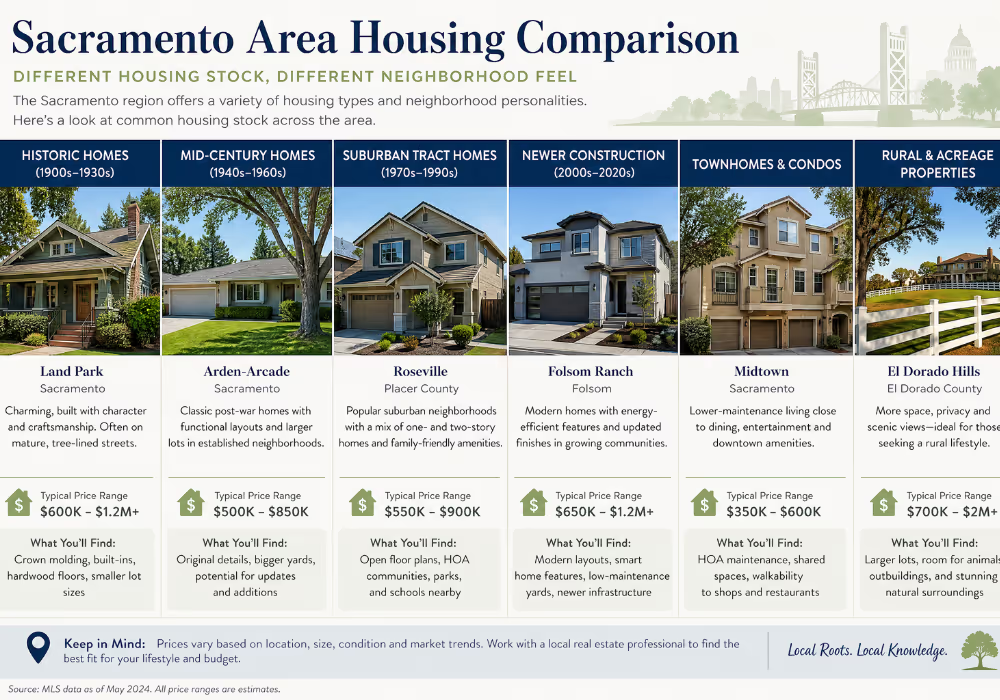
Each city offers different types of homes at different price points. Understanding the housing stock helps you set realistic expectations before you start touring.
Sacramento
Sacramento's housing inventory spans older homes near downtown (many built before 1970), mid-century suburbs, and newer developments on the city's edges [3]. You'll find:
Single-family homes in established neighborhoods like Land Park, Curtis Park, and Tahoe Park
Condos and townhomes particularly in Midtown and Downtown
Newer construction in North Natomas and Pocket-Greenhaven areas
Historic properties in East Sacramento, featuring Craftsman and Tudor styles
The variety means more options across price points—but also more variability in condition and HOA structures depending on the specific neighborhood. A 1920s bungalow in East Sacramento offers a very different ownership experience than a 2015 home in North Natomas.
Elk Grove
Elk Grove experienced significant growth starting in the 1990s and 2000s, resulting in substantial inventory of homes built during that period [3]. The city continues to see new construction, particularly in the southeast toward Sheldon and along the Kammerer Road corridor.
Master-planned communities with HOAs are common throughout the city
Newer single-family homes dominate the inventory
Median home sizes tend to be larger than Sacramento's urban core
New construction options remain available in active developments with builder incentives
Roseville
Roseville's housing stock reflects its growth as a regional employment center. The city includes both established neighborhoods and ongoing new construction [3].
New construction communities in West Roseville and surrounding areas with active builder incentives
Established neighborhoods closer to Historic Old Town Roseville and the Roseville Galleria area
Mix of home sizes from entry-level to executive properties
Higher prevalence of HOAs in newer developments
Rancho Cordova
Rancho Cordova incorporated as a city in 2003, though much of its housing stock predates incorporation. The city offers a mix of older and newer communities [3].
Established neighborhoods built in the 1970s–1990s in areas like Cordova Gardens and Rancho Cordova Village
Newer developments particularly in Anatolia and Sunridge, featuring modern layouts and energy-efficient construction
More affordable entry points compared to Roseville for comparable home sizes
Variable lot sizes ranging from compact to larger parcels depending on the neighborhood
Budget Realities: What Do Homes Actually Cost?
Median home prices fluctuate with market conditions. Rather than citing specific numbers that may shift, here's how to research current pricing:
Check the California Association of Realtors for regional median price reports updated monthly [4]
Use MLS-based tools like Realtor.com or Redfin for real-time active listings
Look at closed sales (not just listing prices) for accurate market data
Compare price-per-square-foot to normalize for home size differences between cities
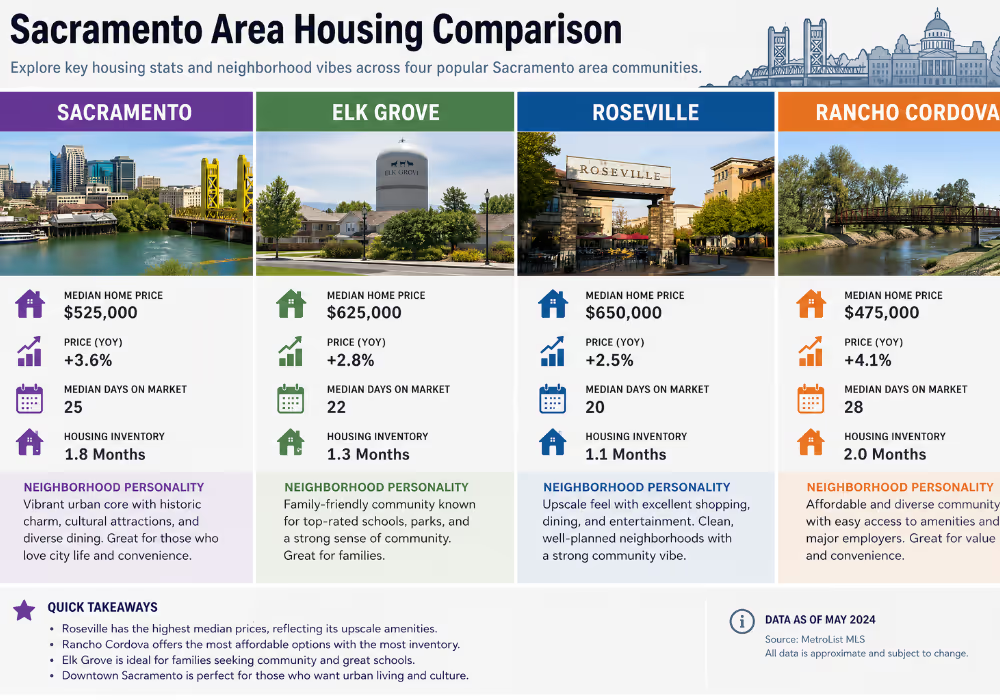
Typical Price Hierarchy (General Pattern)
Based on historical market trends, the general price ranking from highest to lowest median prices tends to follow this pattern:
Roseville — generally highest median prices in this comparison
Elk Grove — typically mid-to-upper range
Sacramento — varies significantly by neighborhood
Rancho Cordova — often a more affordable entry point
This hierarchy shifts based on specific neighborhoods, home age, and market conditions. A newer home in Rancho Cordova's Anatolia neighborhood may cost more than an older home in certain Sacramento neighborhoods. That's why checking current data matters more than relying on general assumptions.
Beyond Purchase Price: Monthly Cost Factors
The purchase price is just one component of housing cost. Build a complete picture by including:
Property taxes: California's Proposition 13 limits the base tax rate to 1% of assessed value, but local bonds and assessments add to this baseline. Different cities and school districts have different additional levies, which can meaningfully affect your monthly payment [5].
HOA dues: Particularly relevant in Elk Grove and Roseville where master-planned communities are common. Monthly HOA fees typically range from $50–$300+ depending on community amenities like pools, parks, and security [6]. Some communities include front-yard maintenance; others don't.
Mello-Roos and Community Facilities District fees: Common in newer developments throughout the region. These special taxes fund infrastructure—schools, roads, parks, fire stations—and can add several hundred dollars per month. They appear on your property tax bill but function like additional assessments and don't decrease if home values drop [5].
Insurance: Costs vary by location, home age, and proximity to wildfire zones. Get quotes specific to any property you're seriously considering, as rates can vary substantially.
Utilities: Older homes may have higher energy costs due to less efficient HVAC systems and insulation. Newer construction often includes energy-efficient features—better windows, modern HVAC, solar pre-wiring—that can reduce monthly bills [7].
Lifestyle, Amenities, and Community Vibe
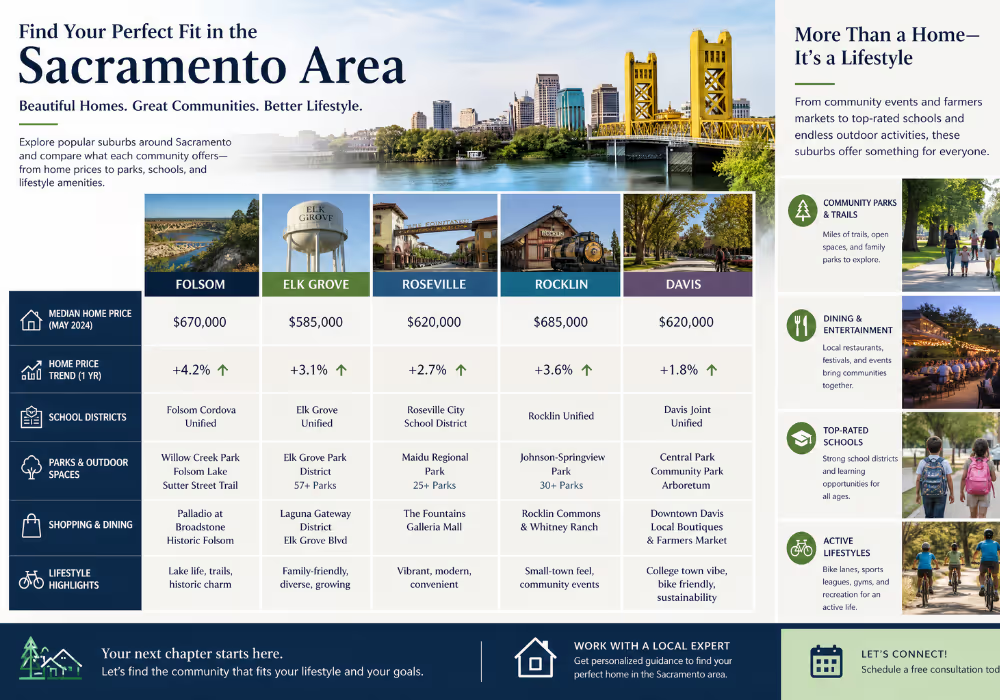
Commute and budget narrow your options, but lifestyle factors often determine which city actually feels right. Each of these four cities offers a different day-to-day experience.
Sacramento: Urban Energy and Variety
Sacramento delivers the most urban experience of the four, with walkable neighborhoods, a growing dining scene, and cultural attractions concentrated near the city center. Midtown and Downtown offer restaurants, breweries, and entertainment within walking distance. East Sacramento and Land Park provide tree-lined streets and a strong neighborhood feel while remaining close to urban amenities.
The city hosts the California State Fair, numerous farmers markets (including the midtown certified farmers market), and access to the American River Parkway for biking and running. For those who value walkability, nightlife options, or proximity to arts and culture, Sacramento proper often ranks highest.
Elk Grove: Family-Oriented Suburbs
Elk Grove has consistently attracted families looking for newer homes, community parks, and a suburban pace. The city maintains an extensive park system, community centers, and youth sports programs. Shopping centers like Elk Grove Promenade provide retail convenience without driving into Sacramento.
The vibe is quieter and more residential. Friday nights may mean neighborhood gatherings rather than downtown restaurants—which is exactly what many buyers want. The Old Town Elk Grove district offers a small historic area with local shops and seasonal events.
Roseville: Retail Hub and Growing Amenities
Roseville functions as a regional retail and employment center, anchored by the Westfield Galleria and Fountains shopping centers. The city offers extensive trails, including connections to the Miners Ravine Trail system, and community pools throughout its newer developments.
Historic Old Town Roseville provides a walkable downtown feel with local restaurants and shops, offering a different character than the newer west side communities. The city draws buyers who work in the Highway 80 corridor and want access to both suburban living and retail convenience.
Rancho Cordova: Practical and Accessible
Rancho Cordova offers a more utilitarian feel—less polished than Roseville, but often more affordable with good highway access. The American River Parkway runs along the city's northern edge, providing trail access for biking, running, and wildlife viewing.
Newer communities like Anatolia and Sunridge have their own parks and modern amenities, while older neighborhoods offer established trees and larger lots. The city works well for buyers prioritizing value and commute efficiency over retail or dining options close to home.
How to Evaluate Lifestyle Fit
Rather than relying on general descriptions, visit each area during the time of day you'd actually be there:
Drive through on a Saturday morning to see who's out walking, what the parks look like, how the neighborhood feels
Check Google Maps or Yelp for the types of restaurants, coffee shops, and services near any specific neighborhood
Visit a local park or trail in each city to gauge maintenance and community activity
Review community calendars on city websites for events and programming that might appeal to you
Researching Safety Without Subjective Rankings
"Is this city safe?" is one of the most common questions buyers ask. Rather than offering subjective assessments—which risk steering and don't account for neighborhood-level variation—here's how to research this yourself:
City and county crime statistics: Many police departments publish crime data or offer interactive crime maps. The Sacramento County Sheriff's Office and individual city police departments (Sacramento PD, Elk Grove PD, Roseville PD, Rancho Cordova PD) often provide public data portals.
Community crime mapping tools: Services like CrimeMapping.com and SpotCrime aggregate reported incidents by location. These tools let you see activity patterns near any specific address.
FBI Uniform Crime Reporting data: The FBI publishes annual crime statistics by jurisdiction, though this data has a lag time [8].
The key insight: crime rates vary within cities as much as between them. A block-by-block assessment matters more than citywide statistics. When evaluating a specific property, check the immediate vicinity rather than relying on general city reputation.
A Framework for Making Your Decision
Rather than declaring a "winner," use this decision framework to identify which city fits your priorities:
If Commute Time Is Your Top Priority
Prioritize Sacramento or Rancho Cordova if you work downtown. These offer the shortest drive times to central Sacramento employers.
Prioritize Roseville if you work in the Highway 80 corridor (Roseville, Rocklin, or Auburn-area employers).
Consider Elk Grove if you work in south Sacramento or have a commute that uses Highway 99 southbound.
If New Construction Is Important to You
Roseville and Elk Grove offer the most active new construction inventory. Both cities have ongoing developments with builder incentives, energy-efficient designs, and modern layouts [9].
Builder incentives can include interest rate buy-downs, closing cost credits, and design upgrades. These programs change frequently—I often help buyers navigate current offers and compare what different builders are providing in any given month.
New construction in Rancho Cordova (particularly Sunridge and Anatolia) provides another option, often at lower price points than comparable new homes in Roseville.
If Budget Is the Primary Constraint
Rancho Cordova often provides the lowest entry point for single-family homes in the region.
Certain Sacramento neighborhoods also offer competitive pricing, particularly in established areas with older housing stock.
Keep in mind that lower purchase prices sometimes come with higher deferred maintenance costs on older homes. Factor in potential updates when comparing total ownership costs.
If Walkability and Urban Amenities Matter
Sacramento's Midtown, East Sacramento, and Land Park offer the most walkable environments with the highest concentration of restaurants, shops, and nightlife within the four-city comparison.
Roseville's Historic Old Town provides a smaller walkable district for those who want some of that feel without living in Sacramento proper.
If Schools Are a Consideration
School quality varies within each city, not just between them. Rather than relying on general city comparisons, research specific school district boundaries and individual school performance data.
The California Department of Education publishes school performance data through the California School Dashboard [10]. You can look up any school's metrics directly rather than relying on third-party rankings that may weight factors differently than you would.
Important: School attendance zones don't always align with city boundaries. Verify which school your potential home address feeds into by contacting the district directly.
Common Mistakes to Avoid
Mistake #1: Starting with price alone. You might find a great deal in an area that adds 30 minutes to your daily commute—costing you 250+ hours per year in the car.
Mistake #2: Trusting "best neighborhood" lists. These rankings often reflect the preferences of whoever created them, not objective criteria that apply to your situation.
Mistake #3: Ignoring total monthly costs. A home with no HOA but higher utility bills and deferred maintenance might cost more monthly than a slightly pricier home in a newer community with an HOA.
Mistake #4: Assuming all new construction is the same. Builder incentive programs, included features, energy efficiency, and warranty coverage vary significantly between developments and change month to month.
Mistake #5: Not test-driving the commute. Visit during actual rush hour before making a decision. What looks reasonable on a Saturday morning may be very different on a Tuesday at 8 AM.
Mistake #6: Overlooking lifestyle fit. Two cities might both work on paper for commute and budget—but one might match your personality and the other might leave you feeling isolated or bored.
Your Next Step: Building a Personalized Shortlist
This framework gives you a starting point, but every buyer's situation is different.
Your priorities around commute tolerance, budget, home features, and lifestyle fit are unique. So is your financing situation—whether you're using conventional financing, a VA loan, FHA, or another path.
Want help building a shortlist based on your specific commute requirements and budget? A consultation can help you identify which neighborhoods and communities fit your criteria—without the subjective rankings.
Request a consult to discuss your situation, or call to talk through your priorities. There's no pressure—just clarity on your options.
Frequently Asked Questions
How do I figure out my actual commute time before moving?
Use Google Maps or Apple Maps with the "arrive by" or "depart at" feature set to your typical work hours. Test multiple days during a normal work week, as traffic patterns vary—Tuesdays through Thursdays tend to show the heaviest congestion. If possible, drive the route yourself during rush hour before making a decision, as apps can underestimate travel time during peak periods.
Are HOA fees common in all four cities?
HOA prevalence varies significantly. Elk Grove and Roseville have many master-planned communities where HOA membership is required, while Sacramento has more established neighborhoods without HOAs. Rancho Cordova has a mix—older neighborhoods often lack HOAs, while newer communities like Anatolia typically require them. HOA fees generally cover common area maintenance, community amenities, and sometimes exterior maintenance.
What's the difference between Mello-Roos and regular property taxes?
Mello-Roos (Community Facilities District) fees fund infrastructure in newer developments—things like schools, roads, parks, and fire stations. They're common in new construction areas throughout the Sacramento region and appear on your property tax bill as a separate line item. Unlike regular property taxes, Mello-Roos fees don't decrease if home values drop, and they typically run for 20-40 years [5].
Should I buy new construction or a resale home?
It depends on your priorities. New construction often includes builder incentives (rate buy-downs, closing cost credits), modern energy efficiency, and warranty coverage. Resale homes may offer established landscaping, larger lots, more central locations, or unique architectural character. Both paths involve tradeoffs worth exploring based on what matters most to you.
How do I research schools without relying on ranking websites?
Access school performance data directly through the California School Dashboard at caschooldashboard.org [10]. You can look up specific schools by name or address and review multiple metrics rather than a single composite score. Contact school districts directly to confirm attendance boundaries for any address you're considering, as boundaries can change and don't always follow intuitive geographic lines.
How can I research neighborhood safety objectively?
Check crime mapping tools like CrimeMapping.com, which shows reported incidents by location. Many local police departments also publish crime statistics or interactive maps on their websites. The FBI publishes annual Uniform Crime Reporting data by jurisdiction, though with a time lag [8]. Focus on the specific blocks near any property you're considering rather than citywide statistics.
About This Guide
This article was created to help homebuyers in the Greater Sacramento area make informed decisions using objective criteria rather than subjective rankings. The information reflects publicly available data and general market patterns.
Tavon Willis is a California-licensed real estate salesperson (DRE #02095751) who has been helping buyers navigate the Sacramento market since 2019. His approach emphasizes education-first guidance—helping first-time buyers, relocating families, and those interested in new construction understand their options clearly before making decisions.
Cited Works
[1] U.S. Census Bureau — "American Community Survey: Commuting Characteristics by Sex, Sacramento-Roseville-Folsom, CA Metro Area." https://data.census.gov/table/ACSST1Y2022.S0801
[2] California Department of Transportation — "Traffic Census Program, Annual Average Daily Traffic Volumes." https://dot.ca.gov/programs/traffic-operations/census
[4] California Association of Realtors — "Housing Market Data, County and Regional Sales and Price Reports." https://www.car.org/marketdata/data/countysalesactivity
[5] California State Controller's Office — "California Property Tax, An Overview, Chapter 6: Special Assessments and Mello-Roos." https://www.sco.ca.gov/ardtax_prop_tax_overview.html
[6] Community Associations Institute — "Homeowner Association Statistics and Data." https://www.caionline.org/AboutCommunityAssociations/Pages/StatisticalInformation.aspx
[7] U.S. Department of Energy — "Energy Saver: New Home Energy Efficiency." https://www.energy.gov/energysaver/new-home-energy-efficiency
[8] Federal Bureau of Investigation — "Crime Data Explorer." https://cde.ucr.cjis.gov/
[9] California Energy Commission — "2022 Building Energy Efficiency Standards for Residential Buildings." https://www.energy.ca.gov/programs-and-topics/programs/building-energy-efficiency-standards/2022-building-energy-efficiency
[10] California Department of Education — "California School Dashboard." https://www.caschooldashboard.org/


