

Sacramento New Construction Buyer Representation: Protect Incentives, Inspections, and Contract Terms
Key Takeaways:
Builder sales representatives work for the builder, not you—having your own buyer's agent means someone is contractually obligated to protect your interests
Many Sacramento-area builders require you to register with an agent on your first visit; visiting alone can forfeit your right to representation later
Recent industry changes now require signed buyer representation agreements before touring any homes, including new construction model homes
Published incentives are typically non-negotiable, but upgrades, lot premiums, and contract terms often have room for discussion
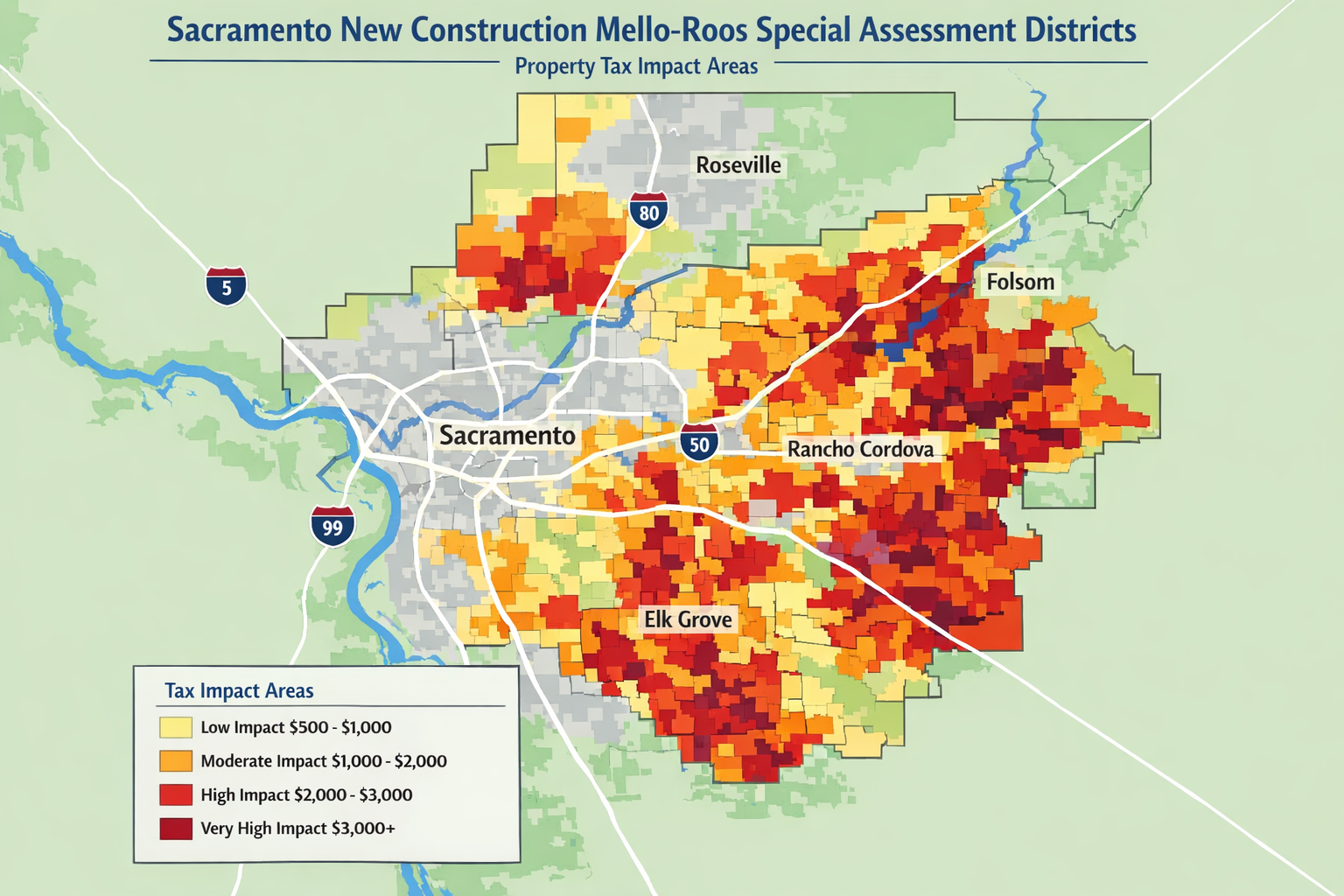
Mello-Roos taxes and special assessments can significantly impact your monthly payment in Sacramento County new construction communities
Walking into a polished model home in Natomas, Rancho Cordova, or Elk Grove feels exciting. The staged furniture looks perfect, the finishes are pristine, and the sales representative is ready to show you every feature of the floorplan.
Here's what catches many buyers off guard: that friendly sales rep works for the builder. Their job is to sell homes at terms favorable to their employer—not to advise you on whether to wait for better incentives, flag contract language that benefits the builder, or recommend you walk away.
In my experience helping buyers navigate Sacramento-area new construction purchases, the difference between a smooth transaction and an expensive headache often comes down to understanding who represents whom—and getting that figured out before your first sales office visit.
This guide covers exactly how new construction buyer representation works, where your negotiating power actually exists, and the specific protections Sacramento-area buyers need to watch for.
The Three Roles in Every New Construction Transaction
Before you step into any sales office in the Sacramento region, you need clarity on who sits on which side of the table.
The Builder's Sales Representative
The person greeting you at the model home holds a real estate license and knows the product inside and out. They can answer questions about floorplans, lot availability, and the builder's current promotions. But their paycheck comes from the builder, and their fiduciary duty runs to their employer.
This isn't a criticism of sales reps—it's simply how the business works. They cannot ethically advise you to hold off for a better deal, point out contract terms that favor the builder over you, or suggest you consider a competing community.
Your Buyer's Agent
A buyer's agent represents your interests exclusively throughout the transaction. In new construction, this means reviewing contracts drafted by the builder's attorneys, negotiating on upgrades and terms, coordinating inspections at critical construction phases, and ensuring deadlines protect you rather than just the builder's timeline.
Important industry update: Following recent changes to how real estate transactions work nationwide, buyers are now required to sign a written buyer representation agreement before touring homes—including new construction model homes. This agreement spells out exactly what services your agent provides and how compensation works. If you haven't had this conversation with an agent yet, that's your first step before visiting any sales office.

The Lender
Most builders partner with preferred lenders and offer meaningful incentives—sometimes thousands in closing cost credits or interest rate buy-downs—when you finance through their partners. These incentives can represent genuine savings, but they deserve the same scrutiny you'd give any financial decision.
Your buyer's agent can help you run the numbers: comparing the builder's preferred lender against outside financing to determine which path actually costs less over the life of the loan.
The First-Visit Registration Trap
Here's the timing issue that catches Sacramento-area buyers most often: many builders require you to register with a buyer's agent on your very first visit to their sales office.
Walk in alone, sign the guest register, tour a few models, and you may have just forfeited your ability to bring representation into the deal later—or created a complicated situation that takes weeks to untangle.
How Registration Policies Typically Work
Builder policies vary, but the common pattern looks like this:
Your first visit "registers" you to whoever accompanied you. If you visit alone, you're often registered directly to the builder's sales team. Bringing an agent on a later visit may not override that initial registration. Some builders offer a 24- or 48-hour grace period; others treat registration as immediate and permanent.
I've seen buyers in Folsom and Roseville learn this lesson the hard way—excited about a community, they toured on a weekend afternoon without thinking about representation, then discovered their options were limited by the time they wanted to make an offer.
What to Do Before Visiting Any New Construction Community
The fix is simple: make one phone call before you visit any sales office.
Connect with a buyer's agent who understands new construction transactions. Have them contact the builder to understand the registration policy. Either visit together on your first trip, or ensure your agent has pre-registered you before you arrive. Keep documentation of your agent relationship before any sales office contact.
This small step protects your ability to have someone in your corner throughout the entire transaction.

Where Builder Incentives Are Negotiable—and Where They're Not
Builder incentives attract buyers, but understanding what's actually on the table requires knowing the difference between published programs and deal-specific terms.
Published Incentive Programs: Generally Non-Negotiable
Builders frequently run community-wide or company-wide promotions that apply to all buyers equally. These include advertised closing cost credits (such as "$15,000 toward closing with preferred lender"), published interest rate buy-down programs, standard warranty packages, and base pricing during specific promotional windows.
These published incentives are marketing tools designed to move inventory. They're available to anyone who qualifies, and there's typically no room for individual negotiation.
Deal-Specific Terms: Often Negotiable
Your buyer's agent can typically negotiate on several fronts that aren't covered by published programs.
Upgrades and options represent one of the strongest negotiating areas. Flooring, countertops, appliances, and structural options often carry high markup, which gives builders room to add value without affecting their base price.
Lot premiums—the extra cost for corner lots, views, or preferred positions within a community—may have flexibility depending on inventory and timing.
Closing timeline flexibility matters especially if you're coordinating the sale of another home. Builders want to close, but the specific date may be negotiable.
Contract contingencies deserve careful attention. Inspection rights, appraisal gap terms, and extension provisions protect you when the unexpected happens.
Quick move-in pricing often has more room than to-be-built contracts. Completed spec homes sitting on the builder's books incur carrying costs, which can create motivation to make a deal.
The key insight: builders often prefer negotiating on upgrades rather than base price because base price reductions affect comparable sales data for appraisals throughout the community.
Quick Move-In vs. To-Be-Built: Different Strategies for Different Situations
New construction purchases fall into two main categories, each with distinct considerations for Sacramento-area buyers.
Quick Move-In Homes (Spec Homes)
These are homes the builder has already completed or nearly completed. They're sitting on the books and costing money every day they don't sell.
What works in your favor: You see exactly what you're buying—no surprises about how finishes actually look or whether that countertop color works with the flooring. Closing timelines run 30-45 days in many cases. There may be more negotiating room on price or included upgrades. You won't face construction delays or material substitutions.
What to watch for: Your customization options are limited or nonexistent. Inspection happens on a completed home rather than during construction phases. Some quick move-in inventory consists of former model homes with higher foot traffic.
To-Be-Built Homes
These contracts involve selecting a lot and floorplan, then choosing options and finishes before construction begins.
What works in your favor: Full customization within the builder's option packages. Opportunity for phase inspections during construction to catch issues before walls close up. Time to sell your current home if needed. Potential to lock in pricing before any market increases.
What to watch for: Construction timelines can extend significantly—I've seen "6-month" builds stretch to 10 or 12 months in Sacramento's market. Material costs and availability may affect your selections. The appraisal happens at completion, creating potential gap risk. Longer exposure to interest rate changes if your lock expires.

Understanding Mello-Roos and Special Assessments in Sacramento-Area New Construction
This topic deserves its own section because it catches so many buyers off guard—and it's particularly relevant in Sacramento County's newer communities.
Mello-Roos is a special tax district that helps fund infrastructure and services in developing areas: roads, schools, parks, fire stations, and similar amenities. When you buy in a Mello-Roos district, you pay an additional tax on top of your standard property taxes.
Why This Matters for Your Budget
In some Sacramento-area new construction communities, Mello-Roos assessments add $200-$400 or more to your monthly payment. Combined with HOA dues, this can significantly change the affordability picture compared to a resale home in an established neighborhood.
The sales office will disclose Mello-Roos obligations, but the disclosure documents can run dozens of pages. Your buyer's agent can help you understand the actual dollar impact and timeline—some Mello-Roos obligations expire after 20-25 years, while others continue longer.
Questions to Ask
Before committing to any Sacramento-area new construction purchase, get clear answers on the total monthly Mello-Roos assessment, the HOA fee and what it covers, how these costs are projected to change over time, and what the combined impact is on your monthly housing payment. Factor these into your budget from day one, not as an afterthought.
The Appraisal Timeline Challenge
Appraisals in new construction transactions work differently than resale purchases, and the timing creates risks that surprise many buyers.
When Appraisals Actually Happen
For to-be-built homes, the appraisal typically occurs when the home is substantially complete—often just weeks before your scheduled closing. If you signed a contract six or eight months ago, market conditions may have shifted in either direction.
What Happens If the Appraisal Comes in Low
If the appraised value is lower than your contract price, you face a decision: bring additional cash to closing to cover the gap, attempt to renegotiate the purchase price with the builder, or cancel the transaction depending on your contract terms.
Builders sometimes negotiate on appraisal gaps, particularly when they need to close sales before quarter-end reporting or when inventory is building up in a community. But their willingness depends heavily on market conditions and their current sales pace.
How Your Agent Helps Navigate Appraisal Issues
A buyer's agent experienced in new construction can review comparable sales data before you commit to help set realistic expectations, ensure your contract includes appropriate appraisal contingencies, advocate for adjustments if values come in low, and help you understand when walking away makes more financial sense than proceeding.
Inspections in New Construction: More Critical Than Most Buyers Realize
"It's brand new—why would I need an inspection?" This assumption costs buyers money every year in Sacramento's new construction market.
Why New Homes Need Professional Inspection
New construction can have issues ranging from cosmetic oversights to significant defects. HVAC systems get installed incorrectly. Plumbing connections aren't tested properly under pressure. Framing or foundation problems hide behind finished drywall. Electrical work misses code requirements. Grading creates drainage issues that only become apparent during the rainy season.
Builder warranties cover many defects, but discovering problems before closing gives you leverage to demand corrections. After closing, you're filing warranty claims and hoping for timely response.
Phase Inspections: The Ideal Approach for To-Be-Built Homes
For homes under construction, phase inspections catch problems before they're covered up.
Pre-drywall inspection is your window to see what's inside the walls: framing quality, electrical rough-in, plumbing rough-in, HVAC installation, and insulation. Once drywall goes up, these elements are hidden.
Final inspection provides a comprehensive review of the completed home before your walkthrough with the builder.
Not all builders readily accommodate phase inspections. Your buyer's agent can negotiate inspection rights as part of your contract terms—getting this in writing before you sign matters.
The Builder's Walkthrough vs. Your Independent Inspection
The builder will conduct a walkthrough with you before closing, working through their punch list process. This identifies cosmetic items they'll repair: paint touch-ups, minor drywall imperfections, cabinet adjustments.
This is not a substitute for an independent inspection. A professional inspector identifies construction quality issues, code compliance questions, and items that may affect your home's long-term performance—things the builder's walkthrough isn't designed to catch.
Warranty Protections: What You Get and How to Use Them
Most builders offer warranty coverage structured in tiers: one year covering workmanship and materials, two years covering mechanical systems like electrical, plumbing, and HVAC, and ten years covering structural defects.
Understanding these timelines matters because many issues don't appear immediately.
The 11-Month Walkthrough
Schedule a comprehensive inspection before your one-year warranty expires. Many defects—particularly those related to settling, seasonal changes, or system performance—only become apparent after you've lived in the home through different conditions.
Common issues discovered at the 11-month mark include nail pops in drywall from normal settling, window seal failures, grout cracking in tile work, drainage issues that only appear during heavy rain, and HVAC performance problems that show up during Sacramento's summer heat.
Document everything in writing and submit warranty claims before your coverage window closes. Verbal conversations don't protect you—written documentation does.
Contract Terms That Protect Buyers
Builder contracts are lengthy, detailed, and drafted by the builder's legal team. Several provisions warrant close attention.
Contingencies Worth Preserving
Appraisal contingency protects you if the appraised value comes in lower than the purchase price. Without this, you're obligated to cover any gap out of pocket.
Financing contingency allows you to exit if you cannot secure financing, though builders often require pre-approval before accepting a contract.
Inspection rights should explicitly state your right to conduct independent inspections and specify the timeframe for doing so.
Timeline Protections
Extension provisions matter when construction runs past the estimated completion date. Some contracts automatically extend; others require renegotiation or include penalty clauses that affect you.
Rate lock coordination requires attention if you're getting a rate lock with the builder's preferred lender. Understand exactly when it expires and what happens if construction delays extend past that window.
Deposit Structures
New construction deposits are often substantial—sometimes 3-5% or more, paid in stages: initial deposit at contract signing, additional deposits at certain milestones like design selection or foundation completion.
Understand exactly which circumstances allow you to recover your deposits and which result in forfeiture. This protection should be clear before you write any checks.
How Buyer Representation Actually Works with Builder-Paid Compensation
A reasonable question: "If the builder pays my agent's compensation, is my agent really working for me?"
Yes—and here's why that structure works.
Your buyer's agent has a written agreement with you establishing their fiduciary duties: loyalty, confidentiality, disclosure, obedience, reasonable care, and accounting. The source of their compensation doesn't change those legal obligations.
Builders factor agent compensation into their cost structure, similar to marketing, model home expenses, and sales staff salaries. This has been standard practice in new construction for decades.
With recent industry changes bringing more transparency to compensation structures, your agent should explain clearly how their compensation works before you begin working together. If that conversation hasn't happened, ask.
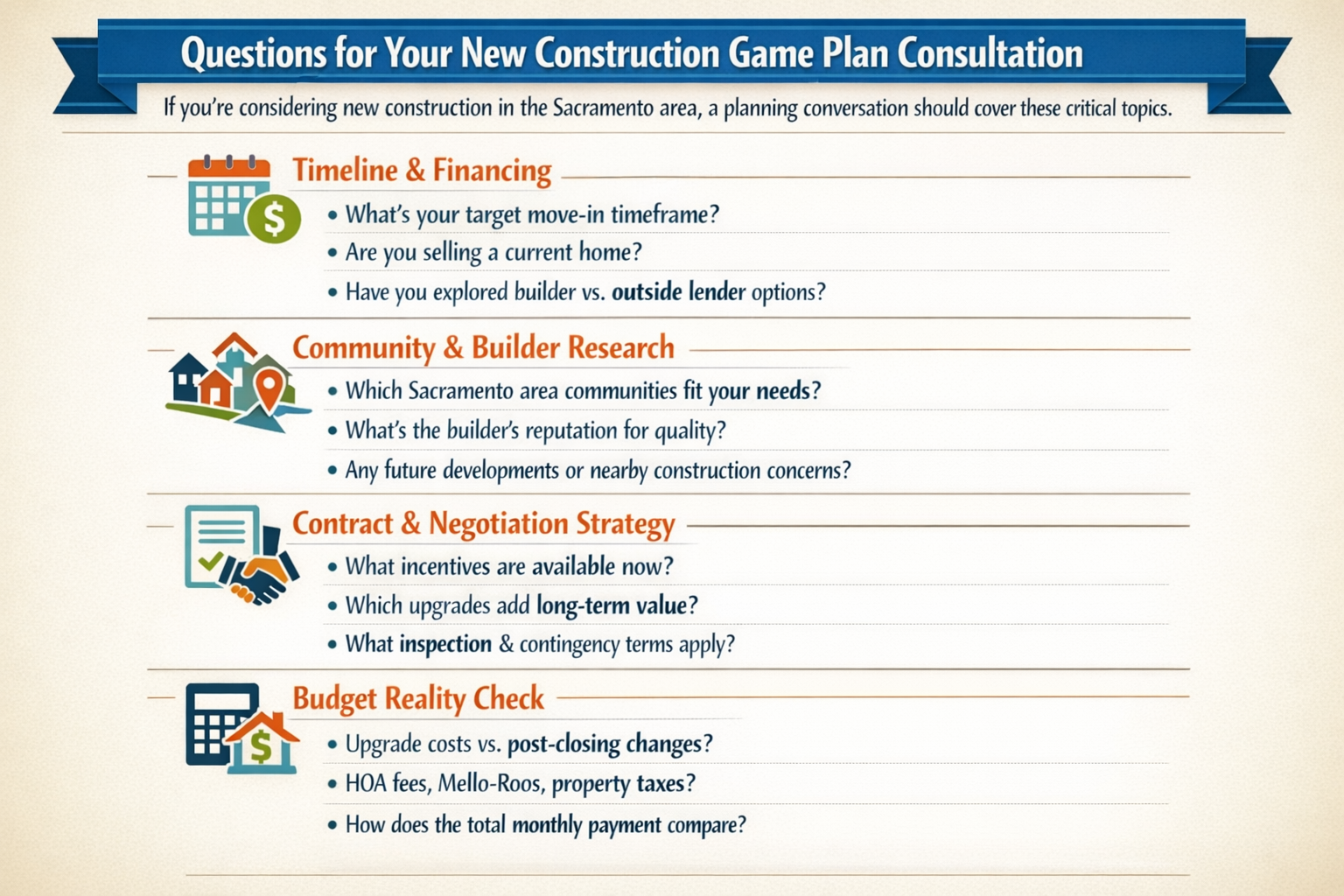
Questions for Your New Construction Game Plan Consultation
If you're considering new construction in the Sacramento area, a planning conversation should cover these critical topics.
Timeline and financing: What's your target move-in timeframe? Are you selling a current home, and how does that coordination work? Have you explored both builder-preferred and outside lender options?
Community and builder research: Which Sacramento-area communities fit your commute patterns, lifestyle priorities, and budget? What's the builder's reputation for construction quality and warranty responsiveness? Are there pending developments that might affect the community—future phases, nearby construction, traffic changes?
Contract and negotiation strategy: What incentives are currently available, and how do they compare to what the builder offered in recent months? Which upgrades offer long-term value versus those better handled after closing? What inspection and contingency terms should we prioritize?
Budget reality check: How do upgrade costs compare to post-closing modifications? What are the actual carrying costs—HOA, Mello-Roos, property taxes? How does the total monthly payment compare to resale options in established neighborhoods?
Your New Construction Checklist: Before the First Sales Office Visit
Use this checklist before visiting any builder's sales center in Sacramento, Elk Grove, Folsom, Roseville, or surrounding communities:
Connect with a buyer's agent experienced in Sacramento-area new construction
Sign a buyer representation agreement (now required before touring)
Confirm your agent has contacted the builder about registration requirements
Get pre-approved with at least one lender (builder comparison comes later)
List your must-haves, nice-to-haves, and deal-breakers
Research the builder: reviews, warranty reputation, quality in past communities
Understand your timeline constraints (lease expiration, current home sale)
Prepare questions about HOA fees, Mello-Roos taxes, and total monthly costs
Know your budget ceiling—including upgrades, closing costs, and reserves
Request Your New Construction Game Plan
Navigating Sacramento's new construction market doesn't require becoming an expert in builder contracts and construction timelines. It requires having someone in your corner who already understands how these transactions work.
A New Construction Game Plan consultation covers your specific situation: timeline, financing options, communities that match your criteria, and a clear roadmap for protecting your interests from first visit through warranty walkthrough.
Ready to explore new construction with confidence? Request a consult or call to discuss your new construction questions—no pressure, just clarity on your options.
Frequently Asked Questions
Do I need my own agent for new construction, or can I just work with the builder's sales team?
You can legally purchase without your own representation, but the builder's sales team works for the builder—their fiduciary duty runs to their employer, not to you. Having your own agent means someone reviews contracts drafted by the builder's attorneys, negotiates upgrades and terms on your behalf, and coordinates inspections to protect your interests. Recent industry changes also now require signed buyer representation agreements before touring homes, making this conversation necessary regardless.
What happens if I already visited a sales office without my agent?
Contact a buyer's agent immediately and explain the situation. Depending on the builder's registration policy and how much time has passed, options may still exist. Some builders have grace periods; others may work with your agent if you haven't signed any purchase documents. The sooner you reach out, the more flexibility typically remains available.
Are builder incentives like rate buy-downs actually good deals?
Builder incentives can represent genuine savings, but they require comparison shopping. A rate buy-down that costs the builder less than the advertised value might still save you money—or an outside lender might offer better overall terms. The key is comparing the complete cost picture: interest rate, closing costs, loan terms, and total payment over the life of the loan rather than looking at any single incentive in isolation.
What's the difference between Mello-Roos taxes and regular property taxes?
Mello-Roos is a special assessment district that funds infrastructure and services in developing areas—roads, schools, parks, fire stations. It's charged on top of standard property taxes and can add several hundred dollars monthly to your payment in Sacramento-area new construction communities. Unlike regular property taxes, Mello-Roos obligations may expire after a set period, but the timeline varies by district.
What inspections should I get on a new construction home?
At minimum, get an independent inspection before closing—even on a brand-new home. For to-be-built homes, a pre-drywall inspection is highly valuable because it reveals framing, plumbing, electrical, and HVAC installation before walls close up. Schedule an 11-month warranty walkthrough to catch issues that develop after move-in but before your one-year warranty expires.
About the Author
Tavon Willis is a California-licensed real estate salesperson (DRE #02095751) serving buyers and sellers throughout the Sacramento and Elk Grove areas. With a focus on first-time homebuyer education and new construction guidance, Tavon helps clients navigate complex transactions with clarity and confidence. His approach emphasizes informed decision-making over pressure—ensuring clients understand their options and feel empowered throughout the homebuying process.
Works Cited
[1] California Department of Real Estate — "Agency Relationships and Disclosure Requirements." https://www.dre.ca.gov/files/pdf/re27.pdf
[2] National Association of REALTORS — "Buyer Representation Agreements: What Buyers Need to Know." https://www.nar.realtor/the-facts/nar-settlement-faqs-what-the-nar-settlement-means-for-buyers
[3] Consumer Financial Protection Bureau — "Shopping for a Mortgage: What You Need to Know." https://www.consumerfinance.gov/owning-a-home/process/compare/
[4] National Association of Home Builders — "Understanding Builder Incentive Programs." https://www.nahb.org/advocacy/industry-issues/land-use-101/community-facilities-districts
[5] California Association of REALTORS — "New Home Purchase Contracts: Key Provisions." https://www.car.org/en/riskmanagement/qa/contracts-folder/new-construction-contracts
[6] Appraisal Institute — "Residential Appraisal Standards and New Construction." https://www.appraisalinstitute.org/assets/1/7/Guide-Note-12.pdf
[7] American Society of Home Inspectors — "Standards of Practice for Home Inspections." https://www.homeinspector.org/Resources/Standard-of-Practice
[8] Federal Trade Commission — "Home Warranties: Understanding Your Coverage." https://consumer.ftc.gov/articles/home-warranties
[9] California Department of Real Estate — "Purchase Contract Requirements and Deposit Handling." https://www.dre.ca.gov/files/pdf/ref/relaw.pdf
[10] National Association of REALTORS — "Compensation in Real Estate Transactions." https://www.nar.realtor/about-nar/policies/mls-policy-statements


