

Moving up, downsizing, or relocating within the Sacramento area? The timing question—sell your current home first or buy the new one before listing—can feel paralyzing.
I've walked clients through this decision dozens of times, and here's what I've learned: there's no universal right answer, but there is a right answer for your situation. It comes down to three factors that most real estate advice glosses over—your certainty about the next home, your timing flexibility, and your cash position.
What follows are the three strategy paths Sacramento sellers actually use. By the end, you'll know which approach fits your circumstances and what tradeoffs come with each.
Quick Comparison: All Three Paths at a Glance
Before we get into details, here's a snapshot to help you orient:
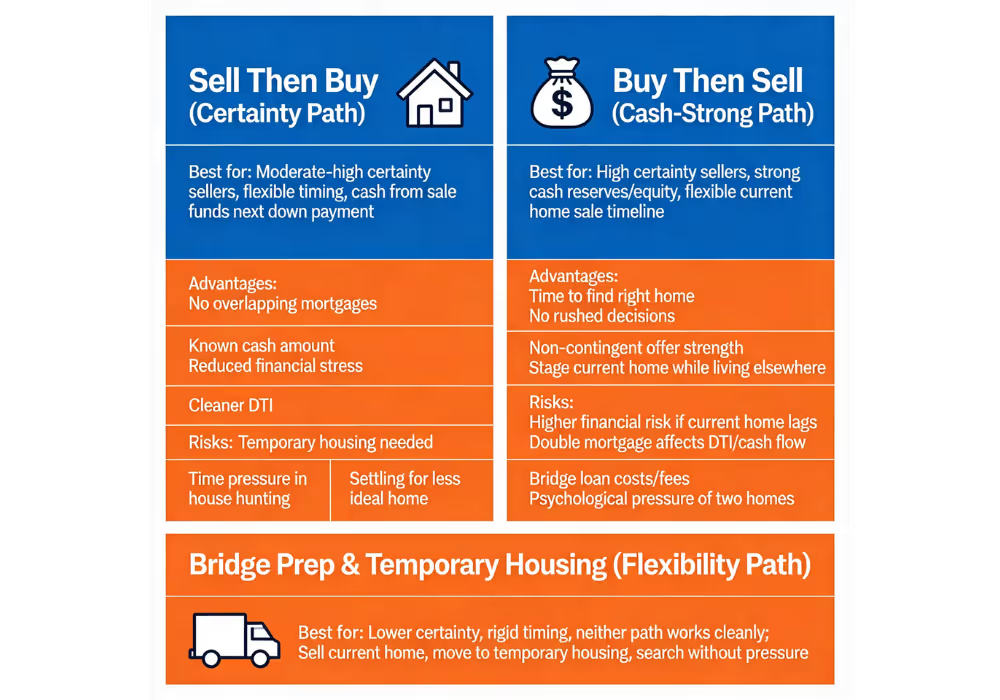
| Strategy Path | Best If You Have... | Main Advantage | Main Risk |
| Sell First (Certainty Path) | Moderate certainty, flexible timing, cash tied to home equity | No overlapping mortgages | Time pressure to find next home |
| Buy First (Cash-Strong Path) | High certainty, strong reserves/equity access, flexible sale timeline | No rushed purchase decisions | Carrying two mortgages |
| Bridge Prep & Temporary Housing (Flexibility Path) | Low certainty, rigid deadlines, or neither path fits cleanly | Maximum negotiating power on next purchase | Two moves instead of one |
Now let's unpack each one.
Why Timing Matters More in Sacramento's Market
Sacramento's housing market creates specific conditions that shape your sequencing decision—and they shift throughout the year.
Inventory levels directly affect your leverage. According to the California Association of Realtors, Sacramento County's months of supply has fluctuated between tight seller's market conditions and more balanced territory over the past two years [1]. When inventory runs low, buyers face stiff competition, making it harder to secure your next home before selling. When listings increase, you may have more breathing room.
Negotiation dynamics shift with supply. In competitive conditions, sellers offering a sale contingency (where your purchase depends on selling your current home) often see their offers passed over for cleaner, non-contingent bids. In balanced markets, contingent offers become more negotiable.
Sacramento has seen substantial equity gains. The Federal Housing Finance Agency's House Price Index shows Sacramento-area home values have appreciated significantly over the past five years [2]. That equity can be a strategic asset—if you know how to access it at the right moment.
Understanding where we sit in the cycle right now helps you pick the right path. When we talk, I can pull the latest days-on-market data for your specific neighborhood.
The 3-Factor Framework: Certainty, Timing, Cash
Before committing to any strategy, honestly assess where you stand on three dimensions.
Factor 1: Certainty About Your Next Home
Ask yourself:
Do you already know the neighborhood, price range, and property type you want?
Have you been actively searching, or is this still exploratory?
How specific are your requirements—school boundaries, commute distance, lot size, new construction vs. resale?
Higher certainty means you can move faster once your current home sells. Lower certainty suggests you'll need more runway to find the right fit. Sacramento buyers often underestimate this—especially when targeting specific school attendance boundaries or communities like Elk Grove, Folsom, or Natomas.
Factor 2: Timing Flexibility
Consider:
Do you have a hard deadline (job start date, lease expiration, school enrollment)?
Could you stay in your current home for several months after it sells if needed?
Are you open to temporary housing between homes?
More flexibility opens up more strategy options. Rigid timelines narrow your choices—but don't eliminate them.
Factor 3: Cash Position
Be honest about the numbers:
Do you have enough liquid savings for a down payment without needing proceeds from your current home sale?
Could you carry two mortgages for 60 to 90 days if necessary?
Would a bridge loan or HELOC be realistic given your equity and income?
Stronger cash positions allow you to buy before selling. Tighter cash positions typically require selling first—or getting creative with timing.
Strategy Path 1: Sell First, Then Buy (The Certainty Path)
Best for: Sellers with moderate-to-high certainty about what they want next, flexible timing, and a cash position that depends on sale proceeds for the next down payment.
How It Actually Works
You list and sell your current home, close the transaction, and then begin your purchase search in earnest. Your sale proceeds fund the next down payment, eliminating any need to juggle two mortgages.
The key to making this work smoothly? Negotiating time after closing.
The Rent-Back Agreement: Your Buffer
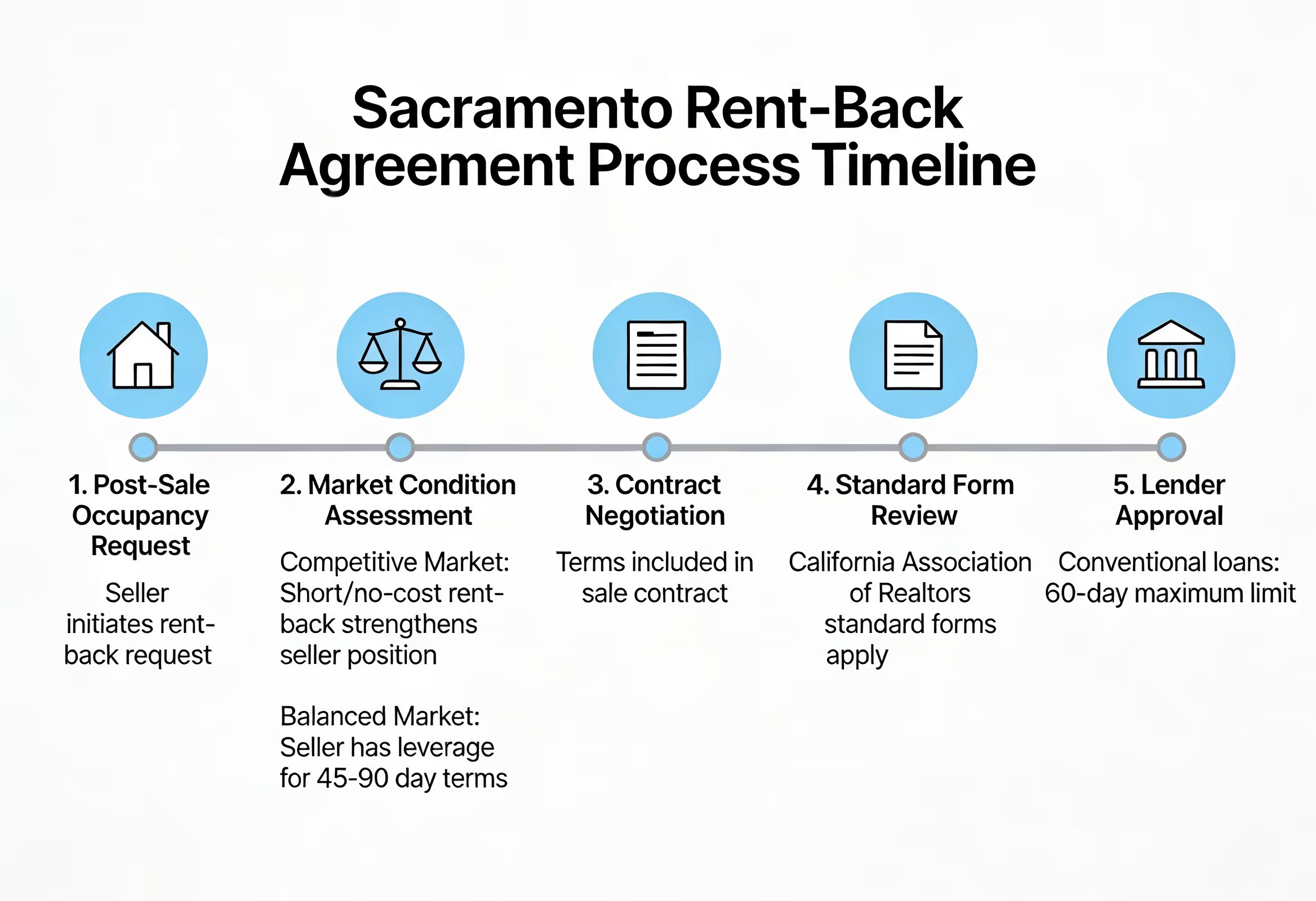
A rent-back (sometimes called a post-closing occupancy agreement or seller leaseback) lets you stay in your home for a defined period after the sale closes—typically 30 to 60 days, though terms vary by transaction.
Here's how rent-back negotiations typically play out:
In competitive markets: Buyers may resist long rent-backs because they're eager to move in. Offering a short or no-cost rent-back can actually strengthen your position as a seller.
In balanced markets: You have more leverage to request 45, 60, or even 90-day rent-back periods. The terms are negotiated as part of your sale contract.
California Association of Realtors standard forms include provisions for rent-back arrangements, and your buyer's lender may impose limits (often 60 days maximum for conventional loans) [1].
What You Gain
No overlapping mortgage payments
You know exactly how much cash you have for your next purchase
Reduced financial stress and uncertainty
Cleaner debt-to-income ratio when applying for your next mortgage
What You Trade Off
You may need temporary housing if your rent-back period expires before your next home closes
You're house hunting under time pressure
You might settle for a less-than-ideal home to meet your timeline
When a Sale Contingency Can Bridge the Gap
If Sacramento inventory is elevated and sellers on the other side are motivated, you might find a next home that accepts an offer contingent on your current home selling. This bridges the sell-first approach with more certainty about where you're headed.
However, sale contingency acceptance rates drop when inventory tightens. In spring 2024, I worked with a seller relocating within Elk Grove who wrote three contingent offers—all rejected in favor of non-contingent buyers. We pivoted to a rent-back strategy and closed successfully, but it required flexibility she hadn't originally planned for.
The lesson: don't build your entire plan around contingency acceptance. Treat it as a bonus if it works out.
Strategy Path 2: Buy First, Then Sell (The Cash-Strong Path)
Best for: Sellers with high certainty about their next home, strong cash reserves or equity access, and flexibility on their current home's sale timeline.
How It Actually Works
You secure your next home before listing your current property. This requires one of the following: Strong cash reserves to cover down payment and closing costs on the new home without relying on your current home's sale proceeds.
Liquid assets: Enough cash for the new down payment that's separate from your current home equity
Equity access: A bridge loan, Home Equity Line of Credit (HELOC), or similar financing that lets you tap equity before selling
Carrying capacity: The ability to pay two mortgage payments temporarily without financial strain
Understanding Bridge Loans in California
Bridge loans are short-term financing products designed specifically for this situation. They typically:
Use your current home's equity as collateral
Carry higher interest rates than traditional mortgages (often 1.5 to 3 percentage points higher)
Include origination fees ranging from 1.5% to 3% of the loan amount
Have terms of 6 to 12 months
Not every lender offers bridge loans, and qualification depends on your equity position, income, and overall debt picture. If you're considering this path, get pre-qualified for bridge financing before you start shopping for your next home.
What You Gain
You can take your time finding the right next home
No rushed decisions or temporary housing logistics
You can move at your own pace, then stage your current home while living elsewhere
Your offer on the next home is non-contingent, giving you negotiating strength
What You Trade Off
Higher financial risk if your current home takes longer to sell than expected
Carrying two mortgages affects your debt-to-income ratio and monthly cash flow
Bridge loan costs and fees add to your overall transaction expenses
Psychological pressure of owning two homes simultaneously
Making It Work in Sacramento
This path becomes more viable when you have substantial equity. Many Sacramento homeowners who purchased five or more years ago have seen significant appreciation [2]. If you bought in 2019 or earlier, you may have enough equity to make bridge financing realistic.
Before committing, get a comparative market analysis to understand your current home's realistic market value and expected days on market. The gap between "what Zillow says" and "what a buyer will actually pay in today's market" can be tens of thousands of dollars—and that gap matters when you're calculating bridge loan amounts.
Strategy Path 3: Bridge Prep and Temporary Housing (The Flexibility Path)
Best for: Sellers with lower certainty about their next home, rigid timing constraints (like a job relocation), or situations where neither the sell-first nor buy-first path works cleanly.
How It Actually Works
You sell your current home, move into temporary housing, and search for your next home without the pressure of a ticking clock. Your sale proceeds sit ready for a strong, non-contingent offer when you find the right property.
Yes, it means two moves. But for many Sacramento sellers, the math and the outcomes justify the hassle.
The Real Cost-Benefit Calculation
| Factor | Temporary Housing | Rushing the Purchase |
| Financial risk | Limited (short-term rent costs) | High (wrong home, overpaying to win a bid) |
| Negotiating power | Strong (non-contingent, flexible close) | Weaker (may need contingencies, tight timelines) |
| Stress type | Logistical hassle, known duration | High-stakes pressure with lasting consequences |
| Long-term outcome | Likely better fit, right price | Risk of compromise you'll regret |
A client I worked with last year dismissed temporary housing initially—"I don't want to move twice." But after losing two offers due to sale contingencies, she reconsidered. Three months in a furnished rental later, she closed on a home she loved at $18,000 under asking because her offer was clean and she could close on the seller's preferred timeline.
Temporary Housing Options in Sacramento
The Sacramento area offers several realistic options:
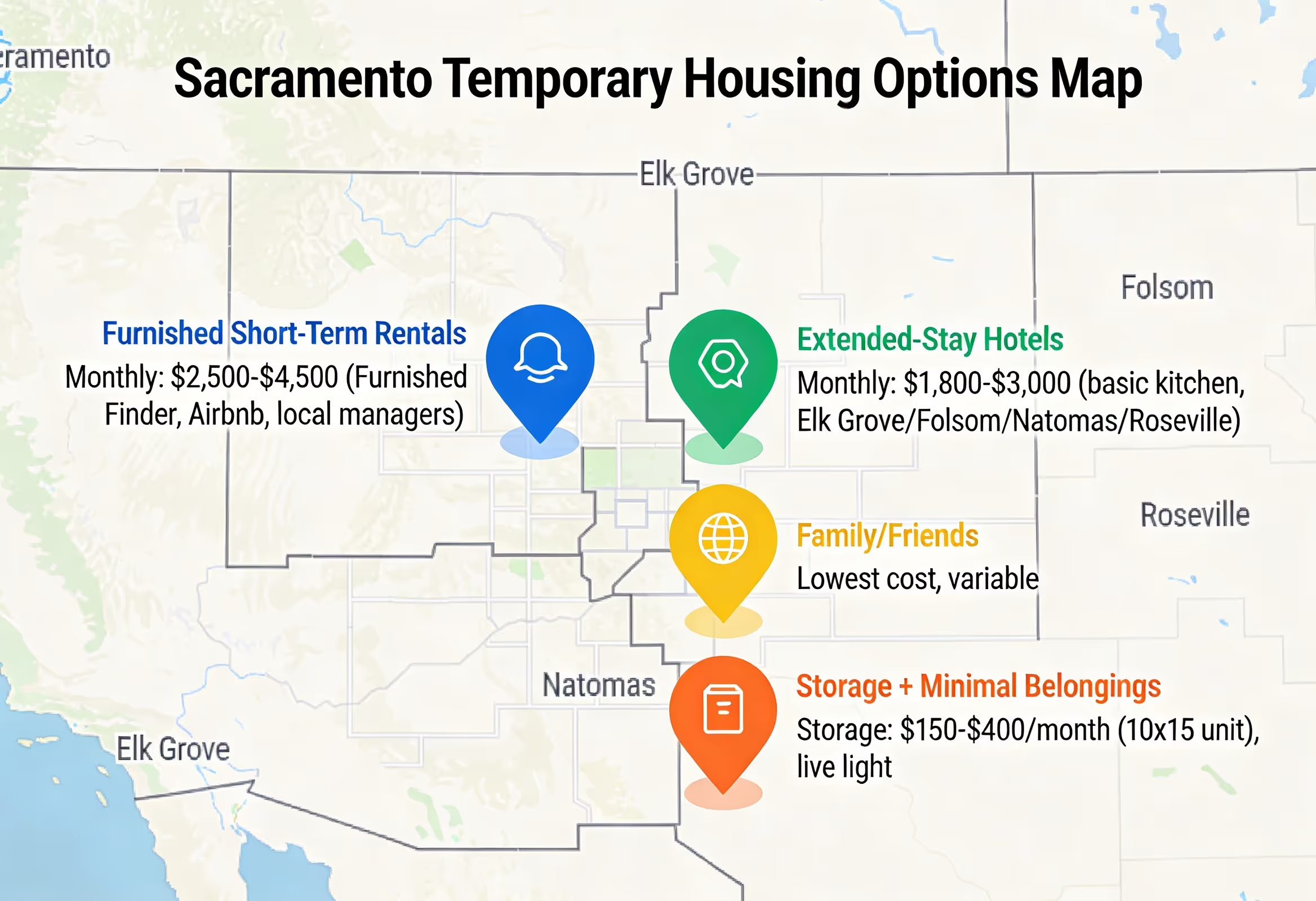
Furnished short-term rentals: Monthly rentals through Furnished Finder, Airbnb (monthly stays), or local property managers. Expect $2,500 to $4,500 per month depending on size and location.
Extended-stay hotels: Options exist in Elk Grove, Folsom, Natomas, Roseville, and throughout the Sacramento metro. Rates typically run $1,800 to $3,000 monthly with basic kitchen facilities.
Family or friends: Less predictable, but often the lowest-cost option if the relationship can handle it.
Storage plus minimal belongings: Move most items into storage ($150 to $400 monthly for a 10x15 unit), live light during the transition.
What You Gain
Maximum flexibility in your next home search
Your offer carries no sale contingency—clean and competitive
You avoid overpaying or compromising due to time pressure
Reduced stress about coordinating two transactions simultaneously
What You Trade Off
Two moves instead of one (current home → temporary → next home)
Storage costs and logistical complexity
Emotional discomfort of living in transition
Possible disruption for kids, pets, or work-from-home setups
California Proposition 19: A Factor for Homeowners 55 and Over
If you're 55 or older (or meet other qualifying criteria), California's Proposition 19 adds an important consideration to your timing strategy.
Prop 19 allows eligible homeowners to transfer their existing property tax base to a new primary residence anywhere in California—potentially saving thousands annually if you're moving from a home you've owned for decades [1].
Key rules to understand:
You must be 55+, severely disabled, or a victim of wildfire/natural disaster
The tax base transfer must happen within two years of selling your original home
If the new home costs more than the old one, you'll pay additional taxes only on the difference
You can use this benefit up to three times in your lifetime
For Sacramento homeowners who bought in the 1990s or early 2000s, Prop 19 can mean the difference between affordable property taxes and a significant increase. This makes the sequence of your sale and purchase strategically important—and worth discussing with a tax professional before you commit to a timeline.
How Sacramento Market Conditions Shift Your Best Strategy
The right approach depends partly on conditions you can't control. Here's how to read the market:
When Inventory Is Tight (Seller's Market)
Your home likely sells faster, possibly with multiple offers
Buyers compete aggressively, potentially accepting shorter rent-back periods
Finding your next home is harder—sale contingency offers frequently lose
Bridge prep or buy-first strategies become more attractive if you can access capital
When Inventory Is Elevated (Balanced or Buyer's Market)
Your home may take longer to sell
Buyers have options, giving them negotiating leverage on price and terms
Sellers on the other side may be motivated enough to accept sale contingencies
Sell-first with contingency or extended rent-back becomes more viable
Getting Current Data
Market conditions shift seasonally and year to year. Before committing to a strategy, ask about:
Current active inventory levels in your target neighborhoods
Median days on market for comparable properties
How contingent offers have been received recently in specific areas
I track this data weekly. When we talk, I can show you exactly where Sacramento and your specific community stand right now.
Common Mistakes That Derail Move-Up Plans
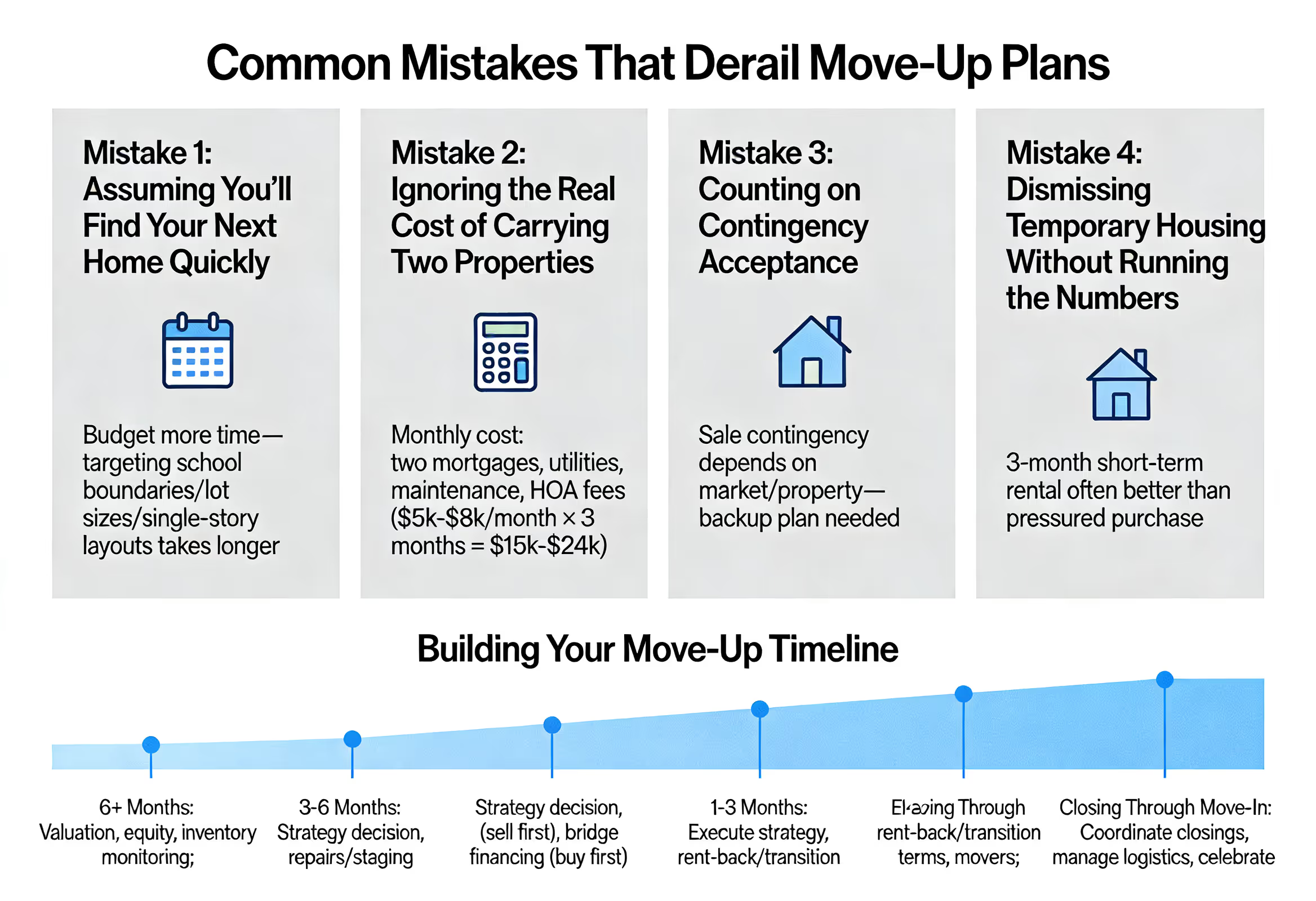
Mistake 1: Assuming You'll Find Your Next Home Quickly
Sacramento buyers routinely underestimate search timelines—especially when targeting specific school boundaries, lot sizes, or single-story layouts. Budget more time than you think you'll need. If you find something perfect in week two, great. If it takes three months, you won't be scrambling.
Mistake 2: Ignoring the Real Cost of Carrying Two Properties
If you pursue buy-first, calculate the actual monthly cost of carrying two homes:
Two mortgage payments (principal, interest, taxes, insurance)
Two sets of utilities
Maintenance on both properties
HOA fees if applicable
For a typical Sacramento move-up situation, this can run $5,000 to $8,000 monthly. Multiply by three months and you're looking at $15,000 to $24,000 in carrying costs—before bridge loan fees.
Mistake 3: Counting on Contingency Acceptance
Sale contingency sounds like the perfect hedge. But acceptance depends heavily on market conditions and the specific property. A well-priced home in a desirable area with multiple offers will rarely accept a contingent bid over a clean one.
Have a backup plan. Know what you'll do if contingency isn't an option.
Mistake 4: Dismissing Temporary Housing Without Running the Numbers
Many sellers reject temporary housing reflexively—"too much hassle." But three months in a short-term rental often delivers better long-term outcomes than a purchase made under pressure.
Run the actual numbers for your situation. The inconvenience is temporary. The home you buy affects your life for years.
Building Your Move-Up Timeline
Every situation looks different, but here's a general framework:
6+ Months Before Your Target Move Date
Get a realistic valuation of your current home
Calculate your equity position and available cash
Start monitoring inventory in your target neighborhoods
Score yourself on certainty, timing, and cash factors
Explore mortgage pre-approval and bridge loan options if relevant
3 to 6 Months Out
Decide on your strategy path (sell first, buy first, or bridge prep)
If selling first: begin repairs, decluttering, and staging preparation
If buying first: secure bridge financing approval
Research temporary housing options as a contingency
Interview agents if you haven't already
1 to 3 Months Out
Execute your chosen strategy
Negotiate rent-back or transition terms as part of your sale
Line up movers and storage if needed
Finalize temporary housing arrangements if using that path
Closing Through Move-In
Coordinate closing dates when possible
Manage logistics across transactions
Execute backup plans as needed
Celebrate—you made it through the hardest part
Frequently Asked Questions
What is a sale contingency and when do Sacramento sellers accept them?
A sale contingency makes your purchase offer dependent on successfully selling your current home. Sacramento sellers accept these more readily when inventory is elevated and buyer competition is low. In competitive markets, contingent offers typically lose to non-contingent buyers. Your agent can advise on current acceptance rates in specific neighborhoods based on recent transaction data.
How long can I negotiate for a rent-back after selling my home?
Rent-back periods typically range from 30 to 60 days in Sacramento transactions, though some buyers agree to longer terms. The maximum often depends on your buyer's lender—many conventional loan programs cap occupancy agreements at 60 days. Extended rent-backs may require a formal lease agreement, security deposit, and higher daily rent rates.
Is temporary housing worth moving twice?
For many Sacramento sellers, yes—especially in competitive markets. Temporary housing eliminates time pressure, allows you to make a clean offer on your next home, and reduces the risk of overpaying or settling for a poor fit. The inconvenience lasts weeks or months; a rushed purchase decision affects you for years. Run the numbers for your specific situation before dismissing this option.
Should I get pre-approved before selling my current home?
Yes. Pre-approval clarifies your purchasing power and shows sellers you're a qualified buyer ready to close. Even if you plan to use sale proceeds for your down payment, understanding your financing options early helps you choose the right strategy path and move quickly when you find the right home.
How does California Proposition 19 affect my move-up timing?
If you're 55 or older, Prop 19 allows you to transfer your current property tax base to a new California home, potentially saving thousands annually. The transfer must occur within two years of selling your original home. This can significantly impact your financial planning—especially for long-time Sacramento homeowners with low assessed values. Consult a tax professional to understand how Prop 19 applies to your specific situation.
Your Next Step: Map Out a Plan That Fits
The sell-then-buy vs. buy-then-sell question doesn't have a universal answer. Your certainty about the next home, your timing flexibility, and your cash position determine which of the three strategy paths makes sense for your situation.
If you're considering a move within the Sacramento or Elk Grove area, I'm happy to walk through your specific circumstances. We can evaluate current market conditions in your neighborhood, review realistic timelines, and build a strategy that minimizes stress while maximizing your outcome.
Ready to start planning? Request a move-up planning call to discuss your options.
About the Author
Tavon Willis is a California-licensed real estate salesperson (DRE #02095751) serving the Greater Sacramento area, including Elk Grove and surrounding communities. With a focus on education-first guidance, Tavon helps homeowners navigate complex decisions—whether buying, selling, or strategically timing both. His approach emphasizes clarity, long-term wealth-building, and informed decision-making over pressure tactics.
Works Cited
[1] California Association of Realtors — "Housing Market Overview." https://www.car.org/marketdata
[2] Federal Housing Finance Agency — "House Price Index." https://www.fhfa.gov/hpi


