
Key Takeaways:
Seller concessions can protect your sale price while making your home more accessible to qualified buyers
Closing cost credits, rate buydowns, and repair allowances each serve different buyer needs—matching the right tool to the situation matters
Your net proceeds (what you actually walk away with) should drive every concession decision
Sacramento County's diverse submarkets—from Elk Grove to Folsom to Natomas—attract different buyer profiles with different financing needs
Understanding loan-type limits prevents deals from falling apart at the last minute
Selling a home in Sacramento County right now means navigating something most sellers don't fully understand: concessions.
Maybe a buyer's agent just asked for a closing cost credit. Perhaps you've seen other listings in Elk Grove or Rancho Cordova advertising rate buydowns to attract offers. Or you're wondering whether giving a repair allowance makes more sense than fixing that aging HVAC yourself before listing.
Here's what I tell my clients: concessions aren't about giving money away. They're about getting the outcome you want—the strongest possible net proceeds—while solving real problems buyers face in this market.
When rates sit higher than they did a few years ago, many qualified buyers can handle the monthly payment but struggle to pull together closing costs on top of their down payment. That gap creates opportunity for sellers who know how to use concessions strategically.
This guide walks through exactly when each type of concession makes sense for Sacramento County sellers, how to evaluate the true cost versus benefit, and how to structure offers that protect your bottom line.
What Are Seller Concessions and How Do They Work?
Seller concessions are contributions you make toward a buyer's transaction costs. Instead of reducing your asking price, you agree to cover certain expenses the buyer would normally pay out of pocket.
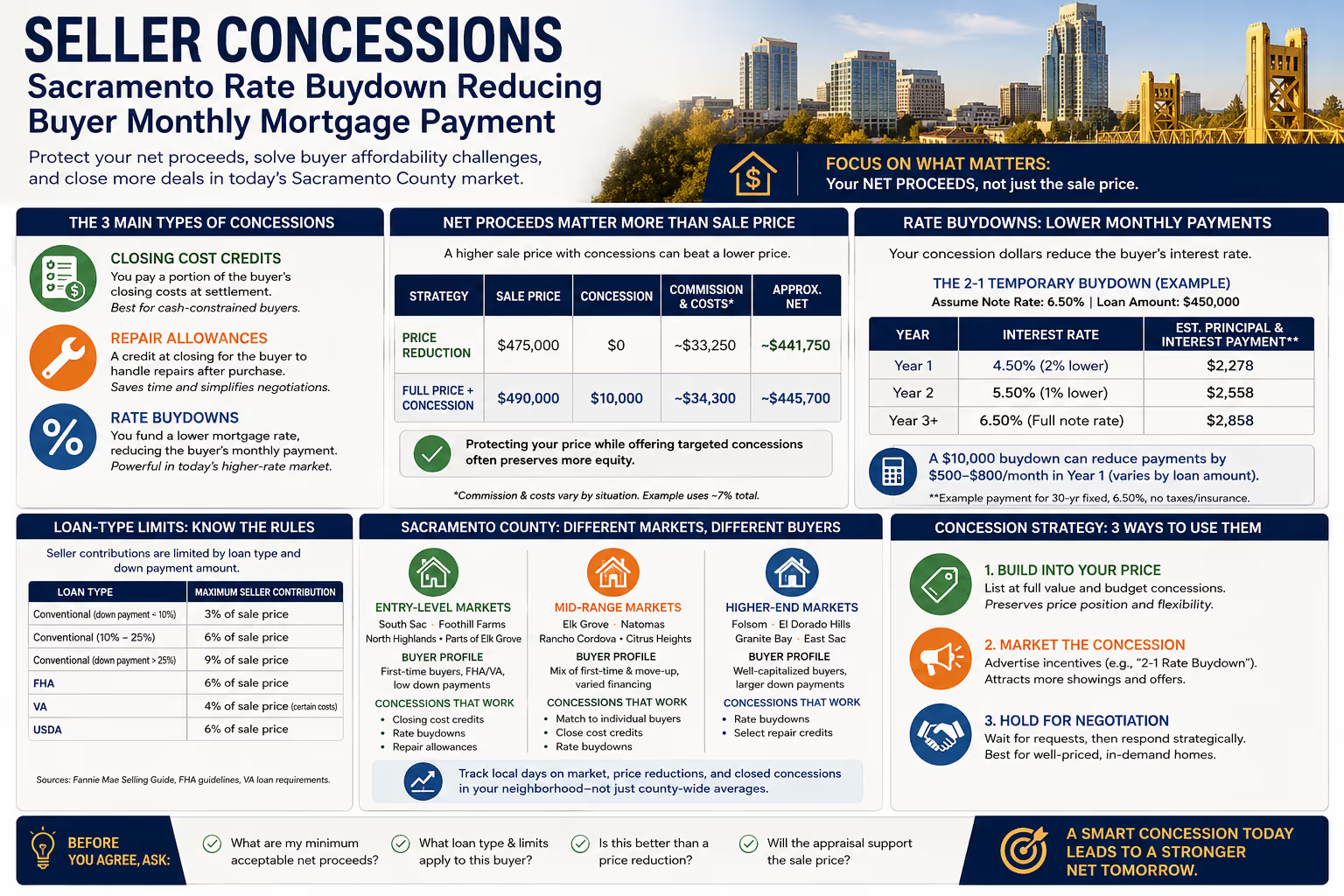
The three main types include:
Closing cost credits – A flat dollar amount or percentage applied toward the buyer's closing costs (lender fees, title insurance, escrow fees, prepaid taxes)
Repair allowances – Credits given in lieu of making physical repairs yourself, letting the buyer handle work after closing
Rate buydowns – Funds used to lower the buyer's mortgage interest rate, either temporarily or for the life of the loan
Why does this distinction matter right now? Mortgage rates remain elevated compared to the historic lows of 2020-2021. The Federal Reserve's monetary policy decisions continue to influence borrowing costs, which directly affects how much house Sacramento buyers can afford [1].
For sellers, this creates a specific challenge: qualified buyers with solid incomes may still face affordability friction. Strategic concessions can bridge that gap without sacrificing your list price.
Why Net Proceeds Matters More Than Sale Price
Most sellers focus on the wrong number. They fixate on the sale price when they should be calculating their net proceeds—what actually lands in their account after all costs, credits, commissions, and fees.
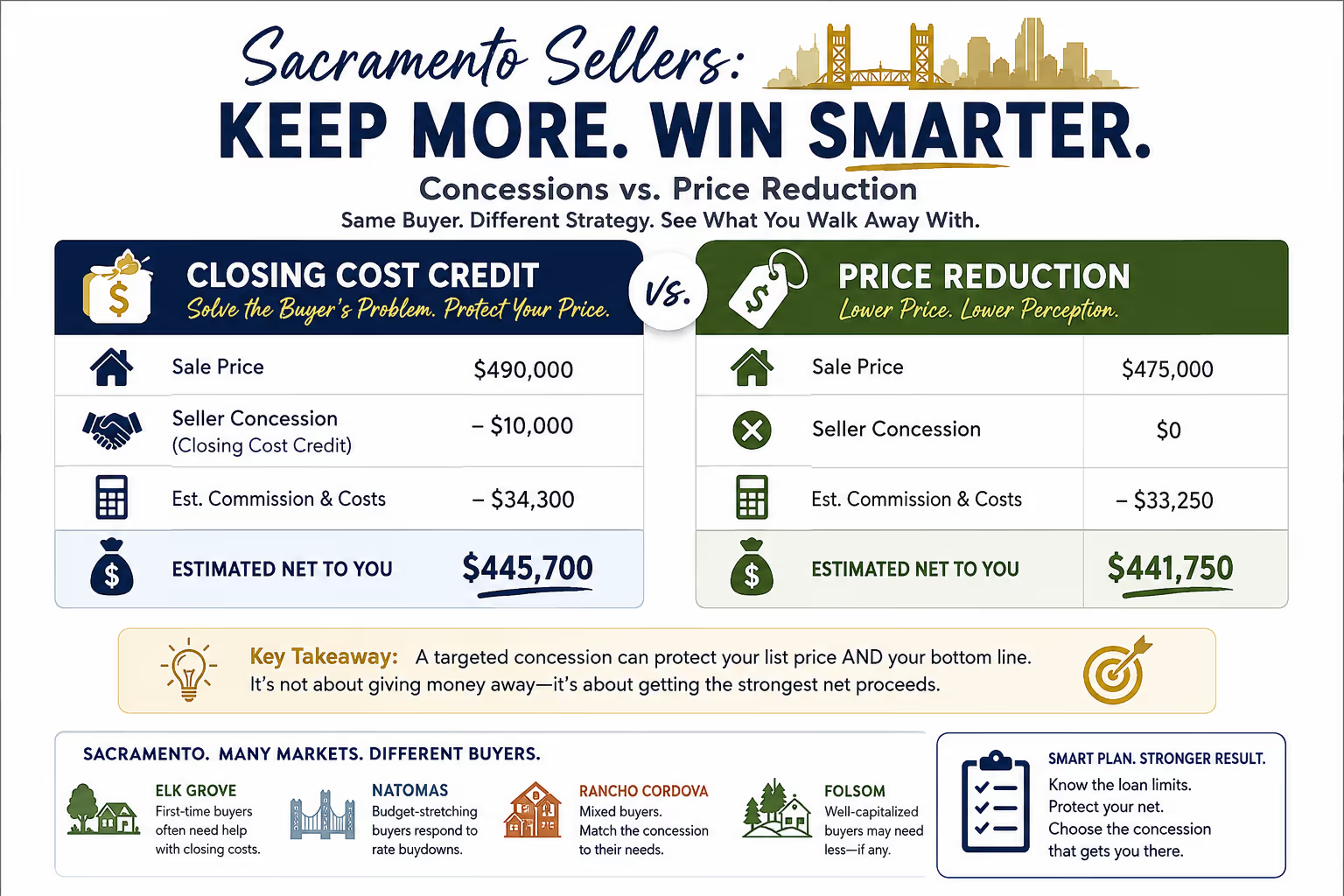
A higher sale price with concessions can absolutely beat a lower sale price without them.
Consider this comparison:
| Strategy | Sale Price | Concession | Commission & Costs | Approximate Net |
| Price reduction | $475,000 | $0 | ~$33,250 | ~$441,750 |
| Full price + concession | $490,000 | $10,000 | ~$34,300 | ~$445,700 |
The math shifts based on your specific situation, but the principle holds: protecting your list price while offering targeted concessions often preserves more equity than dropping your price to attract offers.
Why? Price reductions compound. They affect your commission costs, your property's perceived market position, and often invite additional negotiation pressure. Buyers see a price drop and assume there's room to push further.
Concessions are surgical. They solve a specific problem for a specific buyer without broadcasting weakness to the entire market.
Closing Cost Credits: The Most Common Request
A closing cost credit is exactly what it sounds like—you agree to pay a portion of the buyer's closing costs at settlement.
In California, buyer closing costs generally range from 2% to 5% of the purchase price, depending on loan type, lender fees, and local factors [2]. For a $500,000 home, that's $10,000 to $25,000 the buyer needs beyond their down payment.
When Closing Cost Credits Make Sense
Closing cost credits work well when:
Your buyer is pre-approved but cash-constrained (common with first-time buyers in Sacramento's entry-level price points)
You've received multiple offers and one strong buyer needs a modest credit to close the gap
Your home has been on market longer than comparable properties in your area
You want to avoid a price reduction that could signal desperation to other buyers
When to Proceed Carefully
Watch for these warning signs:
The credit request exceeds what the buyer actually needs for closing—this can trigger appraisal and lender issues
Your buyer shows other financing red flags beyond the credit request
The credit combined with your other costs would leave you below your minimum acceptable net
Loan-Type Limits You Need to Know
Lenders restrict how much sellers can contribute based on loan type and down payment amount. Exceeding these limits can derail a transaction:
| Loan Type | Maximum Seller Contribution |
| Conventional (down payment < 10%) | 3% of sale price |
| Conventional (down payment 10-25%) | 6% of sale price |
| Conventional (down payment > 25%) | 9% of sale price |
| FHA | 6% of sale price |
| VA | 4% of sale price (certain costs) |
| USDA | 6% of sale price |
Source: Fannie Mae Selling Guide, FHA guidelines, VA loan requirements [3]
This matters more than most sellers realize. If you're selling in a neighborhood like North Natomas or South Sacramento where first-time buyers using FHA or VA loans are common, understanding these limits prevents you from agreeing to something that won't work.
Rate Buydowns: Changing the Monthly Payment Equation
Rate buydowns use your concession dollars to reduce the buyer's mortgage interest rate. This can be done permanently (for the life of the loan) or temporarily (typically for the first one to three years).
How Rate Buydowns Work
When you contribute to a buydown, those funds go directly to the lender at closing. In return, the lender charges the buyer a lower interest rate.
The cost varies based on current market conditions and lender pricing. As a general reference point, reducing a rate by 0.25% might cost roughly 1% of the loan amount—but actual costs depend on the rate environment at the time of your transaction [4].
The 2-1 Temporary Buydown
A 2-1 buydown has become popular when rates feel elevated. It works like this:
Year 1: Rate reduced by 2 percentage points from the note rate
Year 2: Rate reduced by 1 percentage point
Years 3+: Full note rate applies
For buyers nervous about current payment levels, this creates breathing room. Many plan to refinance if rates decline, making the temporary reduction particularly attractive.
Why Buydowns Can Outperform Price Cuts
From a buyer's perspective, a $10,000 price reduction saves them a modest amount spread across 30 years of payments. But that same $10,000 applied to a rate buydown can meaningfully reduce their monthly payment during the critical early years when cash flow matters most.
This isn't just math—it's psychology. A buyer stretched on monthly payment feels the buydown immediately. A price reduction feels abstract by comparison.
Where Buydowns Work in Sacramento County
Rate buydowns can be particularly effective in parts of Sacramento County where affordability pressure runs highest:
Entry-level markets in South Sacramento, North Highlands, and portions of Elk Grove where first-time buyers dominate
Move-up markets in Natomas, Arden-Arcade, and Citrus Heights where buyers are stretching budgets
Competitive new construction areas where builders already offer buydowns and resale sellers need to match
In contrast, if you're selling a higher-priced home in Folsom or Granite Bay to well-capitalized buyers with significant down payments, a rate buydown may offer less leverage than other concession types.

Repair Allowances: Simplifying Post-Inspection Negotiations
A repair allowance—sometimes called a repair credit—gives the buyer money at closing to handle repairs themselves rather than requiring you to complete work before the sale.
Why Sellers Often Prefer This Approach
Repair allowances offer several advantages:
Speed: No waiting for contractors, permits, or multiple inspection rounds
Cost certainty: You know exactly what you're contributing (a fixed dollar amount, not an open-ended repair scope)
Simplicity: Fewer pre-closing contingencies and potential delays
Buyer preference: Many buyers actually prefer choosing their own contractors and materials
When Repair Allowances Make Sense
After a home inspection, buyers commonly request repairs. Rather than negotiating each item separately—some reasonable, some excessive—a repair allowance lets you respond with a clean number.
"We'll provide a $5,000 repair credit at closing for the buyer to address items at their discretion."
This works particularly well for:
Cosmetic issues that don't affect safety or financing
Older systems (HVAC, water heaters) nearing end of life but still functional—common in established Sacramento neighborhoods built in the 1970s-1990s
Items where buyer preference matters—they may want a specific brand or contractor
Timeline crunches where your contractor availability would delay closing
When to Complete Repairs Yourself
Some repairs should be handled directly rather than credited:
Safety issues that could affect financing or appraisal (lenders may require certain repairs)
Items explicitly required by the buyer's lender as a condition of the loan
Problems that could expand significantly if buyers underestimate scope and costs
Situations where a repair is straightforward but the credit request seems inflated
Sacramento County Market Dynamics That Affect Concession Strategy
Sacramento County isn't one market—it's a collection of submarkets, each with different buyer profiles, price points, and concession norms.
Understanding Local Buyer Profiles
Different areas attract different buyers with different financing needs:
Entry-level markets (South Sacramento, Foothill Farms, North Highlands): Higher concentration of first-time buyers using FHA, VA, and low-down-payment conventional loans. These buyers often need closing cost help. Concession requests are common and expected.
Mid-range marketsDifferent Sacramento submarkets attract buyers with different concession needs (Elk Grove, Natomas, Rancho Cordova, Citrus Heights): Mix of first-time and move-up buyers. Financing varies widely. Concession strategy should respond to individual buyer circumstances rather than defaulting to a standard approach.
Higher-end markets (Folsom, El Dorado Hills, Granite Bay, East Sacramento): More conventional buyers with larger down payments. These buyers may have less need for closing cost credits but could still respond to rate buydowns during elevated-rate periods.
What to Watch Locally
Pay attention to:
Days on market for comparable properties in your specific neighborhood—not county-wide averages
Price reduction patterns—if homes in your area are sitting and cutting prices, proactive concessions may help you avoid that cycle
What closed listings show for concessions—this data appears in MLS records and reveals what actually worked nearby
The Sacramento Association of Realtors publishes monthly market statistics that can help frame conditions in different price ranges and areas [5].

How to Structure Concession Offers for Maximum Effect
When you decide to use concessions, how you structure them matters.
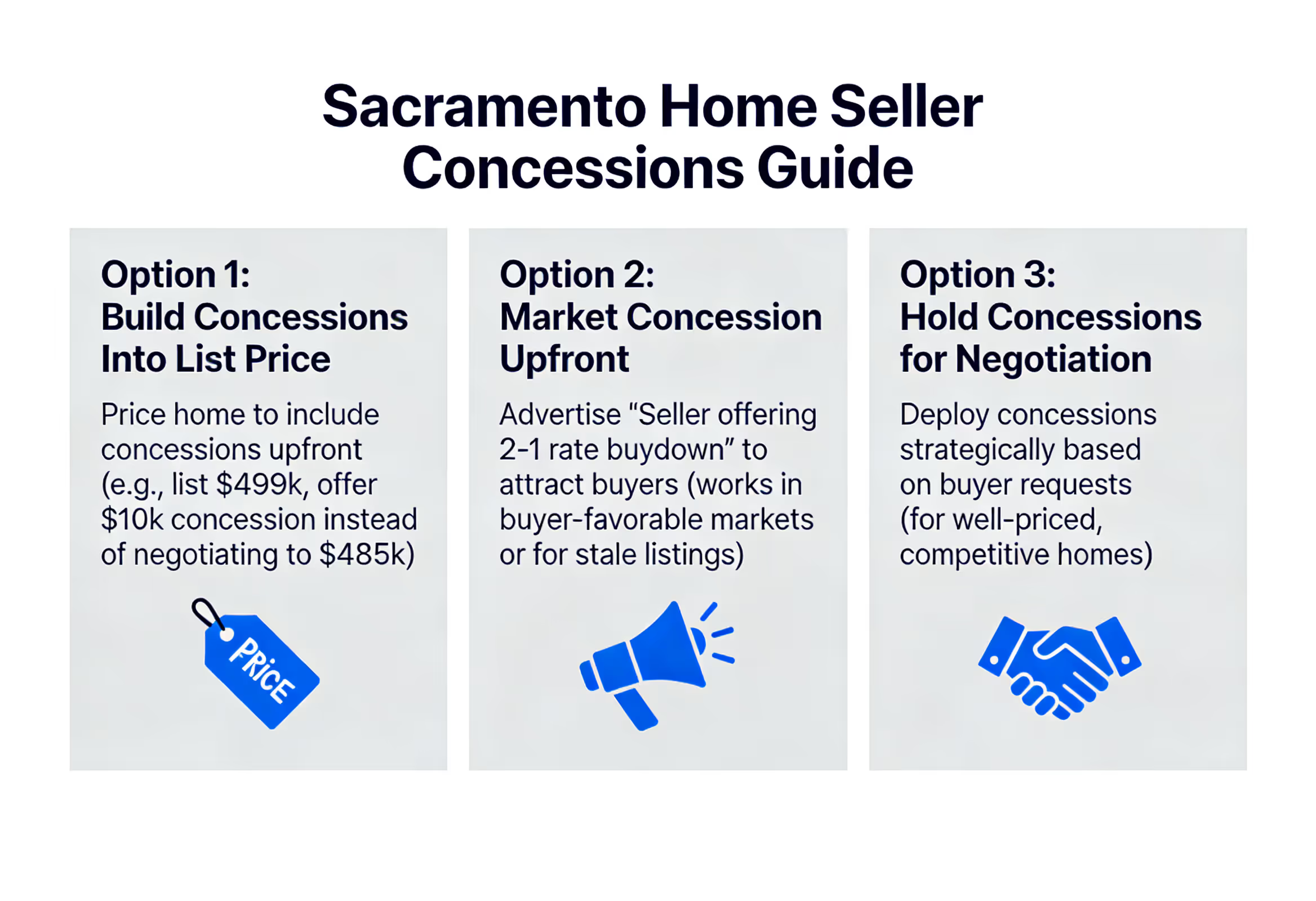
Option 1: Build Concessions Into Your List Price
If you anticipate concession requests based on your target buyer profile, price your home to accommodate them from the start.
Example: Instead of listing at $499,000 expecting negotiation down to $485,000, list at $499,000 prepared to offer a $10,000 concession while holding price.
This preserves your price position in the market while giving you negotiating flexibility.
Option 2: Market the Concession Upfront
In some situations, advertising a rate buydown or closing cost credit can attract more showings and offers. "Seller offering 2-1 rate buydown" signals motivation while preserving your asking price.
This works when:
Market conditions favor buyers and your competition isn't offering incentives
Your home has been listed without strong activity
You want to stand out in a crowded market segment
Option 3: Hold Concessions for Negotiation
For well-priced homes in competitive areas, you may not need to offer anything upfront. Wait to see what buyers request during negotiation, then deploy concessions strategically.
This approach works when your home is priced correctly for current conditions and generating strong interest without incentives.
Mistakes That Cost Sacramento Sellers Money
I've seen these errors repeatedly. Avoid them:
Over-conceding early in the process. Don't offer everything upfront. Leave room to negotiate repairs and other requests that typically emerge after inspection.
Ignoring loan-type limits. Offering a 6% credit to a VA buyer won't work—VA limits seller contributions to 4% for most costs. Know what your buyer's lender allows before agreeing to terms.
Treating all buyers the same. A cash buyer doesn't need a rate buydown. A well-qualified conventional buyer with 20% down has different constraints than an FHA buyer at 3.5% down. Match the concession to the actual situation.
Forgetting appraisal risk. If your concession inflates the sale price beyond what comparables support, the appraisal may not come in at contract price—creating problems for everyone and potentially killing the deal.
Vague contract language. Concessions must be clearly stated in the purchase contract and properly reflected on closing documents. Ambiguity creates disputes and delays.
Questions to Ask Before Agreeing to Any Concession
Work through these before committing:
What are my minimum acceptable net proceeds after all costs?
What type of loan does this buyer have, and what are the concession limits for that loan?
How does this concession compare to the cost of a price reduction to attract a different buyer?
Will the appraisal support the sale price with this concession built in?
What else might this buyer request after their inspection? Am I leaving room to respond?
Your answers should drive whether—and how much—to concede.
Creating a Concession Menu Before You List
The most prepared sellers work with their agent to create a concession menu before the first showing. This document outlines:
Maximum total concession amount you'll consider
Preferred concession type based on your priorities (closing costs, buydown, repairs)
Hard limits based on your net proceeds floor
Response templates for common requests
Having this prepared prevents emotional decision-making during negotiation. When a buyer's agent calls asking for $15,000 in credits, you already know whether that fits your plan—and you can respond quickly.
In competitive situations, speed matters. Buyers often choose the seller who responds decisively.
Take the Next Step
Understanding concessions conceptually is valuable. Applying them to your specific home, neighborhood, equity position, and timeline is where the real decisions happen.
Every seller's situation differs. The right concession strategy for a 1980s ranch in Carmichael looks different than for a newer home in Natomas or a condo in downtown Sacramento.
Ready to see how concessions could work for your home? Request a listing consultation that includes a customized concessions menu tailored to your property, your target buyer pool, and your net proceeds goals. Get clarity on what buyers in your area are actually requesting—and how to respond in ways that protect your bottom line.
Frequently Asked Questions
Do seller concessions always reduce my net proceeds?
Not necessarily. A well-structured concession can preserve your sale price while making your home accessible to more qualified buyers. The key is comparing your net proceeds across different scenarios—price reduction versus concession—rather than looking at the concession amount alone. In many cases, conceding strategically protects more equity than cutting price and inviting further negotiation.
Can I offer a rate buydown if the buyer hasn't asked for one?
Yes. Many sellers proactively market rate buydowns to differentiate their listing, especially when affordability concerns are keeping buyers on the sidelines. This can generate more showings and stronger offers. Work with your agent to determine whether upfront marketing or holding the buydown option for negotiation makes more sense given your property and local competition.
What's the difference between a repair credit and completing repairs myself?
A repair credit gives the buyer a fixed dollar amount at closing to handle repairs themselves. You're responsible only for that agreed amount—no cost overruns, no contractor coordination headaches. Completing repairs means you do the work before closing, which introduces scheduling delays, potential surprises, and timing risk. Many sellers prefer the certainty of a credit.
Are there concessions that can actually hurt my sale?
Yes. Offering concessions that exceed loan-type limits creates problems with the lender. Concessions that inflate price beyond appraised value can blow up the deal. And offering too much upfront leaves no room for inspection negotiations. Strategic restraint matters as much as generosity.
How do I know which concession type a specific buyer prefers?
Ask. Or rather, have your agent communicate with theirs. Buyer needs vary based on loan type, cash reserves, and priorities. Some buyers desperately need closing cost help; others care most about monthly payment. Matching your concession to their actual constraint makes negotiation more productive and increases the chance of closing.
About Tavon Willis
Tavon Willis is a California-licensed real estate salesperson (DRE #02095751) serving Sacramento County and surrounding communities, including Elk Grove, Rancho Cordova, and Natomas. With a focus on helping sellers understand pricing strategy and net proceeds, Tavon emphasizes education-first guidance and clear communication throughout the selling process. His approach helps homeowners make informed decisions—including developing concession strategies that attract qualified buyers without leaving money on the table.
Cited Works
[1] Federal Reserve Board — "Monetary Policy and the Economy." https://www.federalreserve.gov/monetarypolicy.htm
[2] Consumer Financial Protection Bureau — "What are closing costs?" https://www.consumerfinance.gov/ask-cfpb/what-are-closing-costs-en-1845/
[3] Fannie Mae — "Selling Guide: Interested Party Contributions." https://selling-guide.fanniemae.com/
[4] Consumer Financial Protection Bureau — "What are discount points and lender credits and how do they work?" https://www.consumerfinance.gov/ask-cfpb/what-are-discount-points-and-lender-credits-and-how-do-they-work-en-136/
[5] Sacramento Association of Realtors — "Market Statistics." https://www.sacrealtor.org/market-statistics/


