
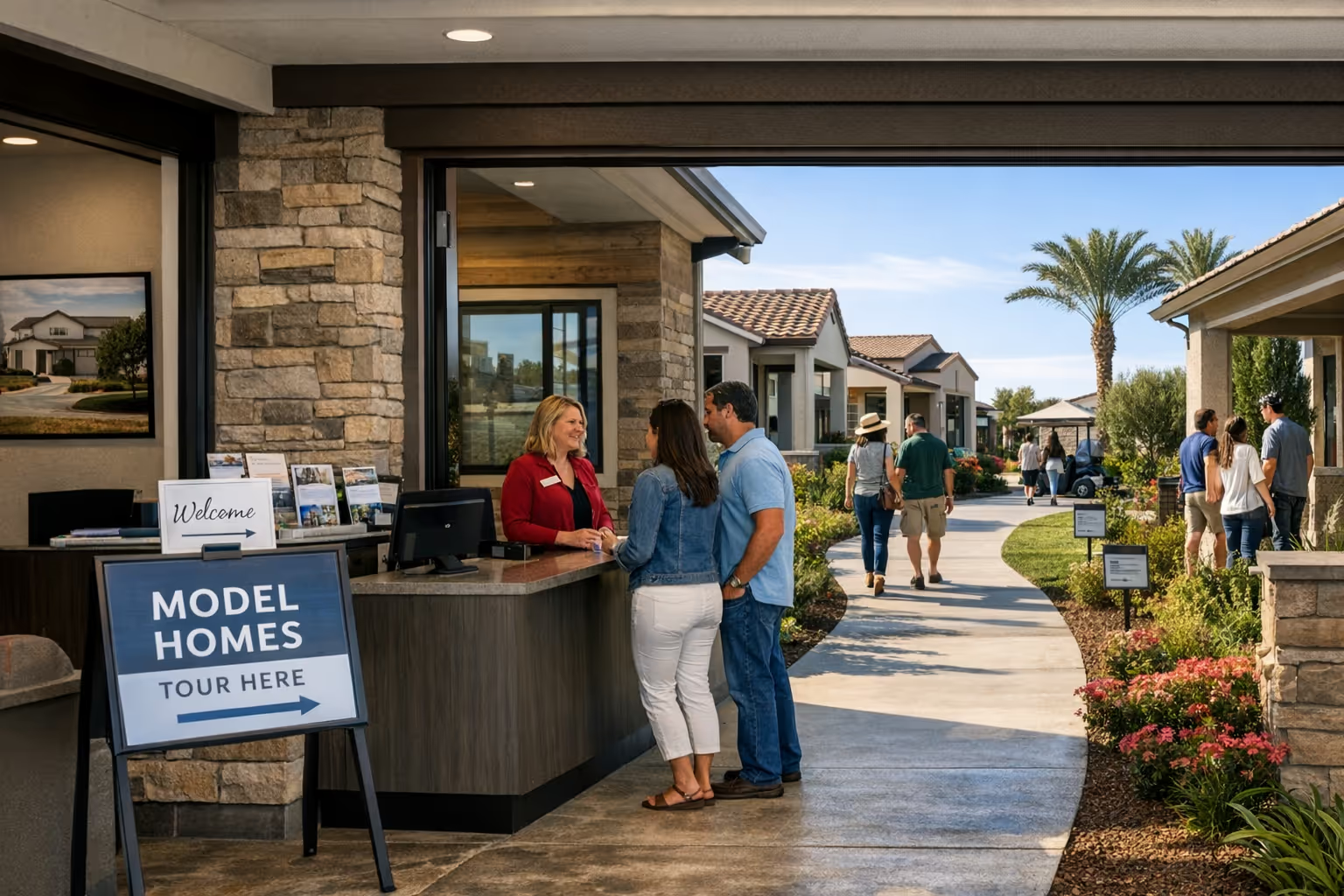
You spotted a new construction community in Sacramento or Elk Grove that looks promising. The floor plans caught your eye, the incentives sound solid, and you're thinking about driving out to tour the models this weekend.
Before you walk into that sales office, there's something worth understanding: what you sign during your first visit can shape your representation options for the entire transaction.
This isn't meant to discourage you from exploring new construction. Builder incentives, interest rate buy-downs, and energy-efficient homes make new builds genuinely attractive for many buyers. But the registration process at model home sales offices works differently than shopping for resale homes—and most first-time visitors don't realize what they're agreeing to until their options have narrowed.
I've walked clients through this process dozens of times in the Greater Sacramento area. The buyers who understand registration before they visit have far more flexibility than those who learn about it afterward.
Here's what actually happens when you tour model homes in California, what those registration forms mean, and how to protect your ability to have your own agent represent you.
If You've Already Visited Without an Agent
Since many people find this article after the fact, I'll address this first: if you've already toured model homes and signed registration forms without listing an agent, you may still have options—but you need to move quickly.
Contact the sales office directly and ask about their policy for adding agent representation after initial registration. Some builders accommodate this request within a specific timeframe (often 24 to 48 hours). Others have firm policies that won't change.
Have your agent reach out to the sales office as well. Agents experienced with new construction understand how to navigate these conversations and may know that particular builder's typical practices.
If the builder's policy is firm, you'll need to decide whether to proceed without outside representation for that community or focus your search on builders where you can still establish representation.
Now, for those who haven't visited yet—here's what you need to know.
What Happens When You Walk Into a New Construction Sales Office
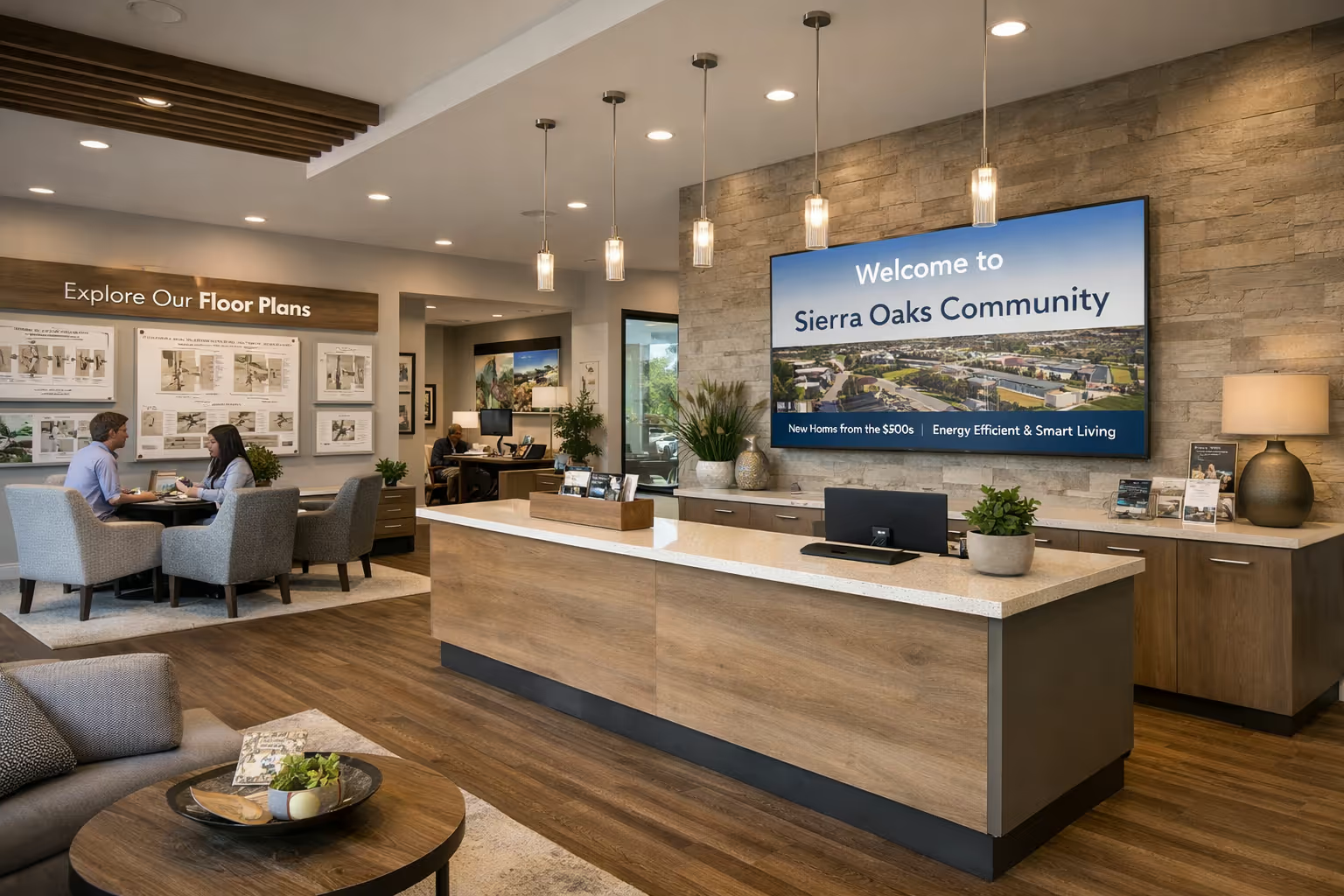
Every builder sales office operates with a similar structure. An on-site sales agent greets you, offers to show you the models, and asks you to "sign in" or "register" before the tour begins.
This feels routine. You sign visitor logs at open houses, so what's different?
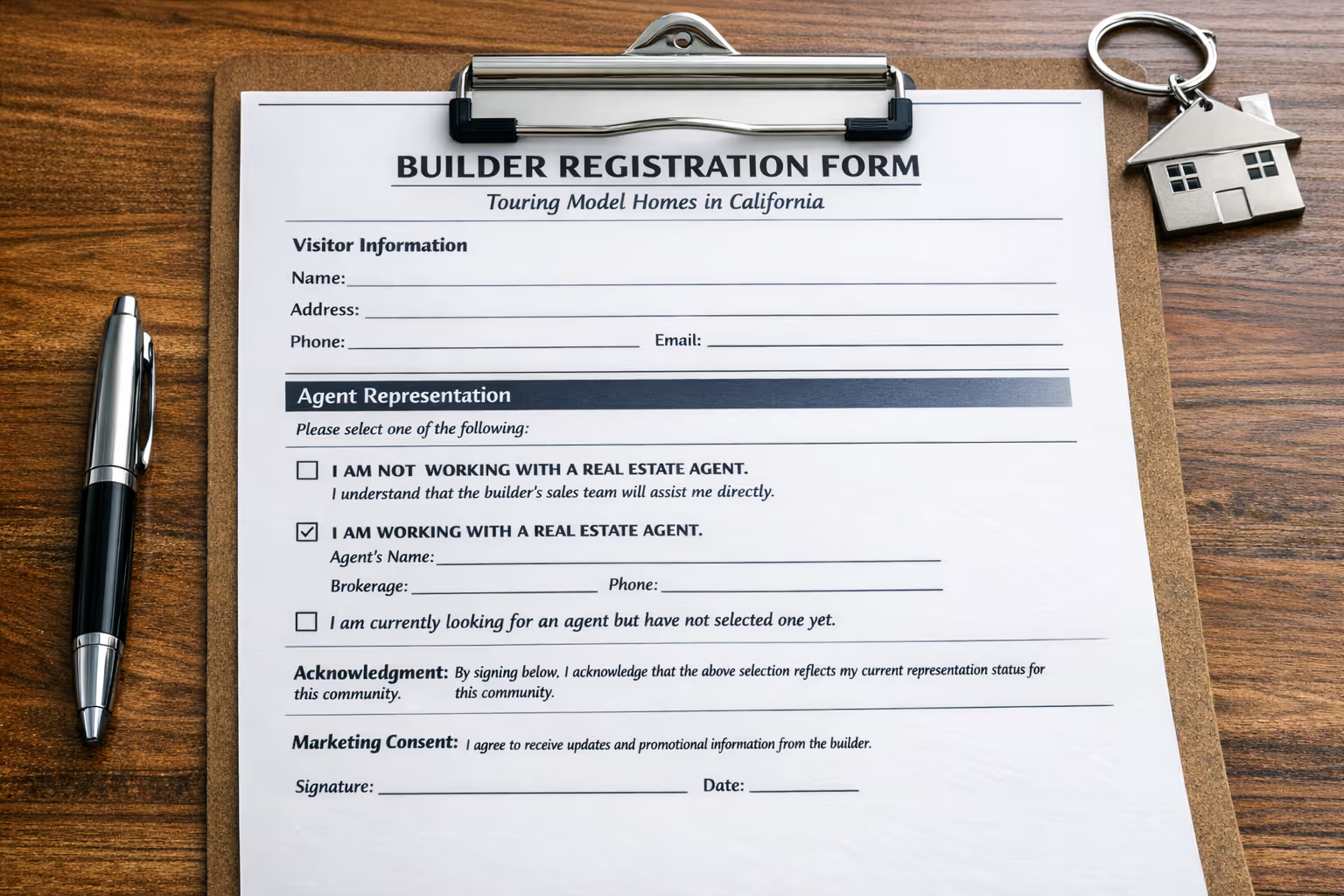
The builder registration card or form you're asked to sign typically does more than record your contact information. In many cases, it establishes that the on-site sales agent is your point of contact for that community—and that you arrived without representation.
This matters because of something called procuring cause—a real estate principle that determines which agent "caused" the buyer to purchase a particular property. Builders use registration policies to document procuring cause from your very first interaction.
Many builders require that your agent accompany you on your first visit, or at minimum, that you identify your agent in writing before or during that initial registration. If you register without mentioning an agent, some builders interpret this as you choosing to work directly with their sales team—and they may decline to work with an outside agent you bring in later.
Understanding the Builder Registration Card
A typical builder registration form includes several sections, each serving a different purpose:
Contact information collection. Name, phone, email, sometimes address. This part is straightforward—builders want to follow up with interested visitors.
Representation acknowledgment. This is the critical section. The form may ask whether you're working with a real estate agent. It may include language stating that by signing, you acknowledge you are not currently represented. Some forms include a field for your agent's name and brokerage—but if you leave it blank, that blank space becomes part of the record.
Marketing consent. Permission to contact you about this community, other communities, promotions, and updates.
Community-specific policies. Some builders include language about their cooperation policies with outside agents, including deadlines for agent registration.
The exact language varies by builder. Some are explicit about representation requirements. Others use vague phrasing that buyers don't fully absorb while they're focused on touring model homes.
What Can and Cannot Be Changed After You Register
Here's where confusion often sets in. Not everything on a registration form carries the same weight:
| Typically Changeable | Often Difficult or Impossible to Change |
| Your contact information | Adding a buyer's agent to your file after initial registration |
| Your interest level in specific floor plans or lots | The date of your first documented visit |
| Your financing preferences | The representation status recorded at that first visit |
| Your purchase timeline | Builder's interpretation of procuring cause |
Builders set their own cooperation policies. Some have strict "first visit" rules where your agent must be present or registered at that initial appointment. Others offer a brief window—sometimes 24 to 48 hours—to add agent information after your first visit. And some are more flexible.
The challenge is that you often don't know which policy applies until you've already signed the registration form. By then, your options may be limited.
Why Builders Have These Policies (and What "Procuring Cause" Means)
From the builder's perspective, these policies exist for legitimate business reasons—and they're grounded in how real estate compensation works.
Procuring cause is the industry term for the agent whose efforts "caused" a buyer to purchase a specific property. In traditional resale transactions, this is often straightforward. In new construction, builders use registration to document procuring cause clearly: whoever brought you in first (or whoever you identified first) gets credit for the relationship.
On-site sales agents invest significant time with prospective buyers. They conduct tours, explain floor plans and options, discuss pricing and incentives, and guide buyers through the selection process. Builders want to recognize and compensate that effort rather than paying both their sales agent and an outside agent who appeared after the relationship was established.
Understanding this doesn't mean you have to accept whatever terms a builder presents. It means you can approach the conversation knowing why the policy exists—and what you need to do to maintain your options.
How to Protect Your Right to Representation Before You Visit
The most reliable approach: have your agent register you with the builder before your first visit, or bring your agent with you to that initial tour.
When your agent contacts the builder's sales office in advance, they can:
Register you as their client before you set foot on the property
Understand that specific builder's cooperation policies
Identify any deadlines or documentation requirements
Ask questions about incentives, timeline, and lot availability on your behalf
If You're Planning a Spontaneous Visit
If you're thinking about a casual weekend drive-by and want to tour spontaneously, here's a practical approach:
Before you sign anything at the sales office:
Tell the on-site sales agent you're working with an outside agent. Be direct: "I have a buyer's agent. I'd like to include their information on the registration form."
Ask about the builder's cooperation policy. "What's your process for working with outside agents? Are there any deadlines I should know about?"
Read the registration form carefully. Look for language about representation, acknowledgment that you're unrepresented, or any fields related to agent information.
Fill in your agent's information completely. Name, brokerage, phone number, license number if there's space for it. Don't leave the agent section blank.
If you don't have an agent yet but want one, say so. You might note on the form that you're in the process of selecting representation, or ask if you can complete registration once you've finalized your agent selection.
Take a photo of what you signed. Keep a record of exactly what was on the form and what you wrote.
What If the Builder Won't Allow Your Agent?
Sometimes, despite your best efforts, a builder maintains a firm policy that excludes your agent—either because of timing or because that builder has restrictive cooperation terms.
You have options:
You can walk away. This is real leverage. The Sacramento area has multiple new construction communities, and builders who won't work with your representation may not be the right fit. I've had clients shift their focus to other communities where they could have full representation, and they've been happy with that decision.
You can proceed without outside representation. This is your choice to make. Some buyers are comfortable working directly with the builder's sales team, particularly if they've researched the process thoroughly.
You can negotiate. In some cases—especially with slower-moving communities or at quarter-end when builders need to hit sales targets—there may be flexibility that isn't immediately apparent. Your agent can sometimes have these conversations more effectively than you can directly.
What I'd caution against: trying creative workarounds like having a spouse register separately to "restart" the process. Builders document households, not just individuals, and this approach can backfire or create complications.
What a Buyer's Agent Actually Does in New Construction Transactions
You might wonder whether representation matters for new construction. After all, you're buying directly from the builder—what's there to negotiate?
More than many buyers expect.
Evaluate the purchase agreement. Builder contracts differ significantly from standard resale purchase agreements. They're typically written to favor the builder and may include clauses about construction delays, material substitutions, arbitration requirements, and walkaway scenarios that deserve careful review. The California Association of Realtors provides guidance on reviewing builder contracts, and an experienced agent knows what to flag [1].
Understand what's included versus upgraded. That stunning model home with the upgraded countertops, extended patio, and premium flooring? Much of what you see may be optional upgrades at additional cost. An agent can help you identify which features are standard and budget accordingly.
Navigate incentive programs. Builder incentives like lender credits, rate buy-downs, or closing cost contributions often come with conditions—using the builder's preferred lender, for example, or selecting from specific lots or floor plans. Understanding the trade-offs helps you make informed decisions.
Monitor construction progress. For homes being built to order, someone should be checking on construction milestones, identifying issues before they become problems, and ensuring the builder meets their commitments.
Coordinate inspections. Even new construction benefits from independent inspections. A pre-drywall inspection catches issues while they're easy to fix. A final walkthrough inspection verifies everything works as it should before you take ownership.
Advocate during the walkthrough. If the final walkthrough reveals incomplete work or defects, having representation helps ensure those items are addressed before closing.
The Real Cost of Skipping Representation
When builders offer incentives for working directly with their sales team—or when buyers assume they'll get a better deal without an agent—the math rarely works out as expected.
Builder incentives are typically structured into their pricing model regardless of whether a buyer has outside representation. The incentive you receive for "not using an agent" may not equal the value of having independent guidance through a complex transaction.
New construction purchases involve longer timelines, more variables, and contracts weighted toward the builder's interests. Having someone whose job is to advocate for you—rather than to sell you upgrades and hit sales targets—provides value that's difficult to quantify but easy to appreciate when questions arise.
Questions to Ask Before Your First Model Home Visit
For Your Agent (Before Visiting)
Have you worked with this builder before?
What's this builder's agent cooperation policy?
Can you register me before our first visit?
What should I know about this builder's contracts and incentive structures?
Are there any current promotions with deadlines I should know about?
For the On-Site Sales Agent
What's included in the base price versus the model I'm seeing?
What incentives are currently available, and what are the conditions?
What's the estimated construction timeline for available lots?
What's your process for working with outside buyer's agents?
If I register today, what documentation will I be signing?
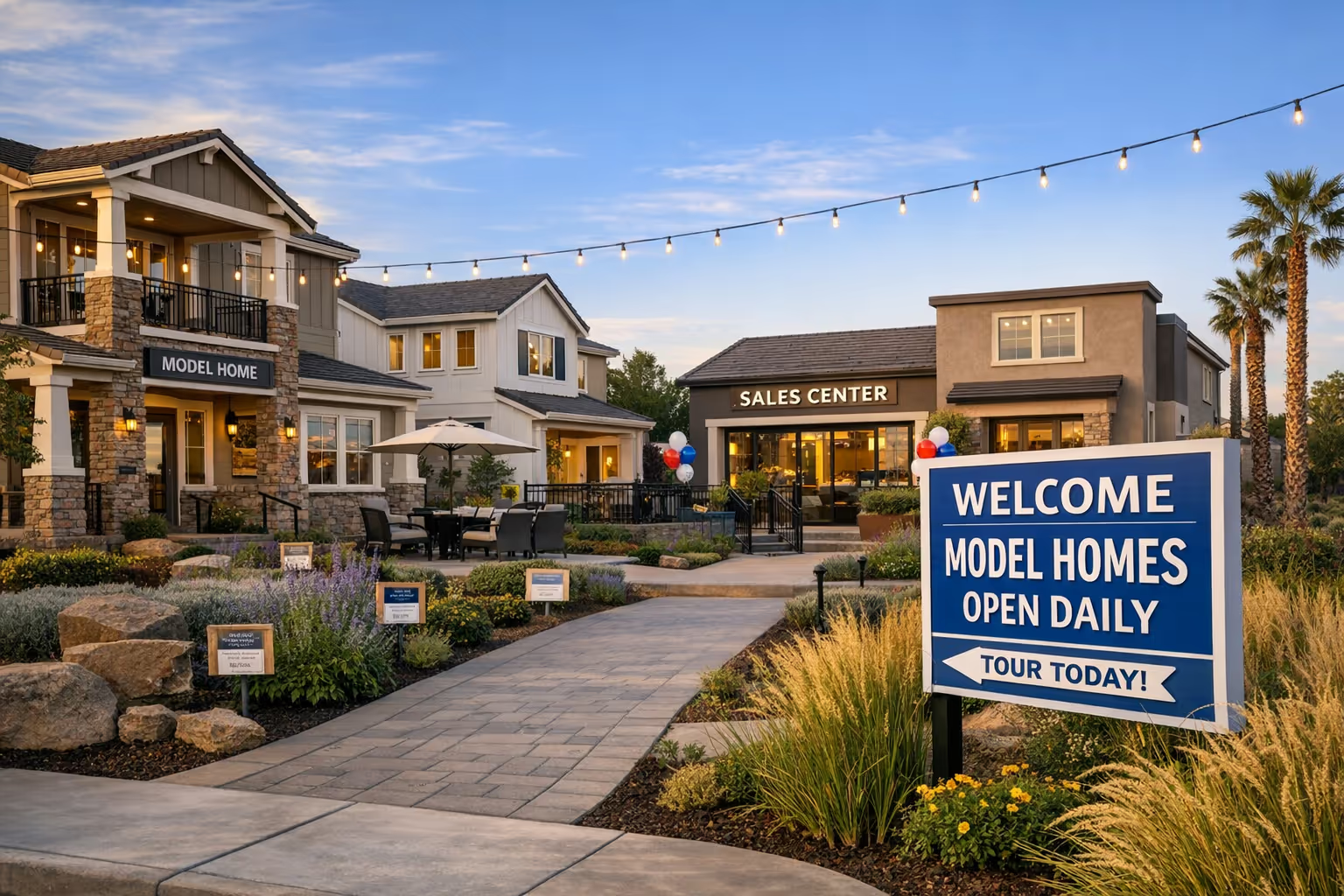
Making Your First Visit Count
New construction can be an excellent path to homeownership, especially here in the Sacramento and Elk Grove areas where several builders are active. Builder incentives, interest rate buy-downs, energy efficiency, lower near-term maintenance costs, and the ability to select finishes that match your preferences all represent genuine advantages.
The key is approaching your first visit prepared.
Registration forms carry weight. Builder policies vary. What feels like a casual "sign-in" may have implications for your representation options throughout the transaction.
If you're serious about exploring new construction communities, the most valuable step is connecting with an agent who understands the process before you start touring. The right time to establish representation is before your first visit—not after you've signed forms that complicate your options.
Planning to tour model homes this weekend? A quick phone call before you visit can clarify your options and help you approach registration informed. Reach out for a no-pressure New Build Visit Prep conversation—I'll walk you through what to expect for that specific builder and how to protect your right to representation. Call us or request a consult today.
Frequently Asked Questions
Can I add my real estate agent after I've already registered at a model home?
It depends entirely on the builder's cooperation policy. Some builders allow you to add agent information within a short window—often 24 to 48 hours—after your initial visit. Others enforce strict first-visit rules where your agent must be present or registered at that first appointment. Contact the sales office immediately if you've already registered, and have your agent reach out directly. Acting quickly gives you the best chance of preserving your options.
Do I need a buyer's agent for new construction if I'm buying directly from the builder?
While not legally required, representation provides significant value in new construction transactions. Builder contracts are typically complex documents written to protect the builder's interests. An experienced agent can help you evaluate purchase agreements, understand what's included versus upgraded, navigate incentive conditions, monitor construction progress, and advocate for repairs identified during walkthroughs. The on-site sales agent works for the builder, not for you.
What is a builder registration card and why does it matter?
A builder registration card or form is the document you sign when first visiting a new construction sales office. Beyond collecting your contact information, it often includes language about your representation status and establishes "procuring cause"—documentation of who brought you to that community. If you sign indicating you're unrepresented, some builders consider this your agreement to work directly with their sales team, which may limit your ability to add an outside agent later.
Why do builders require agents to be present at the first visit?
Builders use registration to establish procuring cause—determining which agent (if any) "caused" you to purchase in their community. When their on-site sales agent invests time showing you models, explaining options, and building the relationship, builders want to recognize that contribution rather than compensate both their agent and an outside agent who appears later. These policies vary by builder, so understanding each community's requirements before visiting helps you maintain your options.
Can I walk away if a builder won't work with my agent?
Absolutely—and this is genuine leverage. The Sacramento area has multiple new construction communities with different cooperation policies. If a builder won't work with your chosen representation, you can focus your search on communities that will. Some buyers proceed without outside representation after weighing their options, but that should be an informed choice rather than a surprise. Your agent can also sometimes negotiate flexibility, especially with slower-moving communities.
About the Author
Tavon Willis is a California-licensed real estate salesperson (DRE #02095751) serving the Greater Sacramento area, including Elk Grove and surrounding communities [2]. With a focus on first-time homebuyer education and new construction guidance, Tavon helps buyers navigate complex real estate decisions—including the registration and representation questions that arise when purchasing from builders. His approach emphasizes education over pressure, ensuring clients understand their options and make informed choices. As a Sacramento native, he brings local market knowledge to help buyers evaluate communities, builder reputations, and incentive programs throughout the region.
Cited Works
[1] California Association of Realtors — "Legal Resources: New Home Construction Transactions." https://www.car.org/en/riskmanagement/qa/legal-articles-by-topic
[2] California Department of Real Estate — "Public License Lookup: Tavon Willis, License #02095751." https://www2.dre.ca.gov/publicasp/pplinfo.asp?License_id=02095751


